Efficient Patient Management Workflow Saves 4+ Hours Daily
Discover how AI-powered workflow automation saves integrative medicine clinicians 4+ hours daily while improving patient adherence by 20% and data quality by 64%.

Integrative and functional medicine clinicians spend over 4 hours daily on administrative tasks, leaving less time for patient care. Manual documentation, complex care planning, and scattered communication workflows lead to burnout and inefficiency. AI-powered workflow automation transforms patient management by streamlining intake, automating personalized care plans, and optimizing follow-ups. This guide provides actionable steps to implement efficient workflows that reclaim your time and improve clinical outcomes.
Table of Contents
- Introduction To Efficient Patient Management In Integrative Medicine
- Prerequisites And Required Tools For Workflow Efficiency
- Step-By-Step Workflow Automation Process
- Common Mistakes And How To Troubleshoot Them
- Expected Results And Outcomes With Efficient Workflow Automation
- Transform Your Practice With Meelio AI Assistant
- Frequently Asked Questions
Key Takeaways
| Point | Details |
|---|---|
| Prerequisites | Validated intake tools, integration-ready EHRs like Practice Better and Cerbo, and comprehensive staff training are essential. |
| Automation Steps | Streamline patient intake, automate documentation, generate personalized care plans, and implement AI-driven follow-ups. |
| Common Mistakes | Lack of EHR integration and insufficient training slow adoption and create data silos in 40% of clinics. |
| Expected Outcomes | Save 4+ hours daily, improve patient adherence by 20%, and enhance data quality by 64% for faster decisions. |
Introduction to Efficient Patient Management in Integrative Medicine
Integrative medicine clinicians face unique challenges managing complex, layered patient data across multiple protocols. Each patient requires individualized assessment of symptoms, lab results, lifestyle factors, and treatment responses. Manual workflows force you to juggle documentation, care plan creation, and patient communication simultaneously.
This complexity creates bottlenecks. Manual data entry is slow and error-prone. Care plans take hours to customize for protocols like Bredesen, Shoemaker, or Wahls. Patient follow-up communications fall through the cracks, reducing adherence and outcomes.
AI is emerging as a critical solution to complex patient data and protocol challenges slowing care delivery. Automation streamlines documentation by capturing clinical notes in real time. It enhances clinical decision-making by analyzing patient data against evidence-based protocols. Standardized yet personalized care plans generate automatically based on your preferred frameworks.
"AI-powered workflow automation transforms integrative medicine by reducing administrative burden while maintaining the personalized, protocol-driven care that defines functional health practice."
The Meelio AI platform specializes in integrative and functional medicine workflows. Unlike generic AI scribes, it delivers protocol-specific clinical intelligence. Key capabilities include:
- Automated care plan generation for complex integrative protocols
- Personalized nutrition recommendations and meal planning
- Longitudinal lab analysis tracking patient progress over time
- Seamless EHR integration with Practice Better and Cerbo
These tools address the specific workflow challenges you face daily. They free up time for patient interactions while maintaining the depth and personalization your practice requires.
Prerequisites and Required Tools for Workflow Efficiency
Successful automation requires preparation. You cannot simply install software and expect transformation. Three foundational elements must be in place before implementing clinical automation.

First, validated patient intake forms tailored to integrative medicine are essential. Generic intake tools miss the nuanced data functional medicine requires. Your forms must capture detailed symptom inventories, environmental exposures, lifestyle factors, and treatment history. Digital symptom tracking tools enable ongoing patient monitoring between visits.
Second, your EHR system must support integration with automation platforms. Successful automation implementations require validated intake tools, integration-ready EHRs like Practice Better and Cerbo, and trained staff. Systems lacking API access create data silos that defeat automation benefits. The table below summarizes essential tool requirements:
| Tool Category | Required Features | Integration Priority |
|---|---|---|
| Patient Intake | Detailed symptom tracking, protocol-specific questionnaires, digital accessibility | High |
| EHR System | API access, Practice Better or Cerbo compatibility, automated data sync | Critical |
| Communication Platform | Automated messaging, appointment reminders, patient education delivery | High |
| Care Planning Software | Protocol templates, personalized recommendations, progress tracking | Critical |
Third, staff digital literacy and comprehensive training determine adoption success. Your team must understand both the technical aspects and the clinical reasoning behind automated workflows. Training should cover system navigation, troubleshooting common issues, and maintaining patient communication quality.
Pro Tip: Start with a pilot program involving 2-3 staff members before full practice rollout. This approach identifies workflow gaps and builds internal champions who can train others.
Invest time in these prerequisites. The AI-integrated EHR systems you choose will shape your practice efficiency for years. Rushing implementation without proper preparation leads to the common pitfalls discussed later in this guide.
Step-by-Step Workflow Automation Process
Implementing automation follows a systematic approach. Each step builds on the previous one, creating a comprehensive workflow that transforms practice efficiency.
-
Assess Current Workflow Bottlenecks: Document where time disappears in your current process. Track how long intake takes, documentation time per patient, care plan creation duration, and follow-up communication frequency. Identify which tasks consume the most time relative to their clinical value.
-
Implement Validated Digital Intake Tools: Replace paper forms with digital intake systems capturing comprehensive patient data. Choose tools with protocol-specific questionnaires for functional medicine frameworks. Ensure mobile accessibility so patients complete intake before their first visit.
-
Integrate AI-Powered Documentation: Connect automation platforms with your EHR system. AI-driven clinical decision support enhances diagnosis personalization and speeds decisions by 30-40%. Real-time note capture during patient visits eliminates post-appointment documentation time.
-
Automate Personalized Care Plan Generation: Configure templates for your preferred protocols like Bredesen, Shoemaker, or Wahls. The step-by-step automation guide shows how AI analyzes patient data and generates customized recommendations. Manual review ensures clinical appropriateness while saving hours on initial drafting.
-
Deploy Flexible Appointment Scheduling: Implement systems allowing patients to book, reschedule, and confirm appointments digitally. Flexible scheduling systems reduce wait times and no-shows by up to 25%. Automated reminders via text and email improve attendance.
-
Enable AI-Driven Follow-Up Communications: Schedule automated check-ins based on treatment protocols. AI-powered intake and follow-up automation sends personalized education materials, medication reminders, and symptom tracking prompts. This consistency improves patient adherence without manual effort.
Pro Tip: Implement one step every two weeks rather than all at once. This phased approach allows staff to adapt and provides time to refine each component before adding the next.
The comparison below illustrates efficiency gains:
| Workflow Component | Manual Process Time | AI-Driven Process Time | Efficiency Gain |
|---|---|---|---|
| Patient Intake | 30-45 minutes | 10-15 minutes | 60-70% reduction |
| Clinical Documentation | 20-30 minutes per patient | 5-10 minutes per patient | 65-75% reduction |
| Care Plan Creation | 45-60 minutes | 10-15 minutes | 75-80% reduction |
| Follow-Up Communications | 15-20 minutes per patient | 2-3 minutes per patient | 85-90% reduction |
These time savings compound across your patient panel. A practice seeing 20 patients weekly reclaims over 20 hours monthly for direct patient care or practice growth.
Common Mistakes and How to Troubleshoot Them
Even well-planned automation implementations encounter predictable obstacles. Recognizing these pitfalls early prevents workflow disruptions.
Lack of EHR integration tops the list. Failing to integrate AI tools with EHR causes data silos in approximately 40% of clinics; inadequate training slows adoption. When automation platforms cannot sync with your EHR, staff resort to manual data entry. This defeats the purpose and creates duplicate work.
Fix: Verify API compatibility before purchasing any automation tool. Request technical specifications from vendors and involve your IT support in evaluation. Choose platforms with proven integration success in practices using your EHR system.
Insufficient staff training creates resistance and poor adoption. Team members who do not understand why automation helps or how to use it effectively will revert to old workflows. This wastes your investment and demoralizes early adopters.
Fix: Allocate dedicated training time, not just quick demos. Create written guides with screenshots for reference. Schedule follow-up sessions to address questions after initial use. Celebrate early wins to build momentum.
Ignoring automated patient communication reduces one of automation's biggest benefits. Some practices automate backend workflows but continue manual follow-ups. This leaves adherence improvements unrealized.
Fix: Start with simple automated reminders, then gradually add educational content and symptom tracking prompts. Monitor patient response rates and adjust messaging frequency based on feedback.
Software interoperability issues emerge when multiple disconnected tools cannot share data. Your intake system, EHR, scheduling platform, and communication tools must work together seamlessly.
Fix: Prioritize platforms offering comprehensive solutions or verified integration partnerships. The automation troubleshooting tips include compatibility checklists to prevent interoperability problems.
Pro Tip: Establish a monthly review process where staff share automation challenges and solutions. This creates continuous improvement and maintains engagement.
Address these common automation pitfalls and fixes proactively. Most failures stem from inadequate preparation rather than technology limitations.
Expected Results and Outcomes with Efficient Workflow Automation
Quantified benefits justify automation investment and set realistic implementation benchmarks. Practices adopting comprehensive workflow automation consistently report measurable improvements across multiple metrics.
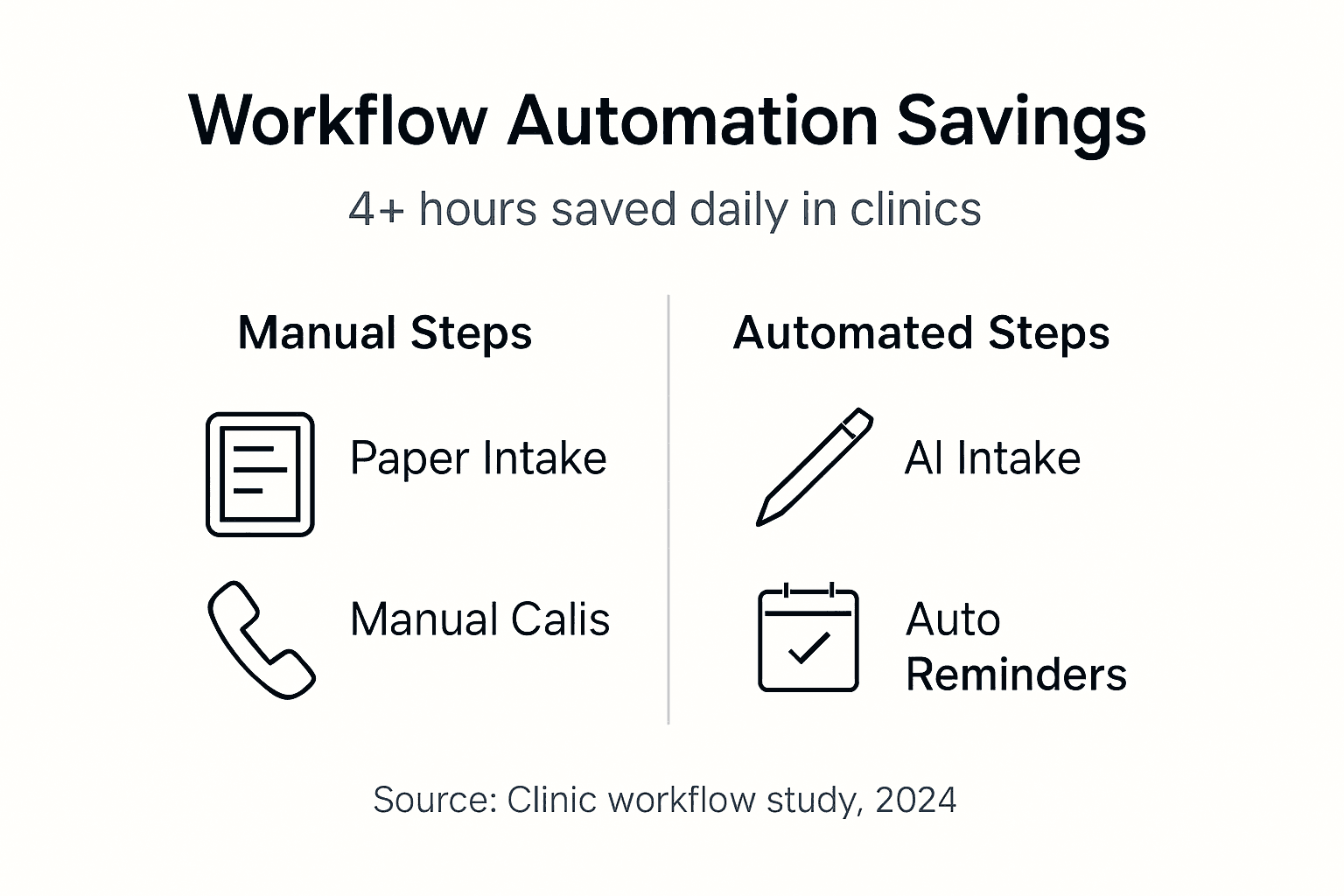
AI-powered workflow automation saves over 4 hours daily in administrative time. This represents 20+ hours weekly that shift from documentation to patient care, practice development, or personal time. The efficiency gain compounds as your patient volume grows.
Patient adherence improves significantly with consistent automated communication. Patient appointment adherence improves by over 20% with automated communications. Better adherence translates to improved outcomes, higher patient satisfaction, and increased practice revenue through reduced no-shows.
Data quality and accessibility enhance clinical decision-making. Data quality improves by 64%, enabling faster, more accurate decisions. Structured digital data supports better pattern recognition across your patient population, informing protocol refinements.
| Performance Metric | Baseline (Manual) | With Automation | Improvement |
|---|---|---|---|
| Daily Admin Time | 4-6 hours | 1-2 hours | 4+ hours saved |
| Appointment Adherence | 65-75% | 85-95% | 20%+ increase |
| Data Quality Score | 60-70% | 95-99% | 64% improvement |
| Care Plan Creation Time | 45-60 minutes | 10-15 minutes | 75% reduction |
"The transition to AI-powered workflows transformed our practice. We now see 30% more patients without extending hours, and our clinical outcomes have never been better. The time savings allow deeper patient relationships rather than rushing through appointments."
These clinical outcome improvements extend beyond efficiency. Clinician burnout decreases when administrative burden lifts. Patient satisfaction rises with better communication and personalized care. Practice profitability increases through higher patient volume and retention.
Expect a 3-6 month adjustment period before realizing full benefits. Initial implementation requires time investment for training and workflow refinement. However, time savings with AI automation begin within weeks as each component activates.
The data quality improvements with AI support long-term practice growth. Better data enables outcome tracking, protocol optimization, and evidence-based refinements that elevate your clinical effectiveness over time.
Transform Your Practice with Meelio AI Assistant
Efficient workflow automation requires specialized tools designed for integrative and functional medicine complexity. The Meelio AI Assistant platform delivers protocol-specific automation that understands frameworks like Bredesen, Shoemaker, and Wahls.
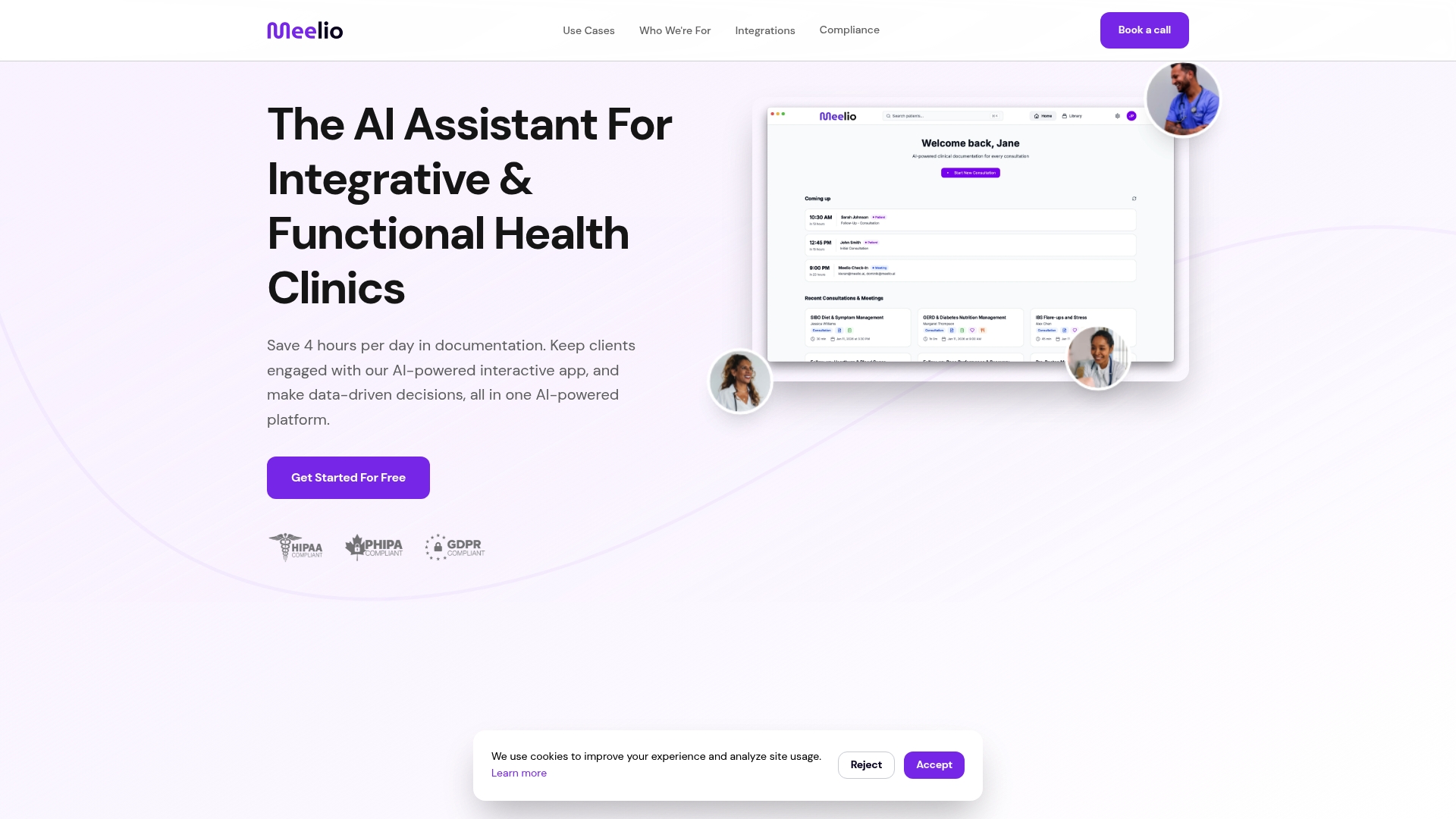
Meelio automates personalized care plan generation based on comprehensive patient data analysis. It creates customized nutrition recommendations and complete meal plans aligned with treatment protocols. Longitudinal lab analysis tracks patient progress automatically, highlighting trends that inform protocol adjustments.
Seamless integration with Practice Better and Cerbo means no data silos or duplicate entry. Your existing workflows enhance rather than disrupting practice operations. Join practices already saving 4+ hours daily while improving patient outcomes through intelligent automation designed specifically for functional medicine.
Frequently Asked Questions
Does AI replace the clinician in patient care?
No, AI augments clinical expertise rather than replacing it. Automation handles repetitive administrative tasks, freeing clinicians to focus on complex decision-making and patient relationships. You maintain full control over treatment decisions while AI provides data analysis and workflow efficiency.
What technical skills are needed before adopting workflow automation?
Basic computer literacy and familiarity with your current EHR system are sufficient. Most automation platforms feature intuitive interfaces requiring minimal technical knowledge. Comprehensive vendor training and ongoing support help staff adapt quickly regardless of technical background.
How quickly can I expect to save time after automation?
Initial time savings appear within 2-4 weeks as automated intake and documentation activate. Full efficiency gains materialize after 3-6 months once all workflow components integrate and staff achieve proficiency. Early wins in documentation time build momentum for broader adoption.
Can automation handle complex integrative medicine protocols?
Yes, specialized platforms like Meelio are built specifically for integrative medicine complexity. They understand nuanced protocols, multi-system interactions, and personalized treatment approaches that generic automation cannot address. Protocol-specific intelligence ensures recommendations align with functional medicine principles.
How does automation improve patient adherence?
Automated communications maintain consistent patient engagement between visits. Timely reminders, educational content, and symptom tracking prompts keep treatment protocols top of mind. This consistency improves adherence by over 20%, leading to better outcomes and higher patient satisfaction with minimal clinician effort.