EHR in functional health: automate care plans in 2026
Discover how specialized EHR systems automate care plans and personalize functional health strategies in 2026. Evidence-based guide for practitioners seeking better patient outcomes through AI-powered clinical workflows.

Many functional health practitioners think electronic health records are just digital filing cabinets. That's a costly misconception. Specialized EHR systems built for integrative medicine can automate complex care plans, personalize nutrition strategies, and integrate longitudinal lab data to transform patient outcomes. This guide reveals how to leverage EHR capabilities beyond basic documentation, showing you practical steps to save hours daily while delivering precision care your patients deserve in 2026.
Table of Contents
- Understanding Functional Health EHR Systems And Automation
- Evidence Of EHR Impact On Clinical Outcomes In Functional And General Health
- Challenges And Limitations Of EHR In Functional Health Practices
- Implementing EHR Effectively For Personalized Functional Health Care
- Enhance Your Practice With Meelio's AI-Powered EHR Solutions
- Frequently Asked Questions About EHR In Functional Health
Key takeaways
| Point | Details |
|---|---|
| Automation transforms workflows | Functional health EHRs reduce care plan drafting time by up to 70% through AI-assisted templates and supplement ordering. |
| Evidence supports better outcomes | Advanced EHR use correlates with 4.2-11.7 points higher process scores and 17-30% lower adverse event odds. |
| Data quality remains critical | Up to 80% missing data rates and 82% copy-paste errors can undermine clinical decisions if not addressed. |
| Integration unlocks precision care | Future EHR systems will incorporate genomic and wearable data for truly personalized functional health strategies. |
Understanding functional health EHR systems and automation
Functional medicine demands more than standard record-keeping. Your patients present with complex chronic conditions requiring multi-system interventions, customized supplement protocols, and ongoing lab monitoring. Generic EHR platforms built for conventional primary care can't handle this complexity.
Specialized functional health EHR systems tailored for functional medicine enable automated care plans through customizable templates, supplement ordering, lab integrations, and AI-assisted plan generation. These platforms support treatment modalities like IV therapies, injection protocols, and nutraceutical regimens that general EHRs ignore. Integration with over 50 laboratory partners means test results flow directly into patient charts without manual data entry.
AI reduces care plan drafting time by up to 70%, letting you focus on clinical reasoning instead of administrative tasks. The technology analyzes patient history, current symptoms, and lab values to suggest protocol-specific interventions aligned with frameworks like Bredesen or Wahls. You review and approve recommendations rather than building plans from scratch.
Automation extends beyond initial care plans. Modern systems track supplement adherence, flag abnormal lab trends, schedule follow-up testing, and generate patient education materials automatically. Longitudinal monitoring becomes manageable even with large patient panels. AI in functional medicine continues advancing these capabilities.
Pro Tip: Customize templates extensively to align with your unique functional protocols for best results. Generic templates won't capture your clinical approach, so invest time upfront configuring the system to match how you actually practice.
- Customizable treatment templates for complex therapies
- Seamless integration with 50+ laboratory partners
- AI-assisted care plan generation saving 70% drafting time
- Automated supplement ordering and patient education
- Longitudinal lab tracking with trend analysis
Evidence of EHR impact on clinical outcomes in functional and general health
Skeptics question whether EHR technology actually improves patient outcomes or just creates digital busywork. Research provides nuanced answers worth understanding as you evaluate systems.
Advanced EHRs linked to 4.2-11.7 points higher process scores and 17-30% lower odds of adverse events across multiple studies. Process measures include medication reconciliation accuracy, appropriate screening completion, and timely preventive care delivery. These improvements directly impact safety and quality metrics that matter for functional health practices.

Mortality effects show more complexity. EHR adoption associated with 8-18% decreases in mortality composites for certain procedures and conditions, demonstrating potential outcome benefits. However, some studies found no significant impact on specific readmission or mortality metrics, indicating that technology alone doesn't guarantee better results.
The variability makes sense when you consider implementation quality. An EHR poorly configured for functional medicine workflows may increase errors rather than prevent them. Systems lacking decision support for nutrient interactions or herb-drug contraindications could miss critical safety issues.
EHRs have reduced adverse events by up to 30%, enhancing clinical safety despite mixed outcome evidence.
What does this mean for your practice? EHR technology enables better care when implemented thoughtfully. The systems excel at preventing medication errors, ensuring complete documentation, and flagging potential safety issues. Outcome improvements depend on how well the platform supports your specific clinical workflows and whether it provides relevant decision support for functional health interventions. Patient-centered care functional medicine guide explores how technology supports this approach.
| Metric | Impact Range | Clinical Significance |
|---|---|---|
| Process scores | +4.2 to +11.7 points | Better adherence to clinical protocols |
| Adverse events | 17-30% reduction | Fewer medication errors and safety issues |
| Mortality rates | 8-18% decrease | Varies by condition and implementation |
| Readmissions | Mixed results | Depends on care coordination quality |
Challenges and limitations of EHR in functional health practices
EHR technology promises efficiency but delivers frustration when poorly designed or inadequately maintained. Understanding common pitfalls helps you avoid them.
Poor interoperability and data quality issues cause up to 80% missing data rates and medication errors contributing 34% of total errors. When labs don't integrate seamlessly or patient history transfers incompletely between systems, you're forced into manual workarounds that defeat automation benefits. Missing supplement histories or incomplete previous provider notes create dangerous knowledge gaps.
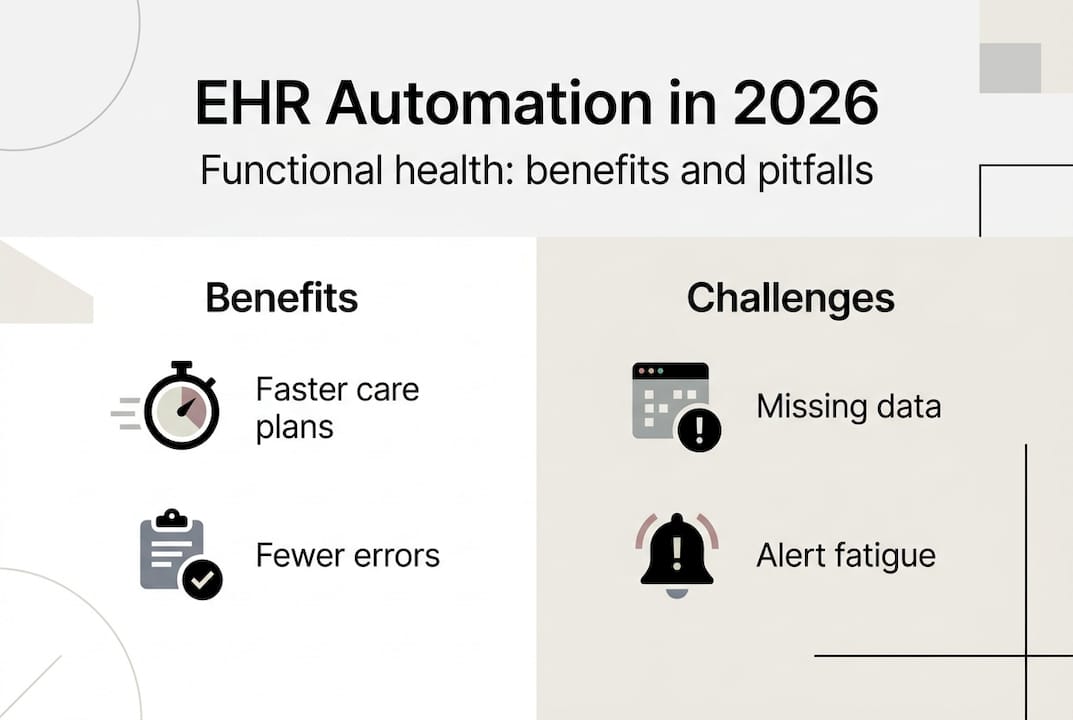
Non-random missingness and copy-paste errors up to 82% contribute to incorrect clinical decisions. Clinicians copying forward previous notes without updating create documentation that looks complete but contains outdated or inaccurate information. AI tools trained on this flawed data propagate errors at scale.
Medication errors constitute a significant portion of EHR-associated clinical mistakes. Alert fatigue from excessive notifications causes practitioners to override legitimate warnings. Systems lacking functional medicine drug databases miss important interactions between pharmaceuticals and high-dose nutrients or botanical medicines.
User interface complexity and workload burdens reduce clinician efficiency rather than improving it. Poorly designed screens require excessive clicking to complete routine tasks. Mandatory fields irrelevant to functional health practice create documentation burden without clinical value. You spend more time satisfying the system than caring for patients.
AI tools face limitations understanding nuanced contexts, sometimes amplifying biases present in training data. An algorithm trained primarily on conventional medicine cases may suggest inappropriate interventions for functional health patients. Context-specific clinical reasoning still requires human expertise.
Pro Tip: Regularly audit your EHR data for quality and customize the system to reduce error-prone workflows. Monthly reviews of documentation patterns help identify copy-paste problems before they compromise care. Efficient patient management workflow strategies address these challenges.
- High rates of missing data degrade reliability
- Copy-paste errors up to 82% create inaccurate records
- Alert fatigue causes override of legitimate warnings
- Interface complexity increases workload burden
- AI limitations with functional medicine context
Implementing EHR effectively for personalized functional health care
Maximizing EHR benefits requires strategic implementation focused on your specific practice needs and patient population.
Start with thorough needs assessment. Map your current clinical workflows from initial consultation through ongoing care management. Identify repetitive tasks suitable for automation and documentation pain points causing inefficiency. Evaluate which lab partners and supplement vendors you use most frequently to prioritize integration requirements.
Select a platform built specifically for functional or integrative medicine rather than adapting general systems. Generic EHRs lack templates for IV nutrient protocols, botanical medicine prescribing, or complex elimination diets. You'll waste countless hours trying to force conventional software to support functional workflows.
Invest heavily in customization and training. Configure templates to match your protocols exactly, including dosing ranges, contraindication checks, and patient education materials. Train your entire team on efficient system use, not just basic navigation. Poor training guarantees continued inefficiency regardless of platform capabilities.
Incorporate emerging data sources to unlock next-level personalization. Future EHR integration will include post-genomics data and wearables to drive true precision care with user-centered design. Systems accepting continuous glucose monitor data, sleep tracking, and activity metrics enable real-time protocol adjustments based on objective patient response.
- Conduct comprehensive workflow analysis identifying automation opportunities
- Select functional medicine-specific EHR platform with relevant integrations
- Customize templates extensively to match your clinical protocols
- Train entire team thoroughly on efficient system use
- Integrate emerging data sources like genomics and wearables
- Establish regular data quality audits and system optimization reviews
Automating routine tasks frees clinician time for direct patient care and complex diagnostics. Let the system handle supplement reordering, routine lab scheduling, and standard patient education. You focus on clinical reasoning, complex case analysis, and therapeutic relationship building that actually require your expertise.
Pro Tip: Prioritize user-centered design and seamless integration to enhance practitioner acceptance and accuracy. Systems that feel intuitive get used properly, while clunky interfaces get circumvented through workarounds that undermine data quality.
| Feature | Traditional EHR | Functional Health EHR |
|---|---|---|
| Treatment templates | Standard medication prescribing | IV nutrients, botanicals, complex protocols |
| Lab integration | Basic chemistry panels | 50+ specialty functional labs |
| Decision support | Drug interactions only | Nutrient-drug-herb interactions |
| Care plan automation | Limited to medications | Comprehensive lifestyle interventions |
| Data sources | Clinical visits only | Wearables, genomics, continuous monitoring |
Explore resources like AI in functional medicine, automation in healthcare, and clinical intelligence AI 2026 for deeper implementation guidance. External perspectives on personalized nutrition checklist adherence tips complement EHR-based approaches.
Enhance your practice with Meelio's AI-powered EHR solutions
You've seen how specialized EHR systems transform functional health practices through automation and personalization. Now consider a platform built specifically for practitioners like you.
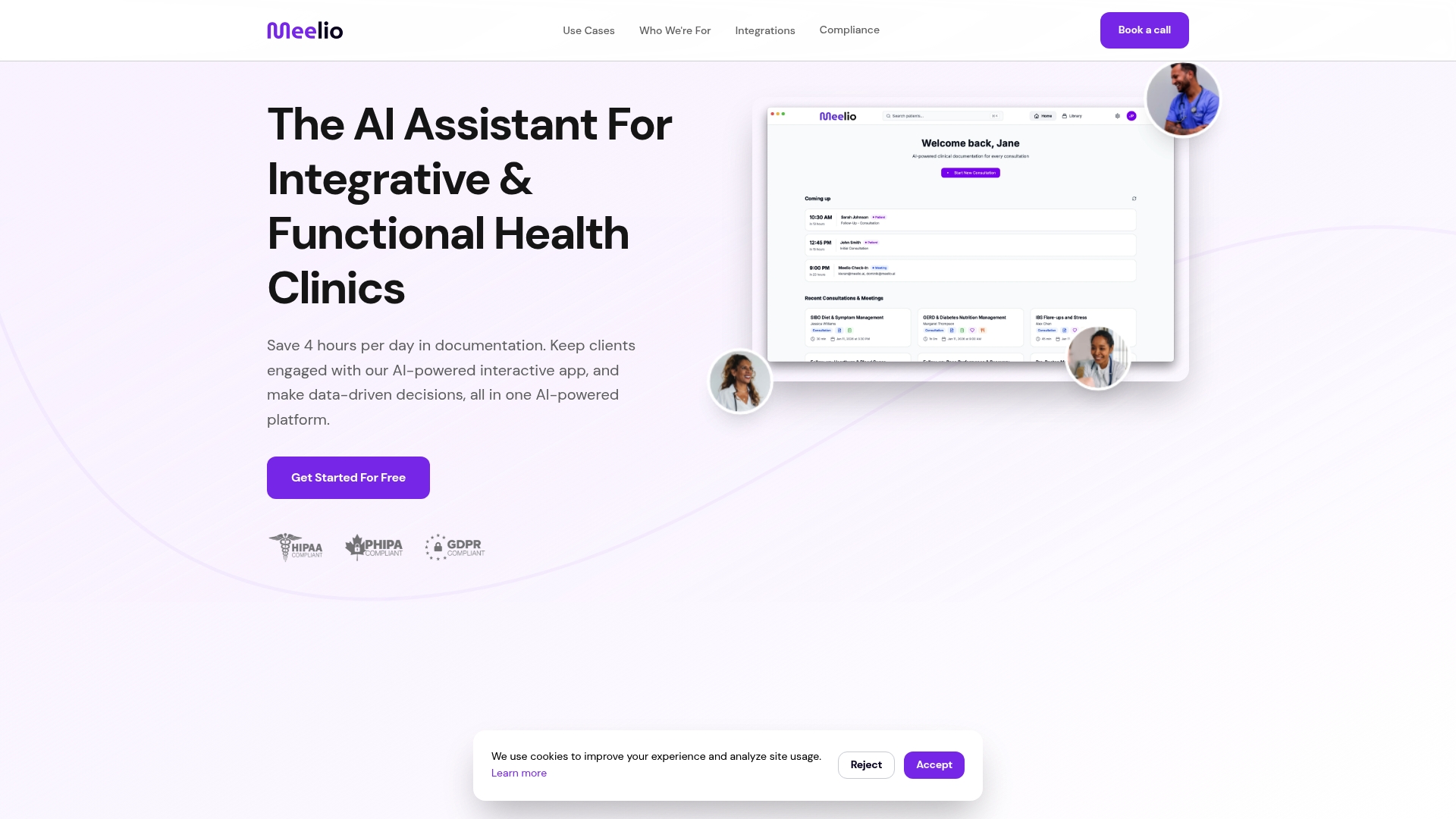
Meelio delivers AI-powered clinical workflow automation designed exclusively for integrative and functional health. Our platform goes beyond generic scribes to provide protocol-specific intelligence for complex frameworks like Bredesen, Shoemaker, and Wahls. AI care plans generate comprehensive interventions in minutes, not hours, while AI meal planning creates personalized nutrition strategies that patients actually follow. Integration with Practice Better and Cerbo means seamless workflow within your existing systems. Practitioners using Meelio save over 4 hours daily while improving patient outcomes through automated longitudinal lab analysis and personalized supplement recommendations. Stop spending your expertise on administrative tasks and start delivering the precision care your patients need.
Frequently asked questions about EHR in functional health
What makes an EHR system suitable for functional health?
Suitable systems include customizable templates for complex interventions like IV therapies and botanical protocols, integration with specialty functional labs, and decision support covering nutrient-drug-herb interactions. Generic EHRs built for conventional primary care lack these essential features, forcing workarounds that waste time and increase error risk.
How does EHR automation impact patient engagement?
Automation enables personalized patient education materials, timely follow-up reminders, and clear care plan documentation that patients can access anytime. When you spend less time on administrative tasks, you have more energy for meaningful patient interactions that build trust and motivation. Functional health assessment checklist approaches benefit from this efficiency.
What are common pitfalls when integrating EHR in functional practices?
Practices often select generic platforms requiring extensive customization, underinvest in team training, or fail to configure decision support for functional medicine interventions. Poor lab integration forces manual data entry that defeats automation benefits. Inadequate ongoing system optimization allows workflows to drift back toward inefficiency over time.
How is AI shaping the future of functional health records?
AI analyzes complex patient data to suggest protocol-specific interventions, predict treatment responses, and identify subtle patterns humans might miss. Future systems will integrate genomic data, continuous wearable monitoring, and environmental exposure tracking to enable true precision medicine. The technology handles pattern recognition while you provide clinical judgment and therapeutic presence.
Can wearable and genomic data be included in EHR workflows?
Advanced platforms already integrate continuous glucose monitors, sleep trackers, and activity data into patient records. Genomic integration remains emerging but shows promise for pharmacogenomic guidance and personalized nutrient recommendations. The key is selecting systems designed for this complexity rather than trying to force conventional EHRs to accept novel data types.