6 Steps to a Smarter Functional Health Assessment Checklist
Discover 6 essential steps for building a functional health assessment checklist that elevates personalized care planning for practitioners and dietitians.

Sifting through patient assessments can feel endless when you want more than just a checklist. You need real answers that actually inform better care decisions, not just paperwork. The challenge is making your intake process both thorough and truly useful for tailored, person-centered care.
This guide breaks down the exact steps proven to boost your functional health assessments. From pinpointing which health domains really matter to harnessing the latest AI tools, you’ll discover strategies that help uncover the full story behind each patient’s health. Get ready to find practical, actionable ideas that will turn your assessment process into a powerful tool for personalized care success.
Table of Contents
- 1. Identify Core Assessment Domains For Functional Health
- 2. Incorporate Patient-Centered Intake Questions
- 3. Leverage AI Tools For Personalized Care Insights
- 4. Integrate Lab Data And Longitudinal Tracking
- 5. Streamline Checklist Integration With EHRs
- 6. Use Actionable Flags For Protocol-Specific Care
Quick Summary
| Key Message | Explanation |
|---|---|
| 1. Identify Core Assessment Domains | Establish clear functional health domains to enhance patient evaluations and improve clinical insights. |
| 2. Use Patient-Centered Intake Questions | Tailor questions to gather deeper understanding of patient challenges beyond mere symptoms. |
| 3. Leverage AI for Data Insights | Utilize AI tools to analyze patient data, streamlining your clinical decision-making process. |
| 4. Track Longitudinal Lab Data | Regularly compare lab results over time to identify trends and adjust treatments effectively. |
| 5. Implement Actionable Flags | Create flags linked to specific protocols for timely clinical interventions based on assessment findings. |
1. Identify Core Assessment Domains for Functional Health
The foundation of any strong functional health assessment starts with knowing exactly what to measure. Without identifying your core assessment domains upfront, you'll spend time collecting irrelevant data and miss the clinical insights your patients actually need.
Think of assessment domains as the major pillars supporting your patient's overall health picture. Each domain captures a different aspect of how your patient functions in daily life and what factors influence their wellbeing.
What Are Core Assessment Domains?
Core assessment domains represent the key functional and health areas you need to evaluate for comprehensive patient understanding. Research on functional assessment frameworks identifies several critical domains that should anchor your practice:
- Bodily functions including sleep, pain, energy levels, and sensory systems
- Daily functioning spanning both activities of daily living and instrumental activities of daily living
- Mental wellbeing covering mood, cognition, and behavioral patterns
- Quality of life reflecting the patient's subjective experience and satisfaction
- Participation and social engagement showing community involvement and relationships
- Meaningfulness capturing purpose, values, and life satisfaction
Each domain tells a different story about your patient's health status.
Identifying the right domains prevents assessment bloat while capturing what actually matters for clinical decision-making.
Why does this matter? When you clearly define your assessment domains, you create a standardized framework that improves consistency across patient evaluations. This means you can track progress more accurately, benchmark outcomes against clinical standards, and share meaningful data with other providers in your patient's care network.
Translating Domains Into Your Practice
Your job is to map these conceptual domains onto your actual patient intake process. Start by auditing your current assessment tool and asking which domains it covers well and which ones you're missing.
Most practitioners find they're strong in physical and functional assessment but weaker in meaningfulness and participation. This gap often explains why patients report feeling better even when clinical markers improve modestly.
Consider using AI-enhanced assessment tools that prompt you systematically through each domain rather than relying on memory or habit. The goal is ensuring no critical domain gets overlooked simply because you forgot to ask.
Pro tip: Map your assessment questions directly to specific domains, then color-code them to identify coverage gaps and ensure balanced evaluation across all areas.
2. Incorporate Patient-Centered Intake Questions
Generic intake forms miss the story your patients actually need to tell. Patient-centered questions transform your assessment from a checkbox exercise into a genuine dialogue that uncovers the root causes of their health challenges.
The difference between standard questions and patient-centered ones is simple: one gathers data, while the other gathers meaning. When you ask about your patient's day-to-day life rather than just symptoms, you discover what truly matters to them and what barriers they face.
Why Questions Matter More Than Forms
Your questions shape what you discover. When you focus solely on symptoms, you miss the environmental factors, lifestyle patterns, and personal priorities that drive health outcomes. Patient-centered intake questions open doors to understanding the full context of your patient's life.
Structured patient-centered intake questions are essential for building a complete clinical picture that supports root-cause analysis and personalized care planning. These questions extend beyond medical history to capture lifestyle inventories, environmental exposures, and what your patient actually wants to achieve.
Asking the right questions transforms assessment from diagnosis-focused to outcome-focused.
The intake phase sets the entire trajectory of your functional medicine work. When you invest time in thoughtful questioning, you build trust while gathering the rich data your clinical reasoning needs.
Core Question Categories to Master
Your patient-centered intake should systematically cover these essential areas:
- Nutrition and digestion including eating patterns, food sensitivities, and digestive symptoms
- Sleep and energy capturing quality, duration, and daytime fatigue patterns
- Movement and mobility exploring exercise capacity, pain patterns, and functional limitations
- Cognitive and mental health addressing focus, mood, stress, and emotional patterns
- Elimination and hydration examining bathroom habits, urinary patterns, and fluid intake
- Social and environmental factors understanding relationships, work stress, and home environment
- Personal priorities and goals clarifying what success looks like for this specific patient
Each category reveals different pieces of your patient's functional health puzzle.
Turning Questions Into Clinical Insights
The art is asking follow-up questions that dig deeper without feeling like interrogation. When a patient mentions poor sleep, you might ask what time they typically wake, whether they feel rested, and how sleep disruptions affect their daily function.
These layered questions help you distinguish between primary sleep disorder and secondary effects from inflammation, caffeine sensitivity, or circadian rhythm disruption. That distinction changes your entire treatment approach.
Pro tip: Record patient responses systematically during intake so you can build longitudinal timelines and track how symptoms evolve with interventions over time.
3. Leverage AI Tools for Personalized Care Insights
Manually analyzing patient data across multiple sources is time-consuming and prone to oversight. AI tools transform scattered health information into actionable clinical insights that guide personalized care decisions.
Think about what happens when you try to synthesize genetics, lab results, lifestyle factors, and patient history all at once. Your brain has to juggle dozens of variables simultaneously. AI excels exactly where human cognition struggles—processing multidimensional datasets and identifying patterns that inform treatment decisions.
How AI Powers Personalized Medicine
Modern AI in functional medicine does far more than store data. It actively analyzes and interprets complex information to support your clinical reasoning and reduce the likelihood of missing critical connections.
AI can integrate multidimensional patient data including genetics, lifestyle factors, lab results, and wearable device information to enable data-driven, predictive treatment plans. These systems learn from your patient's unique context and adapt recommendations as new information emerges.
AI doesn't replace clinical judgment—it amplifies it by handling the computational heavy lifting.
When you're managing complex cases with interconnected health factors, AI becomes your research assistant. It identifies relevant lab correlations, tracks symptom patterns over time, and surfaces insights you might otherwise miss.
Practical Applications in Your Practice
Here's where AI actually helps your daily work:
- Data extraction and timeline building from lengthy patient narratives and medical histories
- Lab value integration automatically connecting results to symptoms and clinical patterns
- Personalized protocol recommendations based on your patient's specific presentation and goals
- Treatment monitoring tracking how interventions affect multiple health domains over time
- Medication and supplement interactions ensuring safety across complex regimens
- Patient engagement through adaptive recommendations that evolve with progress
The best AI tools work invisibly behind your clinical decisions, presenting synthesized insights exactly when you need them.
Building Your AI-Enabled Assessment Process
Start by identifying which parts of your assessment take the most time. Is it organizing patient history? Comparing lab values across years? Synthesizing lifestyle data with clinical findings?
That's where AI provides the biggest return on investment. Tools that process intake questionnaires, extract key data points, and build visual timelines save you hours per week while improving assessment quality.
The goal isn't to let AI make decisions—it's to give you back time for what only you can do: interpret findings in context, build rapport with patients, and make nuanced clinical decisions.
Pro tip: Start with AI tools that integrate directly into your existing workflow rather than requiring separate data entry, so adoption feels natural and doesn't create extra work.
4. Integrate Lab Data and Longitudinal Tracking
A single lab result tells you almost nothing. The real diagnostic power emerges when you compare results across months and years, watching how interventions shift biomarkers and how patterns reveal underlying dysfunction.
Longitudinal lab tracking transforms isolated numbers into a meaningful story about your patient's metabolic trajectory and response to treatment. Without this perspective, you're making decisions based on snapshots instead of trends.
Why Trends Matter More Than Numbers
Your patient's glucose level of 102 mg/dL means something different if it was 95 last year versus 118. Context determines clinical significance. Longitudinal data reveals whether you're moving in the right direction or whether your current approach needs adjustment.
When you integrate lab data across time, you enable real-time decision support and predictive analytics that guide treatment optimization. Automation reduces manual errors while allowing you to spot patterns human review might miss.
Trends reveal root causes; isolated values only suggest symptoms.
The challenge most practitioners face is technical. Labs send results in different formats, patients test at different facilities, and manually organizing years of data becomes overwhelming. This is where integration systems prove invaluable.
What You Can Track Longitudinally
Build a tracking system for markers most relevant to your patient populations:
- Metabolic markers including glucose, insulin, lipid panels, and inflammatory markers
- Micronutrient levels tracking iron, B12, vitamin D, and magnesium across seasons
- Thyroid function monitoring TSH, free T4, free T3, and antibodies over time
- Liver and kidney function ensuring safety during long-term supplement protocols
- Inflammatory biomarkers like hsCRP and homocysteine showing treatment response
- Functional markers such as cortisol patterns and hormone levels reflecting system recovery
Each marker tells part of your patient's metabolic story.
Building Your Tracking System
Start simple. Choose your most clinically important markers and standardize where patients test when possible. Request results in digital format rather than paper copies.
Use tools that automatically organize lab results chronologically and flag meaningful changes. The goal is spending less time on data management and more time on clinical interpretation.
When you can see that your patient's CRP dropped 40% over six months while energy improved, that's concrete evidence your protocol works. That data also guides whether to adjust, maintain, or modify your approach.
Pro tip: Set up automated alerts for concerning trends so you catch metabolic shifts early, allowing preventive adjustments before they become clinical problems.
5. Streamline Checklist Integration with EHRs
Manual data entry between your assessment checklist and electronic health record creates friction, wastes time, and introduces errors. When your checklist integrates directly with your EHR, assessment data flows seamlessly into clinical documentation and decision-making.
Integration transforms your assessment from an isolated exercise into part of your actual clinical workflow. Your checklist becomes not just a tool you use, but a system that actively supports your practice.
Why EHR Integration Matters
Your patients don't care about your backend systems. They care about getting excellent care efficiently. When your checklist data lives in your EHR, you eliminate redundant data entry and ensure consistency across all clinical interactions.
Effective EHR integration streamlines healthcare delivery by enabling seamless data access and exchange while enhancing clinical decision-making and coordination across providers. When assessment data integrates properly, you reduce administrative burden and free up time for actual patient care.
Integrated systems compound benefits: better data quality, faster workflows, stronger clinical decisions.
Without integration, your assessment checklist remains siloed. With it, every finding automatically populates your clinical notes, treatment plans, and patient communication. That's a fundamental shift in efficiency.
Integration Challenges and Solutions
Most practitioners face real obstacles when attempting EHR integration:
- Data format incompatibility between checklist systems and EHR platforms
- Interoperability limitations when using multiple disconnected systems
- User training requirements so staff understand the integrated workflow
- Data privacy concerns ensuring patient information stays secure
- Customization needs fitting standardized EHRs to your specific protocols
These challenges are solvable when you select platforms designed for integration from the start.
Implementing Integration Successfully
Start by auditing your current workflow. Where do you lose time transferring data between systems? Which findings from your checklist never make it into your EHR?
Then evaluate whether your EHR supports modern integration standards. Systems built on interoperable architectures can exchange data reliably with assessment tools, lab systems, and wearable devices.
When your checklist feeds directly into visit summaries, care plans, and outcome tracking, you create a closed feedback loop. You can see whether checklist findings correlate with treatment response, continuously improving your assessment accuracy.
Pro tip: Choose assessment tools that work with your existing EHR rather than forcing your practice into new systems, since adoption depends on minimal workflow disruption.
6. Use Actionable Flags for Protocol-Specific Care
Assessment findings mean nothing if they don't trigger action. Actionable flags transform your checklist from passive documentation into an active care management tool that automatically signals when specific protocols need activation.
Think of flags as your clinical alarm system. When assessment data meets certain criteria, the flag fires and tells you exactly what intervention your patient needs right now.
How Flags Automate Clinical Decision-Making
Your functional health assessment generates dozens of data points. Without flags, you must mentally process every finding and decide what it means. With protocol-specific flags, your system does that thinking for you.
Flags act as actionable alerts tied to specific protocols, indicating urgent issues, warnings, or informational needs that guide necessary care activities. When configured correctly, flags eliminate the gap between assessment and action.
Flags transform assessment findings into automatic clinical prompts.
Consider a patient with severe sleep disruption, low vitamin D, and elevated inflammatory markers. Without flags, you collect this data and hope you remember to prioritize sleep protocol intervention. With flags, the system immediately signals that this patient needs your sleep restoration protocol.
Examples of Protocol-Specific Flags
Your flags should map directly to the frameworks and protocols your practice uses:
- Energy and mitochondrial flags triggering when fatigue scores exceed threshold or multiple mitochondrial markers are compromised
- Gut barrier flags activating when digestive symptoms and food sensitivities reach specified levels
- Detoxification protocol flags signaling when liver markers, environmental exposure history, and symptom load suggest need for support
- Inflammatory cascade flags prompting anti-inflammatory protocol initiation when hsCRP, homocysteine, or tissue-specific inflammation markers elevate
- Hormonal balance flags indicating when cortisol patterns or sex hormone imbalances require targeted intervention
- Cognitive support flags activating when memory, focus, or neuroinflammatory indicators suggest need for neuroprotective protocols
Each flag connects assessment findings to your specific clinical protocols.
Building Your Flag System
Start by listing your core protocols. What are the main interventions your practice delivers? For each protocol, identify which assessment findings should trigger its initiation.
Then set thresholds. A single elevated marker doesn't always warrant protocol intervention. But a combination of findings or a severe single finding should. Define these decision rules clearly so your flags remain clinically meaningful.
Flags only work when they're trusted. If your system generates false alarms constantly, clinicians stop paying attention. Build flags conservatively at first, then expand as you validate their predictive accuracy.
Pro tip: Test your flag logic against 20-30 recent patient cases to ensure flags accurately predict when you'd actually initiate each protocol.
Below is a comprehensive table summarizing the article's main points about strategies for conducting functional health assessments effectively and systematically.
| Procedure | Key Implementation Strategies | Benefits |
|---|---|---|
| Identify Core Assessment Domains | Determine essential categories like bodily functions, mental wellbeing, and quality of life. | Enhances consistency and captures clinically relevant data. |
| Use Patient-Centered Questions | Develop intake queries focused on daily life aspects, barriers, and personal goals. | Builds trust and gathers meaningful context for personalized care planning. |
| Leverage AI Tools | Incorporate AI for data analysis across multiple health dimensions to identify patterns. | Saves time, improves accuracy, and supports evidence-based decision-making. |
| Integrate Longitudinal Lab Tracking | Monitor biomarkers over time to assess trends versus isolated results. | Enables dynamic treatment optimization by evaluating intervention success. |
| Streamline Checklist Integration | Integrate assessments directly with EHR systems for seamless data incorporation. | Reduces administrative workload and increases workflow efficiency. |
| Develop Actionable Flags | Create threshold-based flags tied to specific protocols, enabling responsive interventions. | Ensures timely and focused clinical responses to changes in patient health data. |
Transform Your Functional Health Assessments with AI-Powered Precision
The article highlights the challenge of managing complex, multidimensional assessments without wasting time on irrelevant data or missing critical clinical insights. You face common pain points like fragmented lab data, manual integration struggles with EHRs, and the need for actionable flags that drive protocol-specific care decisions. Concepts such as core assessment domains, patient-centered intake questions, AI-enhanced analysis, and seamless checklist integration are all essential but overwhelming to execute consistently.
Meelio offers the solution you need to overcome these obstacles and elevate your practice. Our AI-driven clinical workflow platform automates longitudinal lab tracking, integrates effortlessly with EHRs like Practice Better and Cerbo, and generates personalized care plans based on trusted protocols including Bredesen and Wahls. Imagine saving 4+ hours daily while confidently leveraging actionable flags and standardized assessment domains to deliver truly personalized care.
Unlock smarter workflows and better patient outcomes today with Meelio.
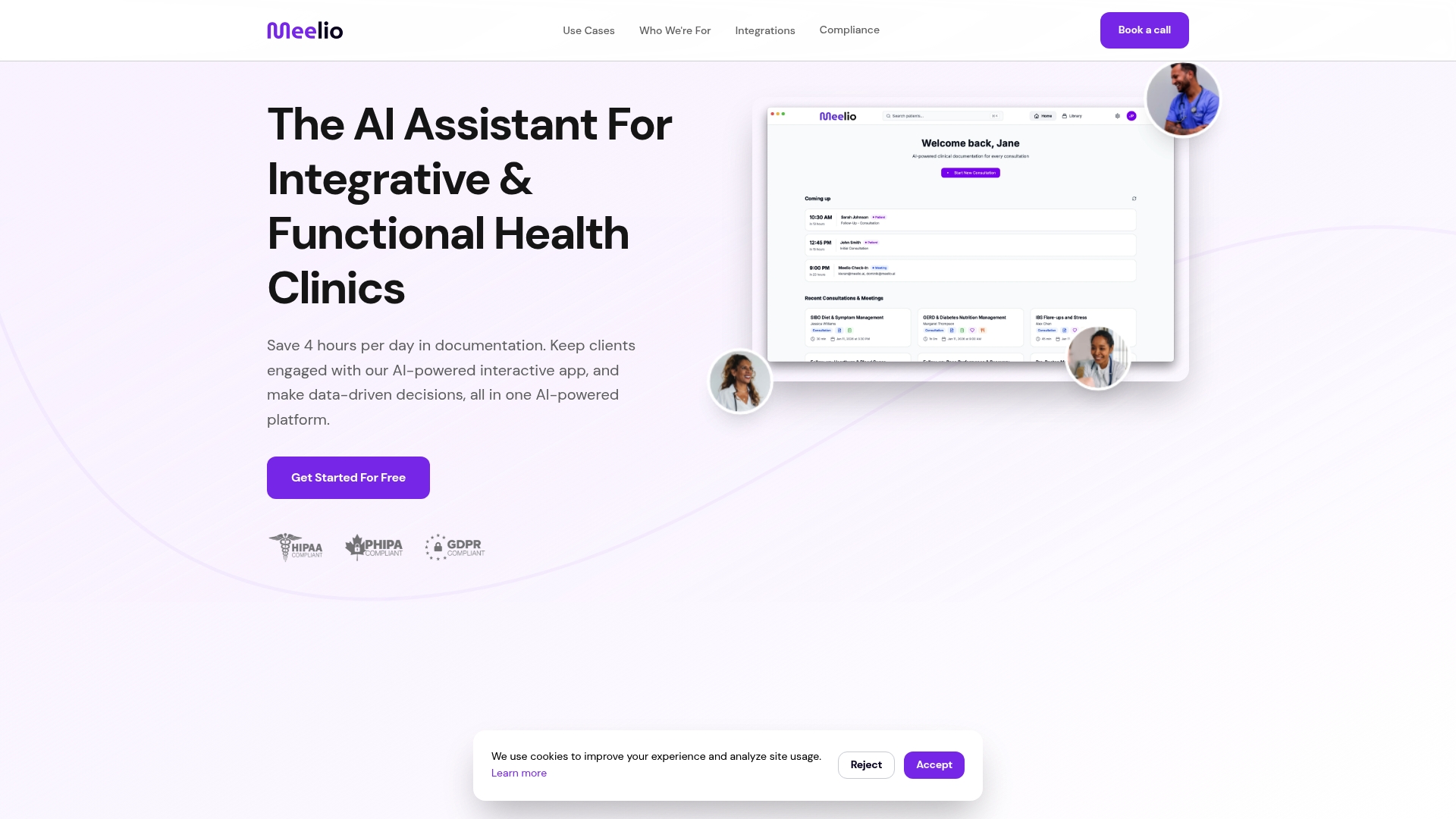
Ready to automate your complex assessments and bring effortless precision to your functional medicine practice Visit https://meelio.ai now to discover how you can integrate advanced AI tools that save time and improve clinical decision-making.
Frequently Asked Questions
What are core assessment domains in functional health?
Core assessment domains are key areas of health and functioning that need evaluation for a comprehensive understanding of a patient's well-being. Identify these domains early to ensure you gather relevant data for clinical decision-making and avoid unnecessary complexity in assessments.
How can I incorporate patient-centered questions into my health assessments?
Incorporate patient-centered questions by focusing on lifestyle, environmental factors, and personal goals rather than just medical history and symptoms. This approach will deepen your understanding of the patient's context and uncover root causes of their health challenges, significantly enhancing the assessment process.
What role do AI tools play in improving functional health assessments?
AI tools analyze complex patient data to extract actionable insights that simplify clinical decision-making. By utilizing these tools, you can track symptoms, trends, and treatment responses more efficiently, allowing you to personalize care plans effectively and save time in your assessments.
Why is longitudinal tracking of lab data important in functional health?
Longitudinal tracking of lab data provides a clearer picture of a patient's health trends over time rather than relying on isolated results. Start by standardizing how you collect and review lab data to monitor changes that inform treatment adjustments and improve patient outcomes continuously.
How can I integrate my assessment checklist with my electronic health record (EHR)?
Integrate your assessment checklist with your EHR by selecting systems that support modern interoperability standards. Evaluate your current workflow to identify areas where manual data entry occurs, and aim to streamline these processes for greater efficiency, reducing administrative burdens by at least 30%.