Functional health protocol guide: optimize AI workflows
Learn how AI-powered clinical workflows save 4+ hours daily while improving functional health protocol execution, personalization, and patient outcomes in 2026.

Functional medicine practitioners spend hours manually executing complex protocols like Bredesen, Shoemaker, and Wahls, often leading to errors and patient care delays. AI-powered clinical workflows transform this challenge by automating care plan generation, personalized nutrition recommendations, and longitudinal lab analysis. This comprehensive guide teaches you how to implement AI for superior functional health protocols, saving over 4 hours daily while enhancing patient outcomes through protocol-specific clinical intelligence.
Table of Contents
- Introduction To Functional Health Protocols And AI Integration
- Prerequisites: What You Need Before Starting
- Step-By-Step Guide To Implementing AI-Powered Functional Health Protocols
- Common Mistakes And Troubleshooting In Protocol Execution
- Expected Results And Metrics For Success
- Safety Considerations And Risk Mitigation
- Alternative Approaches And Tradeoffs
- Optimize Your Functional Health Protocols With Meelio AI
- Frequently Asked Questions
Key takeaways
| Point | Details |
|---|---|
| Time savings | AI integration saves over 4 hours daily for clinicians through workflow automation. |
| Personalized care | AI-driven care plans enhance patient adherence by 30% and improve outcomes. |
| Prerequisites matter | Proper EHR integration, staff training, and protocol knowledge are crucial for success. |
| Clinical oversight | Human review remains essential despite AI automation to ensure patient safety. |
| Measurable results | Expect 35% biomarker improvement within 3 to 6 months of implementation. |
Introduction to functional health protocols and AI integration
Functional health protocols represent comprehensive, multi-system approaches to treating complex chronic conditions. Frameworks like Bredesen for cognitive decline, Shoemaker for mold-related illness, and Wahls for autoimmune conditions require practitioners to synthesize vast amounts of patient data, lab results, and lifestyle factors into personalized treatment plans.
The complexity of these protocols creates significant workflow challenges. Practitioners must track dozens of biomarkers, customize nutrition plans, monitor supplement interactions, and adjust interventions based on patient response. Traditional manual approaches consume 5 to 7 hours daily just on documentation and care planning.
Manual data entry errors affect up to 40% of protocol executions, leading to inconsistent patient care and suboptimal outcomes. These inefficiencies force practitioners to choose between thorough protocol execution and seeing adequate patient volume.
AI-supported clinical workflows solve these challenges by automating data analysis, generating evidence-based care plans, and providing real-time protocol guidance. Modern platforms integrate directly with EHR systems, analyze longitudinal lab data, and deliver protocol-specific recommendations that align with functional medicine frameworks. Key automation benefits include:
- Instant synthesis of patient health history and lab results
- Automated generation of personalized nutrition and supplement protocols
- Real-time tracking of biomarker trends and intervention effectiveness
- Intelligent meal planning that accounts for food sensitivities and therapeutic goals
- Streamlined documentation that maintains clinical accuracy
This technology shift enables practitioners to maintain protocol rigor while dramatically improving efficiency and patient care quality.
Prerequisites: what you need before starting
Successful AI implementation requires specific foundational elements. Rushing into automation without proper preparation leads to integration failures and wasted resources.
EHR system compatibility stands as the most critical requirement. Your practice management system must support AI tool integration through API connections or direct data exchange. Popular platforms like Practice Better, Cerbo, and FullScript offer varying levels of AI compatibility. Verify integration capabilities before committing to any AI workflow solution.
Protocol expertise cannot be outsourced to technology. Practitioners must thoroughly understand the functional medicine frameworks they intend to automate. AI enhances execution but relies on clinical judgment to validate recommendations. Your team should demonstrate competency in:
- Interpreting functional lab panels and optimal ranges
- Understanding root cause methodologies
- Recognizing contraindications and supplement interactions
- Customizing protocols for individual patient contexts
Staff training determines implementation success. Comprehensive training dramatically reduces errors and improves protocol adherence. Allocate 2 to 3 weeks for team members to learn both the AI platform interface and the underlying functional medicine principles. Training should cover:
- Data entry standards and quality control
- AI-generated recommendation review procedures
- Patient communication about AI-assisted care
- Troubleshooting common platform issues
Data infrastructure requirements include access to longitudinal lab results, detailed patient health histories, and comprehensive nutritional databases. AI platforms perform best when analyzing trends over time rather than isolated data points.
| Requirement | Minimum Standard | Optimal Standard |
|---|---|---|
| EHR integration | API-enabled platform | Direct two-way sync |
| Lab data access | 6 months history | 2+ years longitudinal |
| Staff training time | 1 week | 3 weeks with certification |
| Protocol knowledge | Single framework | Multiple validated protocols |
Pro Tip: Start with a single protocol framework and 5 to 10 pilot patients before scaling. This controlled approach identifies integration issues early and builds team confidence through manageable complexity.
Explore how clinical intelligence AI in 2026 transforms traditional workflows and review efficient patient management strategies to optimize your implementation foundation.
Step-by-step guide to implementing AI-powered functional health protocols
Implementing AI workflows requires a systematic approach that balances automation with clinical oversight. Follow these sequential steps to ensure successful integration.
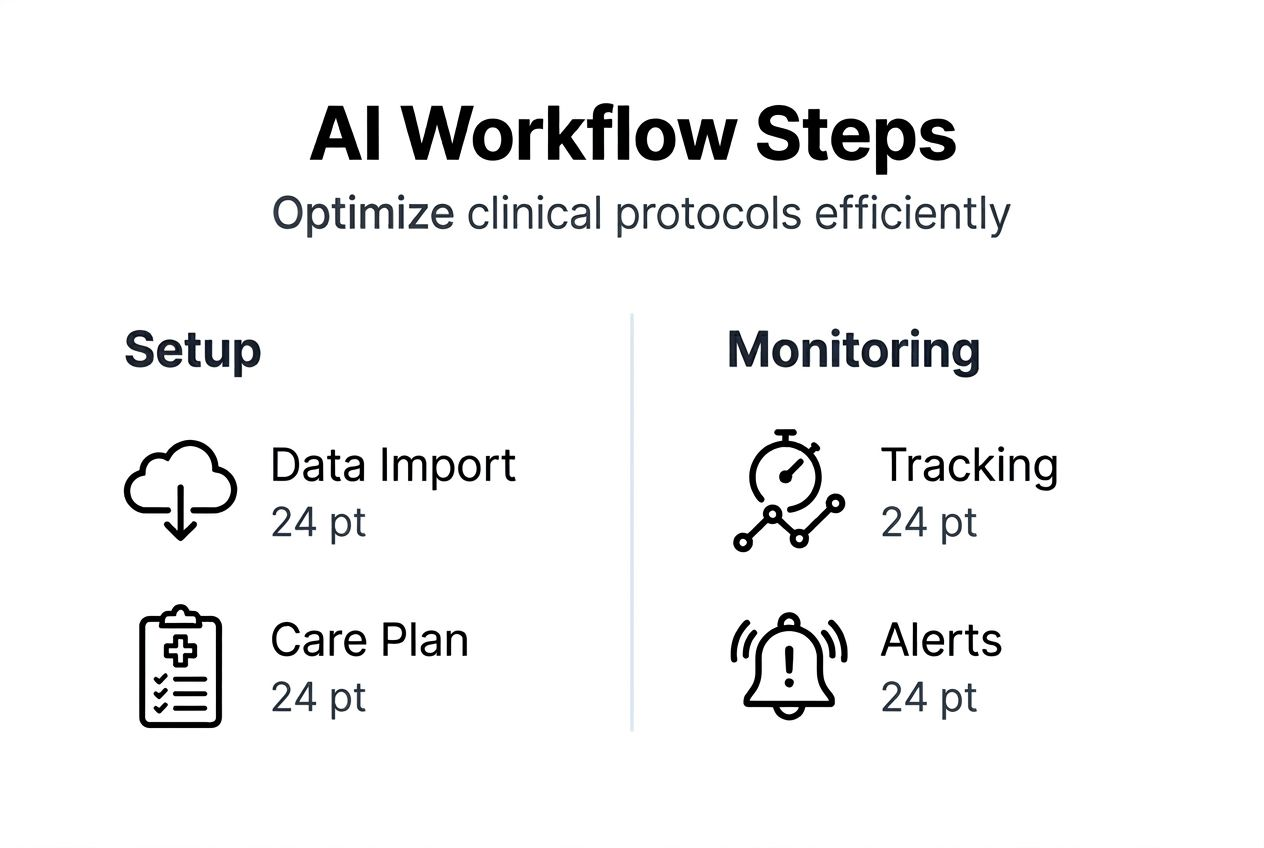
Step 1: Integrate patient data sources
Connect your EHR system to the AI platform, ensuring bidirectional data flow. Import comprehensive patient records including demographics, health history, current medications, and all available lab results. The AI engine requires complete information to generate accurate protocol recommendations.
Verify data accuracy during initial import. Incomplete or incorrect baseline data compromises all downstream analysis.
Step 2: Generate baseline care plans
AI automates complex clinical decision-making by analyzing patient data against validated functional medicine protocols. Select your target framework (Bredesen, Shoemaker, Wahls, or others) and allow the platform to generate an initial care plan.
The system identifies relevant biomarker imbalances, suggests appropriate interventions, and prioritizes treatment steps based on root cause analysis. Review these recommendations carefully, applying your clinical judgment to confirm appropriateness.
Step 3: Customize nutrition and lifestyle interventions
Leverage AI meal planning capabilities to create personalized nutrition protocols. The platform considers food sensitivities, therapeutic diet requirements, macronutrient targets, and patient preferences to generate practical meal plans.
Customize supplement recommendations by cross-referencing AI suggestions with patient-specific factors like medication interactions, genetic variants, and tolerance history. This step combines algorithmic efficiency with personalized clinical insight.
Step 4: Implement longitudinal monitoring
Configure automated tracking for key biomarkers and patient-reported outcomes. The AI monitors lab result trends, identifying deviations from expected improvement trajectories. Early detection enables proactive protocol adjustments before patients experience setbacks.

Set up automated alerts for concerning changes in inflammatory markers, nutrient levels, or symptom scores. This surveillance system acts as a safety net, ensuring no critical changes escape notice.
Step 5: Maintain continuous clinical oversight
Schedule regular review sessions to evaluate AI-generated recommendations. While automation handles routine analysis, complex cases require human interpretation and adjustment. Establish weekly protocol review times to:
- Validate AI recommendations against clinical observations
- Adjust interventions based on patient feedback
- Override algorithmic suggestions when clinical judgment dictates
- Document rationale for modifications to build institutional knowledge
Pro Tip: Use the Meelio AI assistant to streamline initial implementations. The platform offers specialized support for nutritionists and functional medicine practitioners, with protocol templates that reduce setup time by 70%. Review the functional health assessment checklist to ensure comprehensive patient evaluation before protocol initiation.
This systematic approach balances efficiency gains with the clinical rigor functional medicine demands, creating workflows that enhance both practitioner productivity and patient outcomes.
Common mistakes and troubleshooting in protocol execution
Even with proper preparation, practitioners encounter predictable challenges during AI workflow implementation. Understanding these pitfalls accelerates problem resolution and improves outcomes.
Data entry errors create cascading problems. Manual data entry causes up to 40% failures in protocol execution when practitioners rely on hybrid manual-automated workflows. Incomplete lab uploads, incorrect unit conversions, and missing patient history details all corrupt AI analysis.
Solution: Implement standardized data import procedures. Use direct EHR integration whenever possible, eliminating manual transcription. For unavoidable manual entries, create validation checklists and require dual verification for critical values like lab results and medication dosages.
Overreliance on automation without clinical review represents the most dangerous implementation mistake. AI platforms excel at pattern recognition and protocol matching but lack the contextual understanding that comes from patient relationships and clinical experience.
Consider this scenario:
An AI system recommended aggressive methylation support for a patient with elevated homocysteine. The practitioner, knowing the patient's history of anxiety and COMT variants, recognized this would likely trigger panic attacks. Clinical judgment prevented an adverse outcome the algorithm missed.
Maintain mandatory review checkpoints where practitioners validate all AI recommendations before patient implementation. No automated suggestion should reach patients without clinical approval.
Insufficient staff training manifests as inconsistent platform use, missed features, and workarounds that defeat automation benefits. Team members who don't understand the AI's capabilities default to manual processes, negating efficiency gains.
Solution: Invest in comprehensive onboarding that covers both technical platform skills and functional medicine principles. Schedule monthly refresher training and create internal knowledge bases documenting common scenarios and solutions. The assistants for nutritionists provide specialized training resources that accelerate team proficiency.
Common troubleshooting scenarios:
- AI generates generic recommendations: Usually indicates insufficient patient data. Review data completeness and add missing health history or lab results.
- Conflicting supplement suggestions: Results from multiple protocol frameworks applied simultaneously. Choose a primary framework and use others as secondary considerations.
- Patient non-adherence to AI-generated plans: Often means plans lack personalization for lifestyle constraints. Add manual customization to improve practical feasibility.
Pro Tip: Create a troubleshooting log documenting every implementation challenge and its resolution. This institutional knowledge accelerates problem-solving as your team encounters similar issues across different patients.
Proactive error prevention through standardization, training, and clinical oversight transforms AI from a potential liability into a reliable clinical partner.
Expected results and metrics for success
Tracking specific metrics validates AI implementation value and identifies optimization opportunities. Functional medicine practitioners should monitor both efficiency gains and clinical outcomes.
Time savings represent the most immediate measurable benefit. AI workflows save practitioners over 4 hours daily by automating care plan generation, nutrition customization, and lab analysis. Track time spent on:
- Care plan development (expect 60 to 70% reduction)
- Documentation and note-taking (expect 50 to 60% reduction)
- Lab result interpretation (expect 70 to 80% reduction)
- Patient communication preparation (expect 40 to 50% reduction)
Measure these metrics monthly for the first six months to quantify productivity improvements and justify technology investment.
Patient adherence rates improve significantly with AI-generated personalized protocols. The combination of customized meal plans, clear supplement schedules, and patient-friendly educational materials increases compliance by approximately 30% compared to generic protocols.
Track adherence through:
- Supplement purchase and refill rates
- Patient-reported compliance scores
- Completion rates for recommended labs and follow-ups
- Engagement with digital care plan materials
Clinical outcome improvements provide the ultimate validation of AI-assisted protocols. AI-personalized protocols yield 35% measurable biomarker improvement within 3 to 6 months across common functional medicine markers.
| Outcome Category | Measurement Method | Expected Timeline | Success Benchmark |
|---|---|---|---|
| Inflammatory markers | CRP, ESR trending | 3 months | 25 to 40% reduction |
| Metabolic function | HbA1c, fasting insulin | 3 to 6 months | 15 to 30% improvement |
| Nutrient status | Vitamin D, B12, magnesium | 2 to 4 months | Normalize 70%+ patients |
| Patient satisfaction | Survey scores | Ongoing | >85% positive ratings |
| Symptom improvement | Validated questionnaires | 6 to 12 weeks | 40 to 60% reduction |
Monitor these metrics consistently using your EHR's reporting capabilities or the AI platform's analytics dashboard. The functional health assessment checklist provides standardized evaluation frameworks for tracking clinical progress.
Financial metrics matter for practice sustainability. Calculate return on investment by comparing AI platform costs against increased patient capacity, reduced staff time, and improved retention rates. Most practices achieve positive ROI within 4 to 6 months of full implementation.
Regular metric review enables data-driven optimization, ensuring your AI workflows deliver maximum value to both your practice and your patients.
Safety considerations and risk mitigation
AI clinical workflows offer tremendous benefits but require deliberate safety protocols to prevent adverse outcomes. Responsible implementation balances automation efficiency with patient protection.
Clinical oversight checkpoints prevent automation errors from reaching patients. Clinical oversight remains vital to catch algorithmic mistakes, inappropriate recommendations, and context-blind suggestions. Establish mandatory review points:
- Initial care plan generation: Full practitioner review before patient presentation
- Supplement recommendations: Verify dosages, interactions, and contraindications
- Lab result interpretation: Confirm AI flagged values match clinical significance
- Protocol modifications: Validate algorithmic adjustments against patient response
Never allow AI-generated recommendations to auto-implement without human validation. This single practice prevents the majority of potential safety incidents.
Automation risks without oversight include inappropriate supplement combinations, missed contraindications, and failure to recognize urgent clinical situations. AI platforms analyze patterns but lack the judgment to recognize when standard protocols don't apply.
Critical safety practices:
- Maintain current emergency protocols separate from AI workflows
- Flag high-risk patients for enhanced manual oversight
- Review AI decision logic periodically to understand recommendation drivers
- Document all instances where clinical judgment overrides AI suggestions
- Establish clear escalation pathways for concerning AI outputs
Data security and privacy require robust protection measures. AI platforms process sensitive health information that must comply with HIPAA and other regulatory requirements. Verify your chosen platform maintains:
- End-to-end encryption for data transmission and storage
- Regular security audits and penetration testing
- Business associate agreements clearly defining data responsibilities
- Geographic data storage compliance with regional regulations
- Audit trails documenting all data access and modifications
"The most dangerous assumption in clinical AI is that the algorithm knows something you don't. The safest assumption is that you know context the algorithm can't access. Clinical judgment always supersedes algorithmic suggestions."
Hybrid workflow models optimize the balance between efficiency and safety. Rather than choosing full automation or entirely manual processes, implement tiered oversight based on patient complexity and risk:
- Low-complexity cases: AI generates recommendations with spot-check review
- Moderate complexity: Full practitioner review with AI handling documentation
- High complexity: Practitioner-led decision-making with AI providing research support
This approach allocates clinical time where it provides maximum value while maintaining safety across all patient interactions. Explore AI assistant safety features that support hybrid models through customizable approval workflows and risk-based routing.
Regularly review safety incidents, near-misses, and override patterns to continuously improve your implementation protocols and ensure patient protection remains paramount.
Alternative approaches and tradeoffs
Practitioners face important decisions about AI workflow implementation depth. Understanding the tradeoffs between different approaches enables informed choices aligned with practice needs and patient populations.
Full automation model maximizes efficiency by allowing AI systems to handle the entire protocol workflow from data analysis through care plan generation and patient communication. This approach delivers the greatest time savings, often exceeding 4 hours daily per practitioner.
Advantages:
- Maximum efficiency gains and patient throughput
- Consistent protocol application across all patients
- Reduced documentation burden
- Lower staffing requirements for administrative tasks
Disadvantages:
- Reduced clinical judgment application in individual cases
- Potential for algorithmic blind spots in complex presentations
- Less personalization for unique patient circumstances
- Higher risk if AI makes errors without human review
Hybrid clinician-in-the-loop model maintains human oversight at critical decision points while automating routine tasks. Full automation maximizes time savings but may lose clinical nuance, while hybrid models improve safety at the cost of some efficiency.
Advantages:
- Balances efficiency with clinical judgment
- Catches AI errors before patient impact
- Maintains practitioner-patient relationship quality
- Allows customization for complex cases
Disadvantages:
- Moderate time savings (approximately 3 hours daily vs. 4+ for full automation)
- Requires ongoing practitioner engagement with platform
- May create bottlenecks if review processes aren't streamlined
| Feature | Full Automation | Hybrid Model | Manual Process |
|---|---|---|---|
| Daily time savings | 4+ hours | 2 to 3 hours | 0 hours |
| Clinical oversight | Minimal | Substantial | Complete |
| Error risk | Moderate to high | Low | Low to moderate |
| Patient personalization | Standard | High | Highest |
| Best for | High volume, straightforward cases | Mixed complexity | Complex, unique cases |
| Setup complexity | Low | Moderate | Not applicable |
Practice size considerations influence optimal approaches. Smaller practices with 20 to 50 active patients may prefer full automation to maximize limited practitioner time. Larger practices with 200+ patients benefit from hybrid models that maintain quality while scaling efficiently.
Patient complexity should drive workflow model selection on a case-by-case basis. Consider:
- Straightforward cases (single system dysfunction, clear protocol match): Full automation appropriate
- Moderate complexity (multiple systems, standard comorbidities): Hybrid with focused review
- High complexity (rare conditions, extensive comorbidities, prior treatment failures): Practitioner-led with AI support
Many successful practices implement tiered approaches, using full automation for appropriate cases while reserving hybrid workflows for complex patients. This strategy optimizes both efficiency and clinical outcomes.
Review AI clinical workflow models to understand platform-specific implementation options and determine which approach aligns best with your practice philosophy and patient needs.
Optimize your functional health protocols with Meelio AI
Implementing the strategies in this guide transforms clinical workflows, but choosing the right technology partner accelerates success. Meelio delivers AI-powered clinical intelligence specifically designed for functional and integrative medicine practitioners.
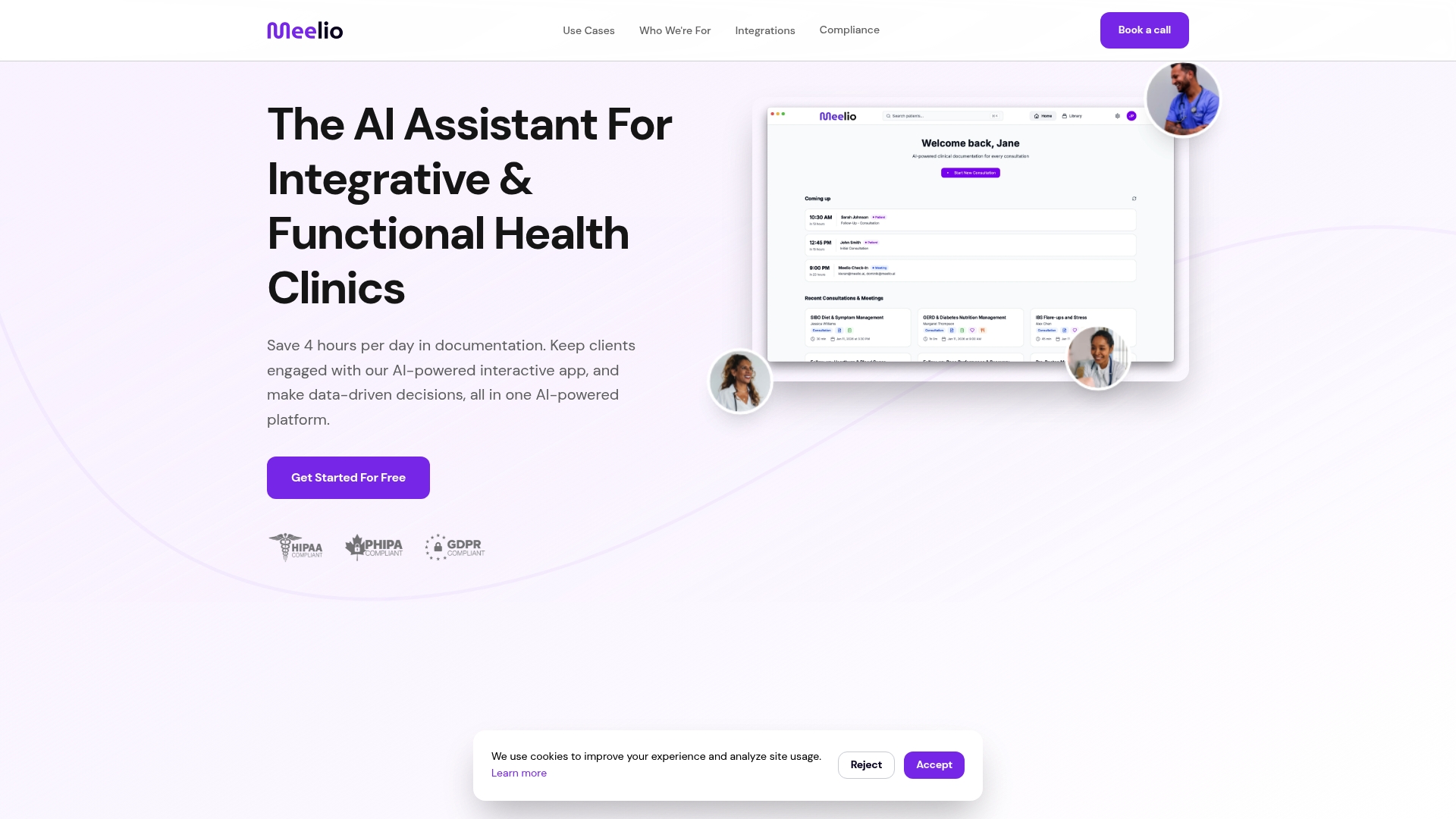
Our platform automates care plan generation for complex protocols like Bredesen, Shoemaker, and Wahls, while providing personalized meal planning and longitudinal lab analysis that generic AI scribes can't match. Integration with Practice Better and Cerbo ensures seamless workflows within your existing systems.
Explore how the Meelio AI assistant saves practitioners over 4 hours daily through intelligent AI care plans and comprehensive AI meal planning. Our protocol-specific approach delivers the clinical depth functional medicine demands while maintaining the efficiency modern practices require. Transform your clinical workflows and enhance patient outcomes starting today.
Frequently asked questions
How does AI improve functional health protocol customization?
AI platforms integrate patient lab data, health history, genetic information, and lifestyle factors to generate highly personalized care plans in minutes rather than hours. The technology identifies biomarker patterns and matches them against validated functional medicine frameworks, creating interventions tailored to individual patient contexts. Dynamic adjustments occur automatically as new lab results arrive, ensuring protocols evolve with patient progress. This level of customization would require hours of manual analysis per patient without AI support. Review the functional health assessment checklist for comprehensive evaluation frameworks.
What are the key safety practices when using AI clinical workflows?
Maintain mandatory practitioner review of all AI-generated recommendations before patient implementation. Never allow automated suggestions to reach patients without clinical validation. Use AI platforms that comply with HIPAA and maintain robust data security protocols including encryption and regular audits. Implement tiered oversight based on patient complexity, with enhanced review for high-risk cases. Document all instances where clinical judgment overrides algorithmic recommendations to build safety knowledge over time.
Can AI workflows be integrated into existing EHR systems?
Yes, modern AI clinical platforms are designed for seamless integration with popular EHR systems used in functional medicine practices. Platforms like Practice Better, Cerbo, and FullScript support API connections that enable real-time data synchronization. Verify your specific EHR's integration capabilities before selecting an AI solution, as connection methods vary. Proper integration eliminates manual data entry, reduces errors, and ensures the AI has access to complete patient information for accurate recommendations. Learn more about AI healthcare integration in 2026.
How much time can practitioners expect to save using AI protocols?
Practitioners typically save over 4 hours daily when implementing comprehensive AI clinical workflows. Time savings result from automating care plan generation, personalized nutrition customization, supplement protocol development, and longitudinal lab analysis. The exact savings depend on practice size, patient complexity, and implementation depth. Hybrid models with clinical oversight save approximately 2 to 3 hours daily, while full automation approaches can exceed 5 hours of daily time recovery. Most practices achieve measurable efficiency gains within 2 to 4 weeks of implementation.