Personalized care plan tips to enhance patient outcomes
Discover evidence-backed personalized care plan strategies that improve patient outcomes and streamline clinical workflows for functional health practitioners.

Functional and integrative health practitioners know that cookie-cutter protocols fail to address the complex, multifactorial nature of chronic disease. Your patients present with unique genetic profiles, environmental exposures, lifestyle patterns, and health goals that demand individualized strategies. Yet many practitioners struggle to systematically organize patient data, prioritize interventions, and create truly personalized care plans that drive measurable outcomes. This article delivers evidence-backed strategies to build functional medicine care plans that improve patient adherence, streamline your clinical workflow, and deliver superior results across diverse patient populations.
Table of Contents
- Key takeaways
- Evaluating criteria for effective personalized care plans
- Key components and options for personalized care plans
- Comparing personalized care plan approaches for optimal decisions
- Practical tips for choosing and implementing personalized care plans
- Enhance your care plans with Meelio AI solutions
- FAQ
Key Takeaways
| Point | Details |
|---|---|
| Structured data tools | Use tools like the Functional Medicine Matrix Timeline and GOTOIT to organize patient data and identify root causes. |
| Collaborative SMART goals | Set goals with patients to create shared ownership and clear, measurable targets that boost adherence. |
| Comprehensive intake | A full intake covering medical history, lifestyle, labs, environmental factors, and social determinants informs phased interventions that tailor plans. |
| Phased interventions | Starting with foundational changes before advanced protocols reduces overwhelm and helps sustain progress. |
| Genomics and multiomics | Genomics and multiomics testing identify variants that affect methylation, detoxification, inflammation, and nutrient metabolism to guide targeted interventions. |
Evaluating criteria for effective personalized care plans
Successful personalized care plans start with rigorous data organization and goal clarity. Structured tools like Functional Medicine Matrix, Timeline, and GOTOIT help you organize patient data and identify root causes rather than just treating symptoms. The Matrix maps antecedents, triggers, and mediators across seven biological systems, while the Timeline visualizes how patient history intersects with current symptoms. GOTOIT (Gather, Organize, Tell the story, Order, Initiate, Track) provides a systematic workflow from intake through follow-up.
Collaborative goal setting transforms patient engagement. When you define SMART goals together with patients, you create shared ownership of the care journey. A vague goal like "eat healthier" becomes "consume 5 servings of vegetables daily for 30 days, tracking in a food journal." This specificity drives adherence because patients understand exactly what success looks like and can measure progress.
Your intake process determines plan quality. Comprehensive intake covering medical history, lifestyle, labs, and environmental factors with phased interventions ensures you capture the full patient picture. Include detailed dietary patterns, sleep quality, stress levels, toxin exposures, and social determinants. This breadth reveals connections that standard intake forms miss.
Phased intervention approaches prevent patient overwhelm while building sustainable change. Start with foundational areas like sleep optimization, stress management, and basic nutrition before layering in advanced protocols. A patient struggling with poor sleep won't benefit from complex supplement regimens until that foundation stabilizes. This staged approach also helps you isolate which interventions drive specific outcomes.
Pro Tip: Create intake templates that auto-populate your Matrix and Timeline tools. This reduces documentation time while ensuring you capture all necessary data points for truly patient-centered care planning.
Having established the criteria, let's explore specific options for personalized care plan components that leverage these criteria.
Key components and options for personalized care plans
Genomics and multiomics testing unlock precision medicine capabilities that standard labs cannot match. Research shows 85% better patient outcomes with genomics and a 38% objective response rate in hard-to-treat melanoma using multiomics approaches. These tools identify genetic variants affecting methylation, detoxification, inflammation, and nutrient metabolism, enabling targeted interventions that address root biochemical imbalances.
Group functional medicine programs offer a scalable model with proven benefits. Studies demonstrate that functional medicine group programs improve patient-reported outcomes like SIBDQ scores, fatigue levels, and sleep quality in IBD patients. These programs combine education, peer support, and individualized protocols within a community framework. Patients benefit from shared learning while you maintain efficiency through group delivery of core content.
Personalized nutrition represents one of the most accessible and impactful interventions. Evidence confirms that personalized nutrition improves HbA1c and glucose response in type 2 diabetes and prediabetes patients. This goes beyond generic diabetic diets to account for individual glucose variability, microbiome composition, and metabolic responses to specific foods. Systems biology approaches integrate these data streams for truly individualized nutrition plans.

Cultural sensitivity and health literacy adaptations prevent care barriers. Edge cases require culturally responsive plans, support for low health literacy, negotiating guideline conflicts, and optional spiritual assessments when patients consent. A plan that ignores cultural food preferences or uses medical jargon beyond patient comprehension will fail regardless of clinical merit.
Key personalization options include:
- Genomic testing for methylation, detoxification, and nutrient metabolism pathways
- Microbiome analysis to guide probiotic selection and dietary modifications
- Advanced metabolic panels revealing mitochondrial function and oxidative stress
- Continuous glucose monitoring for real-time dietary feedback
- Food sensitivity testing to eliminate inflammatory triggers
Implementation steps for maximum impact:
- Start with comprehensive intake capturing medical, lifestyle, environmental, and psychosocial factors
- Apply Matrix and Timeline tools to identify root cause patterns
- Order targeted testing based on clinical hypotheses, not shotgun approaches
- Develop phased interventions prioritizing foundational health first
- Set collaborative SMART goals with measurable milestones
- Schedule regular follow-ups to track progress and adjust protocols
Functional nutrition checklists help ensure you address all relevant factors during plan development.
With options outlined, let's compare these personalized care plan approaches to help decide the best fit for different clinical scenarios.
Comparing personalized care plan approaches for optimal decisions
Different personalized approaches offer distinct tradeoffs in effectiveness, complexity, cost, and patient engagement. Understanding these differences helps you match interventions to patient needs and practice resources.
| Approach | Effectiveness | Complexity | Patient Engagement | Cost | Best For |
|---|---|---|---|---|---|
| Genomics/Multiomics | Very High (85% better outcomes) | High | Medium | High | Complex chronic cases, treatment-resistant patients |
| Group Programs | High for chronic conditions | Medium | Very High | Medium (scales well) | IBD, autoimmune, metabolic syndrome |
| Personalized Nutrition | High (significant HbA1c improvement) | Low to Medium | High | Low to Medium | Diabetes, prediabetes, weight management |
| Standard Functional Medicine | Medium to High | Medium | Medium | Medium | General wellness, prevention |
| AI-Assisted Planning | High | Low | Medium | Low | All cases, especially time-constrained practices |
Genomics and advanced testing deliver exceptional results but require significant investment in both cost and clinician education. You need expertise to interpret complex reports and translate findings into actionable protocols. However, for patients who have failed standard approaches, this depth often provides breakthrough insights.
Group programs shine in cost-effectiveness and patient engagement. The peer support component enhances adherence while you deliver core education efficiently. However, some patients need more individualized attention than group formats allow.
Personalized nutrition offers an accessible entry point with measurable metabolic benefits. Most practitioners can implement dietary interventions without advanced certifications. The challenge lies in maintaining patient adherence to dietary changes over time.
"While some RCTs show no significant benefits over usual care for certain chronic diseases, advantages are clearer in cases like coronary artery disease blood pressure control. The key is matching the right approach to the right patient."
Barriers to personalized medicine adoption include cost, accessibility, ethical concerns, and integration with traditional medicine, plus the need for more real-world evidence. Insurance rarely covers advanced testing, creating access disparities. Privacy concerns around genetic data require careful consent processes. Integrating personalized protocols into standard care workflows demands practice redesign.
Technology solutions address many of these barriers. AI personalized care tools automate data organization, protocol generation, and patient education, reducing clinician burden. Workflow automation enables you to deliver personalized care at scale without proportional increases in administrative time.
Pro Tip: Start with personalized nutrition and basic functional testing for most patients, reserving genomics and multiomics for complex cases. This tiered approach optimizes outcomes while managing costs and complexity.
Considering these comparisons, let's conclude with practical recommendations on selecting and implementing personalized care plans in your practice.
Practical tips for choosing and implementing personalized care plans
Selecting the right care plan depth requires honest assessment of patient complexity and your practice resources. A patient with multiple chronic conditions, failed conventional treatments, and complex medication interactions warrants comprehensive genomic testing and multiomics analysis. A motivated patient seeking metabolic optimization may achieve excellent results with personalized nutrition and basic functional labs.
Collaborative SMART goal setting maximizes adherence and outcomes through patient empowerment. Schedule dedicated time during initial consultations to explore patient priorities, barriers, and motivations. A patient who values convenience over perfection needs different goals than one committed to intensive protocols. Document these goals prominently in the care plan and reference them during follow-ups.
Phased implementation prevents overwhelm while building momentum. Start with sleep hygiene, stress reduction, and anti-inflammatory nutrition before introducing complex supplement protocols. This foundation improves patient capacity to implement advanced interventions. Track which phase drives specific improvements to refine your approach.
Technology integration transforms personalized care from aspirational to practical. AI-assisted care planning and nutrition help practitioners save time and improve plan personalization by automating routine tasks while maintaining clinical oversight. These tools analyze patient data, suggest evidence-based interventions, and generate detailed protocols in minutes rather than hours.
Cultural competence and health literacy adaptations ensure plans actually get implemented. Train staff to recognize cultural dietary preferences, religious restrictions, and health beliefs that impact adherence. Use teach-back methods to confirm patient understanding. Provide written materials at appropriate literacy levels with visual aids.
Implementation steps for your practice:
- Audit your current intake process to identify data gaps preventing personalized planning
- Implement Matrix and Timeline tools to systematically organize patient information
- Develop tiered testing protocols matching intervention depth to patient complexity and resources
- Create SMART goal templates that prompt collaborative objective setting
- Build phased intervention protocols starting with foundational health optimization
- Integrate AI care planning solutions to automate protocol generation and reduce documentation burden
- Leverage AI meal planning tools to deliver personalized nutrition efficiently
- Train staff in cultural competence and health literacy best practices
- Schedule regular follow-ups with structured outcome tracking
- Refine protocols based on patient feedback and outcome data
Pro Tip: Use AI nutrition personalization to generate customized meal plans in seconds rather than spending 30 minutes per patient manually creating plans. This frees time for higher-value clinical activities.
To help you put these tips into practice, here's how our platform can support your personalized care planning needs.
Enhance your care plans with Meelio AI solutions
Building truly personalized care plans demands significant time and cognitive effort. Meelio AI accelerates this process while improving plan quality through protocol-specific clinical intelligence. Our platform generates comprehensive care plan drafts incorporating patient history, lab results, and evidence-based interventions for complex frameworks like Bredesen, Shoemaker, and Wahls protocols.
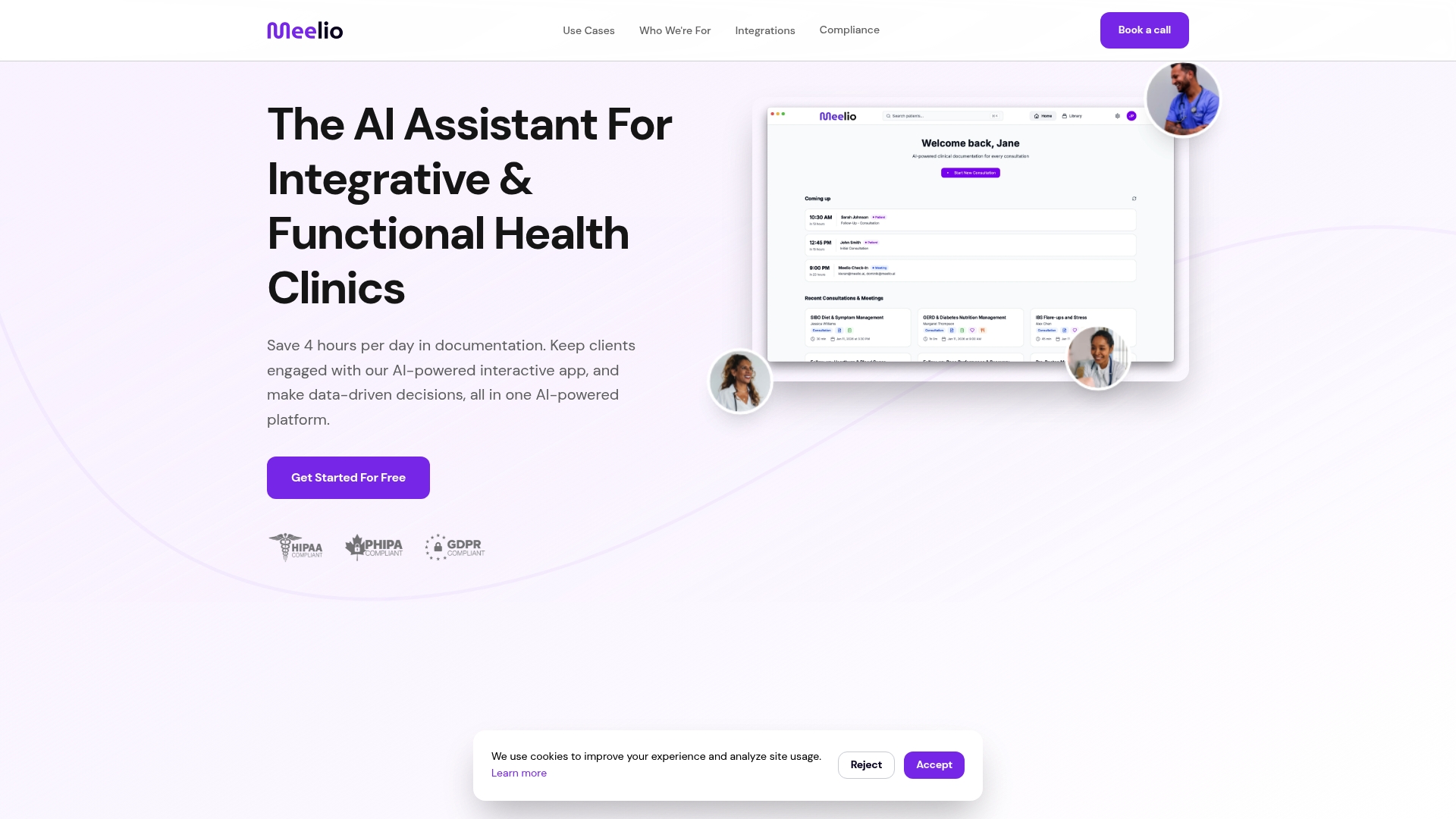
Our AI care plans feature automates the heavy lifting of protocol development, suggesting targeted supplements, lifestyle modifications, and testing based on patient presentation. AI meal planning delivers personalized nutrition recommendations accounting for dietary preferences, restrictions, and therapeutic goals in seconds. Integration with Practice Better and Cerbo means these tools fit seamlessly into your existing workflow, saving 4+ hours daily while boosting patient adherence through tailored, actionable plans.
Now, let's address common practitioner questions about personalized care plans to further support your clinical success.
FAQ
What tools best organize patient data for personalized plans?
The Functional Medicine Matrix and Timeline frameworks help practitioners systematically organize patient history, labs, and lifestyle data to identify root causes. The Matrix maps antecedents, triggers, and mediators across biological systems, while the Timeline visualizes how patient history connects to current symptoms. These structured tools transform scattered data into coherent clinical narratives that guide targeted interventions.
How do SMART goals improve patient adherence?
SMART goals are Specific, Measurable, Achievable, Realistic, and Time-bound, providing clarity that motivates patients and improves adherence. Research shows SMART goals lead to greater goal attainment when collaboratively set with patients because they create shared ownership of outcomes. Instead of vague intentions, patients receive concrete targets they can track and celebrate, building momentum through visible progress in their patient-centered care journey.
What challenges should practitioners anticipate when personalizing care plans?
Costs and insurance coverage limit access to advanced personalized testing, creating equity concerns. Ethical and privacy issues require careful patient consent and data handling, especially for genetic information. Integrating personalized approaches with standard care workflows remains challenging without practice redesign and technology support. AI personalized care tools help address workflow integration barriers by automating routine tasks.
How can AI tools support personalized care planning?
AI tools automate data organization, goal tracking, and meal planning, reducing administrative burden so you can focus on patient interaction. AI-assisted nutrition and care planning save over 4 hours daily and enhance plan personalization by analyzing complex patient data and suggesting evidence-based protocols instantly. These AI care planning solutions maintain clinical oversight while eliminating repetitive documentation tasks that drain practitioner energy and time.