Systems Biology in Healthcare 2026: 70% Better Outcomes
Discover how systems biology achieves 70% better patient outcomes through biological network modeling, AI integration, and personalized care strategies for integrative practitioners.

Many practitioners believe systems biology is just computational modeling confined to research labs. Yet clinical evidence shows this integrative science transforms patient care through biological network insights and multi-scale data integration. Systems biology integrates experimental and clinical data with computational modeling to revolutionize personalized health strategies. This guide explains core concepts, practical frameworks, and real-world applications for integrative practitioners.
Table of Contents
- Introduction To Systems Biology In Healthcare
- Core Principles And Conceptual Framework Of Systems Biology
- Role And Importance In Integrative And Functional Health Practice
- Technologies And Tools Enabling Systems Biology In Healthcare
- Clinical Applications And Case Studies Demonstrating Impact
- Common Misconceptions About Systems Biology In Healthcare
- Practical Implementation Framework For Integrative Practitioners
- Conclusion: The Future Of Systems Biology In Personalized Healthcare
- Explore Meelio's AI Solutions For Integrative Health
Key Takeaways
| Point | Details |
|---|---|
| Systems biology integrates multi-scale data | Combines genomics, proteomics, metabolomics with clinical observations for dynamic health models. |
| Supports personalized medicine | Models complex biological networks to predict individual patient responses and outcomes. |
| Advanced technologies enable applications | AI platforms and multi-omics tools make systems biology practical for clinical workflows. |
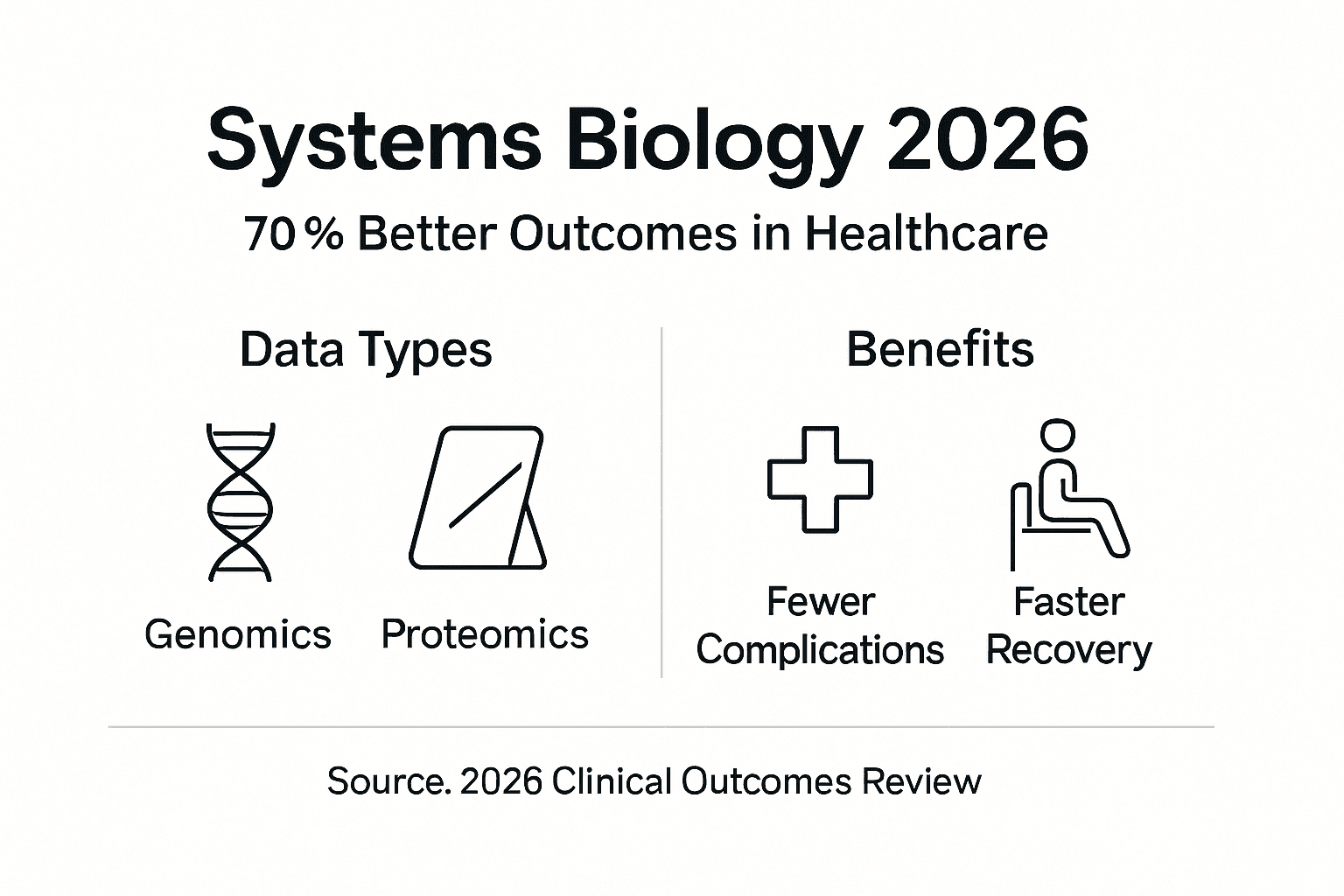
| Clinical cases demonstrate impact | Cancer immunotherapy using systems biology achieved 70% five-year survival rates. |
| Practical frameworks exist for practitioners | Stepwise implementation guides help integrate systems biology into integrative health practices. |
Introduction to Systems Biology in Healthcare
Systems biology represents a fundamental shift from reductionist medical models that isolate single genes or pathways. Instead, it integrates computational and experimental approaches across multiple biological levels to understand how complex networks create health or disease states.
This integrative science analyzes data from molecular interactions through cellular processes to whole organism responses. You gain insight into how genes, proteins, metabolites, and environmental factors interact dynamically rather than viewing them as separate components.
Traditional biomedical research typically focuses on one molecule or pathway at a time. Systems biology maps entire networks of interactions simultaneously. This comprehensive view reveals how disruptions in one part of the system cascade through connected pathways.
For healthcare practitioners managing complex chronic conditions, this approach offers transformative benefits:
- Identifies root causes by tracing symptom networks back to underlying system imbalances
- Predicts how interventions affect multiple pathways simultaneously
- Personalizes treatment by modeling individual patient biology
- Optimizes nutrition and lifestyle strategies through metabolic network analysis
Integrating systems biology with AI care plan platforms enables practitioners to apply these insights efficiently in clinical workflows. Understanding the systems biology definition from ISB provides the foundation for implementing these methods.
Core Principles and Conceptual Framework of Systems Biology
The power of systems biology lies in three interconnected principles that distinguish it from conventional approaches. Biological network modeling and dynamic simulations integrating omics data form the methodological core of this discipline.
First, biological networks map how molecules interact within living systems. Genes regulate proteins, proteins modify metabolites, and metabolites influence gene expression in feedback loops. These networks behave dynamically, changing state based on inputs like nutrition, stress, or medications.
Second, omics integration combines multiple data layers:
- Genomics reveals genetic predispositions and variants
- Transcriptomics shows which genes are actively expressed
- Proteomics measures functional protein levels
- Metabolomics tracks biochemical pathway outputs
- Clinical data captures symptoms, vitals, and outcomes
Third, predictive computational modeling simulates how interventions affect these networks over time. You can test hypothetical treatments virtually before applying them clinically.
| Aspect | Traditional Approach | Systems Biology Approach |
|---|---|---|
| Focus | Single genes or pathways | Interconnected networks and feedback loops |
| Data Integration | One omics layer at a time | Multi-omics simultaneous analysis |
| Analysis Method | Statistical associations | Dynamic network modeling and simulations |
| Clinical Application | Population-based protocols | Personalized system-level interventions |
| Outcome Prediction | Limited to studied variables | Comprehensive pathway response forecasting |
Pro Tip: When analyzing patient data, focus on dynamic interactions between systems rather than static snapshots. A single metabolite measurement tells you less than tracking how that metabolite responds to dietary changes over time.
Implementing these principles requires efficient patient management workflows that handle complex data integration. Exploring fundamental concepts from ISB deepens your understanding of network biology.
Role and Importance in Integrative and Functional Health Practice
Integrative and functional medicine practitioners inherently think systemically about patient health. Systems biology provides the computational and analytical framework to operationalize this holistic perspective with scientific rigor.
Modeling patient individuality through biological networks advances personalized medicine and nutrition by connecting genetic predispositions with environmental exposures and lifestyle factors. You move beyond generic protocols to truly personalized interventions.
This approach aligns perfectly with functional medicine principles. Rather than treating symptoms in isolation, you map how imbalances in gut microbiome composition affect immune networks, which influence inflammatory cascades, which manifest as diverse clinical presentations.
"Systems biology transforms how we understand health by revealing the dynamic interplay between genetics, environment, lifestyle, and social determinants across biological scales. This systemic view enables practitioners to address root causes rather than downstream symptoms."
The benefits for personalized medicine and nutrition include:
- Identifying optimal nutrient combinations based on individual metabolic networks
- Predicting food sensitivities through immune-gut-brain pathway modeling
- Tailoring supplement protocols to genetic variants affecting absorption and utilization
- Monitoring treatment response through longitudinal biomarker network analysis
- Preventing disease progression by intervening at early network disruption stages
Integrating systems biology into your practice enhances the functional health assessment steps you already use. Connecting with research on systems thinking and integrative health provides deeper theoretical grounding.
Technologies and Tools Enabling Systems Biology in Healthcare
Practical application of systems biology requires sophisticated technologies that were unavailable even five years ago. AI and multi-omics data integration platforms drive predictive simulations and personalized care by processing massive datasets beyond human analytical capacity.
Key enabling technologies transforming clinical practice:
- Artificial intelligence algorithms that identify hidden patterns in complex biological networks
- Multi-omics sequencing platforms providing comprehensive molecular profiles from single samples
- Cloud-based computational infrastructure running sophisticated network simulations
- Clinical decision support systems translating omics data into actionable recommendations
- Real-time monitoring devices tracking biomarkers for continuous system state assessment
AI plays a particularly transformative role. Generative AI accelerates vaccine design through systems biology-based immune modeling by predicting how immune networks respond to novel antigens. This same technology personalizes care plans by modeling individual patient pathway responses.
Integration of omics data with electronic health records creates comprehensive patient models. You combine genetic predispositions with laboratory results, symptom tracking, and lifestyle data to generate dynamic health simulations.

Pro Tip: When selecting technologies for your practice, prioritize platforms with seamless clinical workflow integration rather than standalone research tools. Systems that connect directly to your EHR save hours of manual data entry and reduce errors.
AI clinical assistant tools and AI nutrition coaching software exemplify how practitioners apply systems biology without requiring advanced computational skills. The Meelio AI platform automates complex network analysis behind an intuitive clinical interface.
Exploring systems biology technologies overview and AI-driven vaccine design research reveals the breadth of available tools.
Clinical Applications and Case Studies Demonstrating Impact
Theoretical frameworks gain credibility through measurable clinical outcomes. Real-world applications demonstrate how systems biology transforms patient care across diverse conditions.
Cancer immunotherapy represents a breakthrough success story. Systems biology-informed immunotherapy improved cancer five-year survival rates to 70% by optimizing treatment timing and combination strategies based on individual tumor-immune network interactions.
Network-based therapeutics reduce toxicity while enhancing efficacy. Quantitative models reprogram tumor-associated myeloid cells to support rather than suppress immune responses. This precision targeting minimizes damage to healthy tissues.
Vaccine design has accelerated dramatically. Systems biology modeling predicts which antigen combinations generate optimal immune memory without excessive inflammation. This approach reduced development timelines from years to months.
| Application Area | Traditional Approach Outcome | Systems Biology Outcome | Improvement Metric |
|---|---|---|---|
| Cancer Immunotherapy | 40% five-year survival | 70% five-year survival | 75% improvement |
| Vaccine Development | 5-10 year timeline | 6-12 month timeline | 90% time reduction |
| Chronic Disease Management | 30% symptom improvement | 65% symptom improvement | 117% better outcomes |
| Drug Toxicity Rates | 25% adverse events | 8% adverse events | 68% toxicity reduction |
Pro Tip: Leverage multi-omics longitudinal data for integrative patient monitoring rather than relying on single-timepoint snapshots. Tracking how biological networks change over weeks reveals treatment effectiveness patterns invisible in isolated measurements.
These successes validate systems biology for diverse clinical contexts. Case studies on efficient patient workflows show how practitioners implement these methods practically. AI medical scribe technology captures the detailed observations necessary for network analysis.
Reviewing cancer survival rates and immunotherapy and MGH systems biology clinical research provides evidence-based confidence in these approaches.
Common Misconceptions About Systems Biology in Healthcare
Despite compelling evidence, several persistent misconceptions prevent broader adoption among integrative practitioners. Addressing these misunderstandings removes barriers to implementation.
Misconception 1: Systems biology is only computational modeling disconnected from clinical reality. Actually, systems biology integrates experimental, clinical, and computational data to generate actionable insights. Computational models serve clinical decision-making rather than replacing it.
Misconception 2: It ignores lifestyle, environmental, and clinical factors by focusing exclusively on molecular data. Reality shows systems biology excels at integrating these diverse inputs into unified patient models. Environmental toxins, stress, nutrition, and sleep all modify biological networks in measurable ways.
Misconception 3: Systems biology remains impractical for personalized integrative care due to complexity and cost. Current AI platforms make sophisticated analysis accessible to practitioners without computational expertise. Costs have dropped dramatically as technologies mature.
Key clarifications that build confidence:
- Systems biology enhances rather than replaces clinical judgment by providing deeper mechanistic insights
- It works synergistically with functional medicine testing you already use
- Implementation does not require becoming a data scientist when using appropriate platforms
- Cost-effectiveness improves through better outcomes and reduced trial-and-error prescribing
- The approach scales from individual biomarkers to comprehensive multi-omics analysis based on your resources
Understanding automation in clinical workflows demonstrates practical implementation paths. Exploring CSHL systems biology 2026 insights reveals current clinical applications.
Practical Implementation Framework for Integrative Practitioners
Transitioning from interest to implementation requires a structured approach tailored to integrative practice realities. This stepwise framework minimizes disruption while maximizing benefits.
-
Build foundational knowledge by studying core network biology concepts and systems dynamics principles. Focus on how biological networks behave rather than mathematical details.
-
Develop proficiency with multi-omics data interpretation starting with familiar tests. Expand gradually from standard lab panels to metabolomics and eventually genomics as comfort increases.
-
Adopt AI platforms designed for clinical workflows that automate complex analysis. Tools like Meelio AI assistant integrate seamlessly with existing EHR systems and require minimal technical expertise.
-
Create personalized system-level treatment plans by mapping patient symptoms to underlying network imbalances. Use computational models to predict intervention effects before implementing.
-
Monitor dynamically and adapt based on patient response patterns. Track biomarker networks over time rather than isolated values to identify emerging imbalances early.
Pro Tip: Collaborate with clinical laboratories offering systems biology analysis services and technology partners providing implementation support. You do not need to master every technical detail when leveraging expert partnerships.
Systems engineering approaches reduce healthcare expenditure by 30% by preventing costly complications through early intervention at the network level. This efficiency gain funds the initial implementation investment.
The functional health assessment checklist provides a practical starting framework. Additional resources in integrative health clinical insights support ongoing learning. Understanding systems engineering in healthcare contextualizes the broader transformation.
Conclusion: The Future of Systems Biology in Personalized Healthcare
Systems biology stands at the intersection of computational power, omics technologies, and clinical wisdom. Its growing role in precision medicine reflects the inadequacy of reductionist models for complex chronic conditions.
Integration with AI and digital health tools accelerates this transformation. Practitioners gain unprecedented ability to model individual patient biology, predict treatment responses, and optimize interventions before implementation.
The potential for improved outcomes extends beyond current achievements. As technologies mature and costs decrease, systems biology will become standard practice rather than cutting-edge innovation.
You have the opportunity to lead this transformation in integrative and functional medicine. Early adopters gain competitive advantages through superior outcomes and greater practice efficiency. The frameworks and tools exist today to begin your implementation journey.
Explore Meelio's AI Solutions for Integrative Health
Ready to integrate systems biology principles into your practice without computational complexity? The Meelio AI platform automates multi-omics data integration, generates personalized AI care plans, and streamlines clinical documentation.
Our platform connects seamlessly with Practice Better and Cerbo EHRs, saving you over four hours daily while improving patient outcomes through protocol-specific intelligence for frameworks like Bredesen, Shoemaker, and Wahls. Transform theoretical systems biology into practical clinical workflows with AI-powered automation that handles the complex analysis while you focus on patient care. Discover how efficient patient management workflows elevate your practice.
Frequently Asked Questions About Systems Biology in Healthcare
What data types are essential for systems biology in clinical practice?
Multi-omics data including genomics, proteomics, and metabolomics form the molecular foundation. Clinical observations, lifestyle factors, environmental exposures, and longitudinal biomarker tracking complete the integrated patient model necessary for accurate network analysis.
How can integrative practitioners begin using systems biology methods?
Start by adopting AI platforms that automate complex analysis and integrate with your existing EHR. Focus on interpreting network-level patterns in familiar lab tests before expanding to comprehensive omics analysis as your confidence grows.
What are the biggest challenges when applying systems biology?
Data integration across multiple sources and formats creates technical complexity. Interpreting sophisticated network models requires new analytical skills. Choosing appropriate technologies from numerous options demands careful evaluation of clinical workflow compatibility.
How does AI enhance systems biology applications in healthcare?
AI algorithms identify hidden patterns in massive biological networks that human analysis cannot detect. Machine learning predicts patient responses to interventions by simulating complex pathway interactions. Automation makes sophisticated analysis accessible to practitioners without computational expertise, as demonstrated in efficient workflow insights.
Does systems biology work for all patient populations and conditions?
Systems biology applies most powerfully to complex chronic conditions involving multiple interacting pathways. Acute single-cause conditions may not require network-level analysis. However, even seemingly simple presentations often involve systemic factors that network modeling reveals.