AI-powered nutrition: Save 4+ hours daily with smart plans
Discover how AI-powered nutrition saves practitioners 4+ hours daily while delivering personalized meal plans that improve patient adherence and outcomes.

Functional medicine practitioners spend countless hours manually creating personalized nutrition plans, reviewing labs, and adjusting protocols. AI-powered nutrition platforms now automate over 4 hours of daily tasks, transforming how clinicians deliver precision care. This article explains how AI integrates into clinical nutrition workflows to enhance efficiency and patient outcomes.
Table of Contents
- Introduction To AI-Powered Nutrition
- How AI Enhances Clinical Nutrition Workflows
- Personalization And Patient Outcomes In AI-Driven Nutrition
- Integration With Functional Medicine Protocols
- Common Misconceptions About AI In Nutrition
- Comparing AI-Powered Nutrition Tools To Traditional Methods
- Practical Implementation Considerations For Practitioners
- Conclusion And Next Steps For Clinical Practice
- Explore Meelio's AI Solutions For Integrative Nutrition
- Frequently Asked Questions About AI-Powered Nutrition
Key takeaways
| Point | Details |
|---|---|
| AI integrates diverse clinical data | Synthesizes EHRs, labs, and preferences to automate personalized nutrition plans |
| Time savings up to 70% | Reduces nutrition plan creation time while maintaining customization quality |
| Protocol-specific customization | Supports Bredesen, Shoemaker, and Wahls frameworks for targeted treatment |
| Augments clinical judgment | AI supports, not replaces, practitioner decision-making in nutrition care |
| Compliance and integration | Requires HIPAA compliance and seamless EHR workflow integration |
Introduction to AI-powered nutrition
AI-powered nutrition represents a clinical technology that synthesizes patient data to generate personalized dietary recommendations within functional medicine frameworks. Unlike generic diet apps, these platforms integrate multi-source data like EHRs, labs, and patient preferences to support complex clinical protocols.
The technology pulls from multiple data sources. Electronic health records provide medical histories and current medications. Laboratory results reveal nutrient deficiencies, inflammatory markers, and metabolic function. Patient preferences capture food allergies, cultural dietary patterns, and lifestyle constraints.
Machine learning algorithms process this information to create tailored nutrition recommendations. The system identifies patterns across thousands of clinical cases, learning which dietary interventions work best for specific patient profiles. This complexity addresses the multi-factorial nature of functional medicine, where practitioners must consider dozens of variables simultaneously.
Key AI functions include:
- Automated meal planning aligned with therapeutic protocols
- Nutritional assessment identifying deficiencies and imbalances
- Longitudinal lab trend analysis tracking patient progress
- Care plan generation incorporating nutrition with supplements and lifestyle
- Documentation assistance maintaining compliance standards
Research shows artificial sweeteners impact gut health differently across individuals, demonstrating why personalized nutrition matters. AI systems account for these variations by analyzing individual patient data rather than applying population-level guidelines.
How AI enhances clinical nutrition workflows
Clinical nutrition planning traditionally consumes significant practitioner time. Creating a comprehensive care plan requires reviewing medical histories, analyzing lab results, researching protocol requirements, and formatting recommendations. AI reduces nutrition plan creation time by 50-70% while maintaining quality.
Automation targets repetitive, time-intensive tasks. The platform generates initial care plans based on patient data and selected protocols. It reviews longitudinal lab results, flagging trends that require attention. Meal plan formulation happens in minutes instead of hours, with recipes tailored to therapeutic goals and patient preferences.
EHR integration eliminates redundant work. Patient information flows directly from your practice management system into the AI platform. Documentation flows back seamlessly. Studies show integration reduces duplicate data entry errors by 90%, improving accuracy while saving time.
This efficiency allows clinicians to focus on high-value activities. Instead of spending hours on administrative tasks, you engage in nuanced clinical reasoning. You review AI-generated recommendations, apply your expertise to refine them, and spend quality time educating patients.
The time savings compound across your practice. Four hours saved daily translates to 20 additional hours weekly for patient care, professional development, or work-life balance. Automation in healthcare demonstrates how practitioners reclaim time for meaningful clinical work.

Workflow improvements extend beyond speed. AI maintains efficient patient management workflows by standardizing processes while allowing customization. Every care plan follows evidence-based protocols yet adapts to individual needs.
Pro Tip: Before adopting any AI platform, verify it integrates with your existing EHR system to avoid creating additional data silos that reduce efficiency gains.
Personalization and patient outcomes in AI-driven nutrition
Personalization drives superior clinical outcomes in functional medicine. Generic dietary advice fails because patients present with unique genetic profiles, health histories, and lifestyle contexts. AI analyzes patient-specific data to create recommendations that feel relevant and achievable.
Protocol-specific customization supports targeted treatment goals. A patient following the Bredesen protocol for cognitive health receives different macronutrient ratios and food timing than someone on the Wahls protocol for autoimmune conditions. The AI adjusts recommendations based on the selected framework while incorporating individual lab values and preferences.
Early detection capabilities enhance clinical effectiveness. AI algorithms identify emerging nutrient imbalances before they become symptomatic. A trending decline in vitamin D levels triggers proactive dietary adjustments, preventing deficiency-related complications.
Patient adherence improves significantly with personalized plans. Research confirms meal planning boosts patient adherence by 50% when recommendations align with individual preferences and lifestyles. People stick with nutrition plans that feel designed for them, not copied from a textbook.
The personalization process follows clear steps:
- Gather comprehensive patient data from EHRs, intake forms, and lab results
- Select appropriate functional medicine protocols based on health goals
- Input dietary restrictions, allergies, and cultural food preferences
- AI generates customized meal plans with recipes and shopping lists
- Review and refine recommendations using clinical judgment
- Monitor patient progress through follow-up labs and symptom tracking
- AI adjusts nutrition plans dynamically based on ongoing results
AI meal planning platforms combine clinical precision with practical usability. Patients receive grocery lists, prep instructions, and recipe variations that fit their schedules. This practical support transforms theoretical nutrition advice into daily action.
The nutritionist AI assistant role extends throughout the patient journey. Initial consultations benefit from comprehensive baseline assessments. Follow-up visits incorporate progress tracking and plan adjustments. This continuity of personalized care drives better health outcomes than episodic, generic recommendations.
Integration with functional medicine protocols
Functional medicine protocols require sophisticated dietary approaches that generic nutrition software cannot support. AI platforms designed for integrative practitioners incorporate framework-specific algorithms that understand protocol requirements.
The Bredesen protocol for cognitive decline demands precise macronutrient timing, ketogenic ratios, and specific nutrient densities. AI systems calculate these parameters automatically while suggesting meals that meet the criteria. The Shoemaker protocol for biotoxin illness requires strict avoidance of certain foods and precise supplementation timing. The Wahls protocol for autoimmune conditions emphasizes vegetable diversity and specific food categories.
Protocol adherence improves when AI handles complexity. Practitioners select the relevant framework, and the platform ensures all dietary recommendations align with protocol guidelines. This consistency supports treatment effectiveness while reducing the cognitive load on clinicians managing multiple complex cases.
Dynamic adjustments respond to patient progress. If lab results show inadequate ketone production on a ketogenic protocol, the AI recalculates macronutrient ratios and suggests meal modifications. If inflammatory markers persist despite dietary changes, the system flags potential food sensitivities requiring investigation.
Protocol-specific AI adaptations include:
- Macronutrient ratio calculations for ketogenic and low-carb protocols
- Elimination diet phases with systematic reintroduction tracking
- Autoimmune protocol compliance with approved food databases
- Methylation support through folate and B vitamin optimization
- Detoxification support with cruciferous vegetable scheduling
- Anti-inflammatory meal patterns based on latest research
The clinical AI assistant becomes an extension of your expertise. You focus on interpreting results and guiding patient care while the platform handles protocol execution details. This division of labor optimizes both clinical outcomes and practitioner efficiency.
Common misconceptions about AI in nutrition
Skepticism about AI in clinical practice often stems from misunderstandings about how the technology functions and its intended role. Clarifying these misconceptions helps practitioners make informed adoption decisions.
The replacement myth persists despite evidence to the contrary. AI does not replace clinical judgment or eliminate the need for trained practitioners. Research confirms AI tools augment data processing but cannot replicate the nuanced decision-making that experienced clinicians provide. You remain essential for interpreting complex cases, adjusting recommendations based on subtle patient cues, and providing therapeutic relationships that drive behavior change.
The generic recommendation concern misunderstands modern AI capabilities. Early nutrition software offered cookie-cutter meal plans with minimal customization. Current AI platforms analyze dozens of individual variables to create truly personalized recommendations. The automation in healthcare revolution delivers specificity that manual methods struggle to match.
Data privacy fears require direct address. All legitimate AI nutrition platforms serving U.S. practitioners must comply with HIPAA regulations. These safeguards ensure patient information remains encrypted, access-controlled, and protected from unauthorized disclosure. Verify HIPAA compliance before selecting any clinical software.
Control concerns about treatment decisions reflect valid professional autonomy values. Quality AI platforms position themselves as decision support tools, not autonomous prescribers. You review every recommendation, apply your clinical reasoning, and approve final care plans. The technology serves your clinical vision rather than dictating treatment approaches.
Key clarifications include:
- AI processes data faster than humans but lacks clinical intuition and empathy
- Practitioner oversight remains essential for safe, effective patient care
- Data security regulations protect patient information in compliant systems
- Professional judgment guides how AI recommendations get implemented
- Technology enhances rather than diminishes the practitioner role
"AI augments the clinician's ability to process complex data but does not replace the critical thinking, empathy, and individualized care that define quality healthcare." National Institutes of Health
Understanding AI as a sophisticated tool rather than a replacement clarifies its appropriate role in functional medicine practices.
Comparing AI-powered nutrition tools to traditional methods
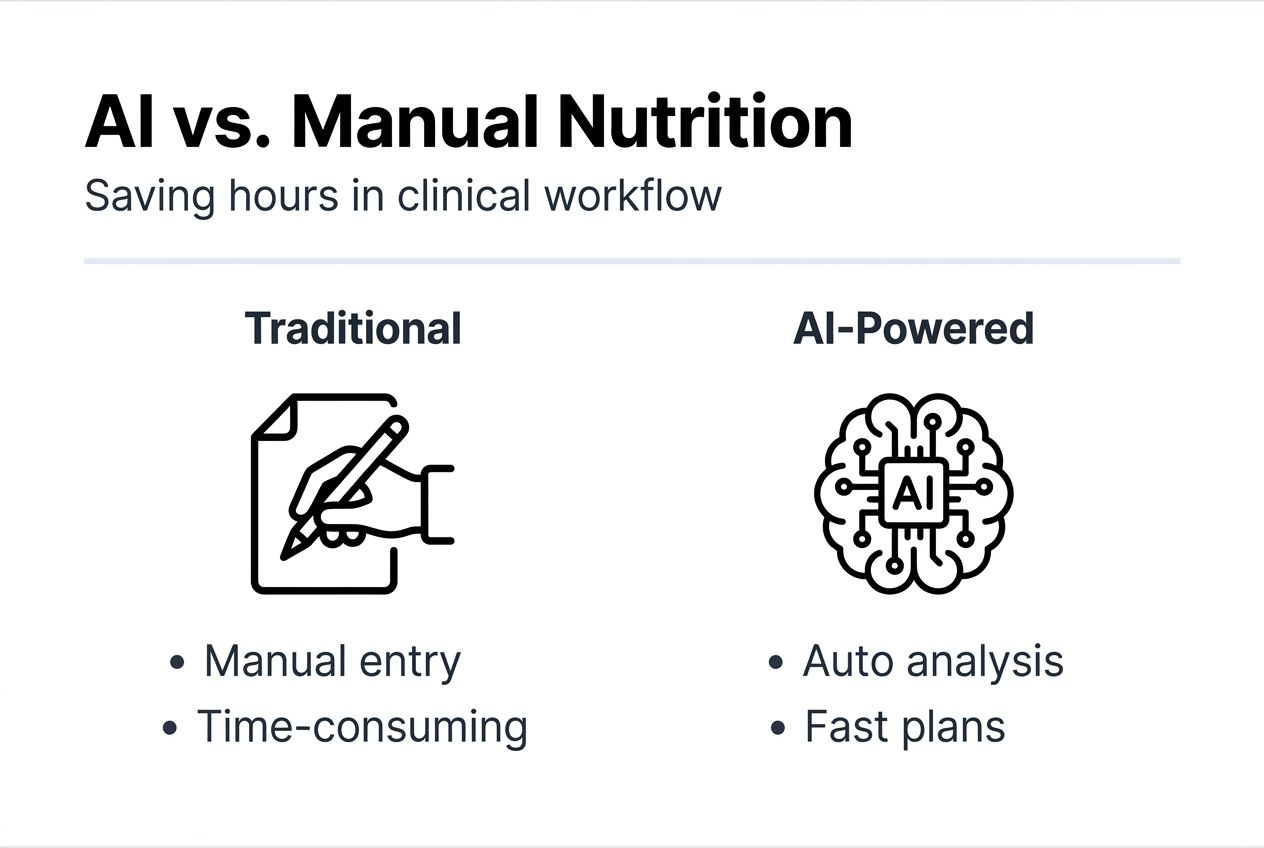
The differences between AI-powered platforms and traditional approaches reveal why many practitioners transition to technology-assisted workflows. Direct comparison illuminates practical advantages in daily clinical work.
Traditional manual nutrition planning requires hours per patient. You review records, research protocols, calculate macronutrients, select recipes, and format recommendations. Human error risks increase with complexity and fatigue. Generic diet apps offer speed but lack clinical integration and protocol specificity, making them unsuitable for functional medicine.
AI platforms automate data analysis and customization while maintaining clinical rigor. Information synthesis happens in seconds rather than hours. Documentation generates automatically. Meal planning efficiency improves dramatically without sacrificing personalization quality.
| Feature | Manual Planning | Generic Apps | AI Clinical Platforms |
|---|---|---|---|
| Time per plan | 2-4 hours | 15-30 minutes | 10-20 minutes |
| Protocol specificity | High (manual) | None | High (automated) |
| EHR integration | Manual transfer | None | Seamless sync |
| Personalization depth | Limited by time | Minimal | Comprehensive |
| Error risk | Moderate to high | Moderate | Low |
| Clinical documentation | Manual creation | Not included | Auto-generated |
Practitioners gain multiple advantages with AI-powered tools:
- Dramatic time savings allow expanded patient capacity or reduced work hours
- Consistency ensures every patient receives protocol-compliant recommendations
- Accuracy improves through automated calculations and data validation
- Scalability supports practice growth without proportional time increases
- Documentation quality meets compliance standards with less effort
The setup process for AI platforms requires initial investment but pays dividends in daily workflow efficiency. Most practitioners report full competency within two weeks and never return to manual methods.
Practical implementation considerations for practitioners
Successful AI adoption requires thoughtful planning beyond simply purchasing software. Strategic implementation ensures you maximize benefits while minimizing disruption to existing workflows.
EHR compatibility stands as the first critical factor. Your AI platform must exchange data seamlessly with your practice management system. Incompatible systems create data silos that negate efficiency gains. Verify integration capabilities during the evaluation phase, requesting demonstrations with your specific EHR.
Data security compliance protects your practice and patients. Confirm HIPAA compliance through vendor documentation and third-party audits. Understand where patient data gets stored, how it gets encrypted, and who can access it. Never compromise on security standards regardless of feature appeal.
Workflow adjustments require staff preparation. Team members need training on new processes, from data entry protocols to reviewing AI-generated recommendations. Schedule dedicated onboarding time rather than expecting immediate proficiency. Most platforms offer training resources and support during initial implementation.
Clinician oversight protocols maintain quality control. Establish clear review processes for AI-generated care plans before patient delivery. Define which recommendations require manual verification versus automatic approval. This governance ensures technology enhances rather than compromises care quality.
Implementation steps include:
- Evaluate multiple platforms for features, integration, and support quality
- Verify HIPAA compliance and data security measures
- Test integration with your existing EHR system
- Train staff on new workflows before full deployment
- Establish quality control protocols for AI recommendations
- Start with a pilot group of patients to refine processes
Pro Tip: Pilot your chosen AI platform with 5-10 patients across different protocol types before practice-wide rollout. This limited trial reveals workflow adjustments needed without overwhelming your team.
The Meelio platform exemplifies thoughtful implementation support, offering dedicated onboarding assistance and ongoing technical support to ensure smooth transitions.
Conclusion and next steps for clinical practice
AI-powered nutrition transforms functional medicine practice by automating time-intensive tasks while enhancing personalization quality. Practitioners save hours daily, patients receive more relevant recommendations, and clinical outcomes improve through precision and consistency.
Technology augments rather than replaces your clinical expertise. You maintain control over treatment decisions while delegating data processing and documentation to AI systems. This partnership optimizes both efficiency and effectiveness in complex functional medicine cases.
The evolution toward AI-assisted workflows represents practical progress rather than radical disruption. Early adopters report significant practice improvements without compromising the therapeutic relationships that define quality care. As platforms mature and integration deepens, these tools become standard infrastructure for modern integrative practices.
Explore AI nutrition platforms that align with your practice philosophy and patient population. Meelio's AI assistant specifically serves functional medicine practitioners, offering protocol-specific intelligence and seamless workflow integration that generic tools cannot match.
Explore Meelio's AI solutions for integrative nutrition
Ready to reclaim hours daily while enhancing patient care quality? Meelio's AI assistant transforms functional medicine nutrition workflows through intelligent automation designed specifically for integrative practitioners.
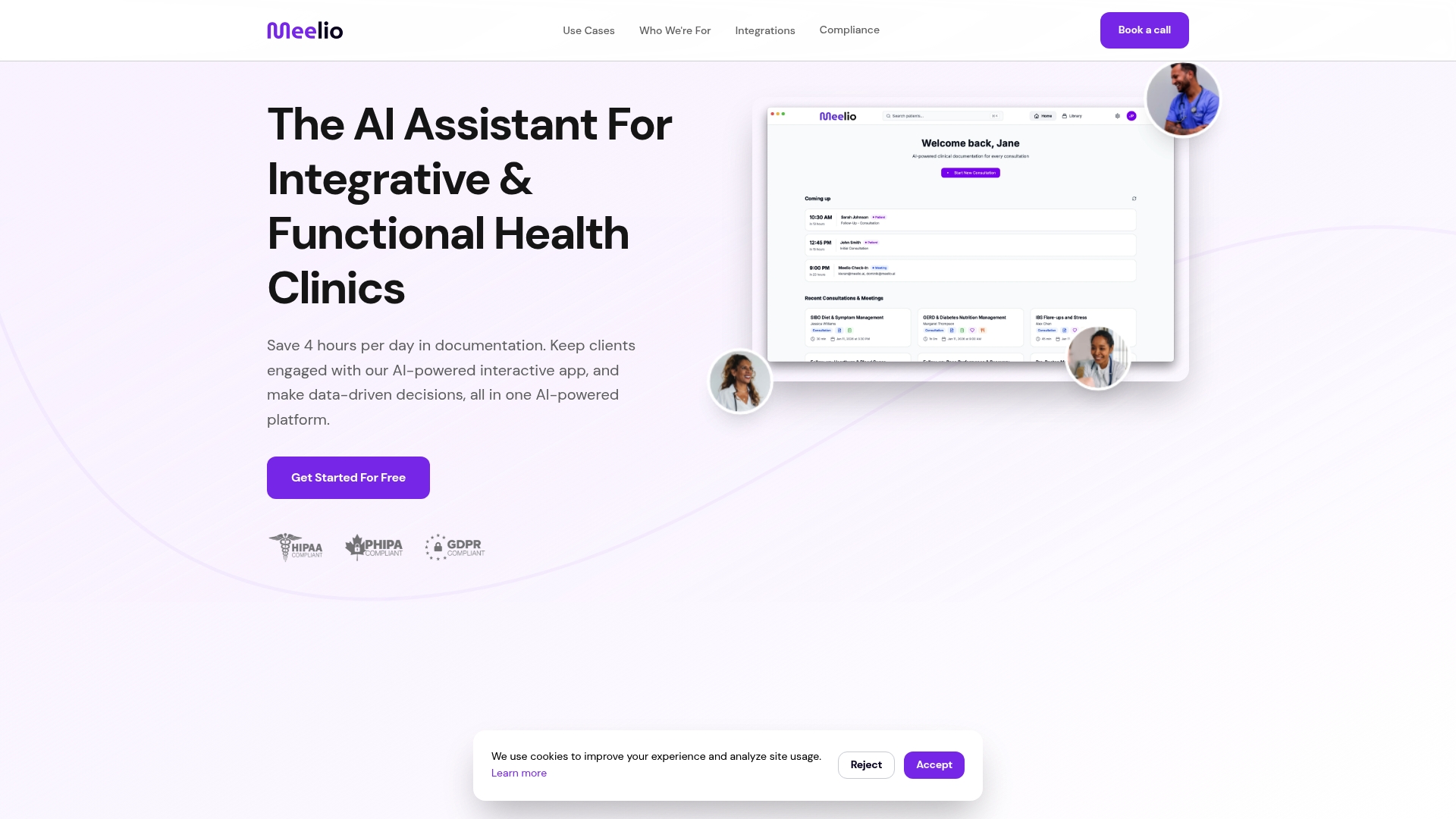
Our platform delivers protocol-specific AI care plans for Bredesen, Shoemaker, and Wahls frameworks. Generate personalized meal planning in minutes instead of hours. Integrate seamlessly with Practice Better and Cerbo EHRs for streamlined workflows. Join practitioners already saving 4+ hours daily while improving patient outcomes through precision nutrition intelligence.
Pro Tip: Start with Meelio's meal planning module to experience immediate time savings while gradually adopting additional features as your team gains confidence with AI-assisted workflows.
Frequently asked questions about AI-powered nutrition
How does AI improve personalized nutrition in clinical practice?
AI analyzes comprehensive patient data including labs, health history, and preferences to generate tailored nutrition recommendations aligned with specific functional medicine protocols. This multi-factor analysis creates more precise, relevant meal plans than manual methods while saving practitioners hours per patient.
Can AI replace my clinical judgment as a practitioner?
No, AI serves as a decision support tool that processes data and generates recommendations for your review. You maintain full control over final care plans, applying your expertise to refine suggestions based on clinical intuition and patient-specific factors that algorithms cannot capture.
What data security measures protect patient information in AI nutrition tools?
Legitimate platforms comply with HIPAA regulations through encryption, access controls, and secure data storage. Verify that any AI tool you adopt provides business associate agreements, undergoes regular security audits, and maintains transparent data handling policies.
How difficult is it to integrate AI nutrition software into existing workflows?
Integration difficulty depends on EHR compatibility and team preparedness. Platforms designed for clinical use offer seamless data exchange with major practice management systems. Most practitioners achieve full competency within two weeks with proper training and pilot testing.
What functional medicine protocols are supported by AI nutrition platforms?
Leading platforms support major frameworks including Bredesen for cognitive health, Shoemaker for biotoxin illness, and Wahls for autoimmune conditions. AI care plan systems incorporate protocol-specific dietary requirements, macronutrient ratios, and elimination phases. The nutritionist AI assistant adapts recommendations based on selected protocols while maintaining personalization for individual patients.