Automation in Healthcare: Save 4+ Hours Daily, Boost Care 20%
Discover how automation saves integrative medicine practitioners 4+ hours daily while improving patient adherence by 20% through AI-powered clinical workflows.

Integrative medicine practitioners face unprecedented administrative demands that steal precious time from patient care. Automation can save over four hours daily on clinical workflows alone, yet many clinicians remain uncertain about implementation. This article cuts through confusion to reveal how AI-powered automation transforms complex functional medicine protocols into streamlined workflows while improving patient adherence by 20% and preserving the personalized care your practice demands.
Table of Contents
- Introduction To Automation In Healthcare
- How Ai Enhances Personalized Care Plans In Functional Medicine
- Integration With Ehr Systems: Streamlining Clinical Workflows
- Common Misconceptions About Automation In Healthcare
- Comparing Automation Tools In Integrative Medicine
- Practical Implementation Strategies
- Conclusion: Advancing Patient Outcomes Through Automation
- Unlock Efficiency With Meelio Ai Assistant
- Frequently Asked Questions About Automation In Healthcare
Key Takeaways
| Point | Details |
|---|---|
| Time savings | Automation reduces administrative burden by 4+ hours daily, freeing clinicians for direct patient care. |
| Enhanced accuracy | AI platforms improve care plan personalization for complex protocols like Bredesen, Shoemaker, and Wahls. |
| Patient outcomes | AI-supported care plans boost patient adherence rates by approximately 20%. |
| Tool selection | Protocol-specific AI tools deliver superior clinical intelligence compared to generic alternatives. |
| Integration planning | EHR integration streamlines workflows but requires strategic implementation for optimal results. |
Introduction to Automation in Healthcare
Healthcare automation encompasses technologies that handle repetitive clinical and administrative tasks without direct human intervention. For integrative and functional medicine practitioners, this means AI systems that generate personalized care plans, analyze longitudinal lab data, create nutrition protocols, and document patient encounters.
Your practice faces unique challenges that generic automation cannot address. Complex protocols require understanding nuanced interactions between lifestyle interventions, supplement regimens, and biomarker trends. Manual documentation of these multifaceted care plans consumes hours that should belong to patients.
Automation in integrative healthcare addresses these pain points by handling tasks such as:
- Generating protocol-specific care plans based on patient intake data
- Creating personalized meal plans aligned with therapeutic diets
- Analyzing lab results across multiple timepoints to identify trends
- Documenting clinical encounters with appropriate medical terminology
- Sending automated patient education materials and reminders
The critical distinction lies in clinical intelligence. While basic automation handles scheduling and billing, advanced AI platforms synthesize complex patient data to support clinical decision making. Research shows practitioners using these tools save an average of 4+ hours daily, time immediately redirected to patient consultations and care refinement.
The goal remains constant: preserve care quality while eliminating administrative friction. Automation should feel invisible to patients while dramatically visible in your daily workflow efficiency.
How AI Enhances Personalized Care Plans in Functional Medicine
AI transforms how you create and manage care plans by synthesizing diverse data streams into coherent clinical recommendations. Traditional manual approaches require you to mentally integrate patient history, current symptoms, lab values, and protocol specifications. AI platforms perform this synthesis instantly while maintaining protocol fidelity.
Consider a patient following the Bredesen protocol for cognitive decline. Your AI assistant reviews their intake questionnaire, identifies relevant biomarkers from recent labs, cross-references current medications, and generates a preliminary care plan addressing each protocol pillar. You review and refine rather than build from scratch.

AI-powered platforms excel at maintaining consistency across complex frameworks. Whether you work with Bredesen, Shoemaker, or Wahls protocols, AI ensures every intervention aligns with protocol specifications while personalizing to individual patient needs.
Real-time monitoring capabilities enable dynamic adjustments as patient data evolves. When follow-up labs reveal improving inflammatory markers, your AI assistant can automatically suggest protocol modifications, flagging changes for your review before patient communication.
Patient adherence improves dramatically with AI support. Studies demonstrate 20% better adherence to personalized nutrition and lifestyle interventions when patients receive AI-generated meal plans and automated progress tracking. This occurs because recommendations feel achievable and personalized rather than generic.
Key benefits include:
- Instantaneous care plan generation from complex patient datasets
- Protocol-specific recommendations for Bredesen, Shoemaker, Wahls frameworks
- Automated nutrition planning based on therapeutic diet requirements
- Longitudinal analysis identifying biomarker trends across timepoints
- Patient-facing materials explaining interventions in accessible language
Pro Tip: Choose AI platforms that integrate nutrition and lab data automatically. Manual data entry introduces errors and defeats automation's purpose. Direct EHR integration ensures accuracy while maintaining your existing workflows.
The combination of clinical intelligence and administrative efficiency means you spend consultation time discussing nuances rather than explaining basics. Patients arrive prepared, and you arrive equipped with comprehensive insights.
Integration with EHR Systems: Streamlining Clinical Workflows
Your electronic health record system serves as your practice's operational backbone. Integrating AI automation requires seamless data flow between platforms to avoid creating additional administrative burdens.
Integrative medicine practitioners commonly use EHR systems like Practice Better and Cerbo, which offer varying degrees of API access and integration capabilities. Successful EHR integration delivers bidirectional data flow: patient information flows into AI tools for analysis, while generated care plans and documentation flow back into patient records.
Benefits of proper integration include:
- Eliminated duplicate data entry reducing transcription errors
- Automatic population of patient demographics and history
- Seamless care plan documentation within existing records
- Unified patient communication through established channels
- Consolidated billing and insurance documentation
Privacy and interoperability represent critical considerations. Your AI platform must maintain HIPAA compliance throughout data transmission and storage. Look for platforms offering encrypted data transfer, secure cloud storage, and clear data governance policies. Patient consent for AI-assisted care should be documented in your intake process.
Common integration challenges include limited API functionality in some EHR systems, workflow disruption during initial setup, and staff training requirements. Mitigate these by selecting AI platforms with proven integration experience, implementing changes during lower-volume periods, and investing in comprehensive staff onboarding.
Successful integration preserves your existing clinical workflows while eliminating friction points. You should notice automation working through reduced time spent on documentation and care plan creation, not through learning entirely new systems.
Regulatory compliance extends beyond HIPAA to include state-specific telehealth regulations, clinical documentation requirements, and professional liability considerations. Your AI platform should provide documentation meeting medical-legal standards while you maintain ultimate responsibility for clinical decisions.
Common Misconceptions About Automation in Healthcare
Fear and misunderstanding prevent many practitioners from adopting beneficial automation technologies. Addressing these misconceptions directly helps you evaluate tools objectively.
-
Misconception: Automation depersonalizes patient care. Reality: AI enhances personalization by processing more patient data than humanly possible, identifying patterns you might miss, and generating truly individualized recommendations. Your clinical judgment guides AI suggestions rather than being replaced by them.
-
Misconception: AI reliability remains questionable. Reality: Validated, protocol-specific tools undergo rigorous testing against clinical frameworks. These platforms achieve higher consistency than manual processes while flagging uncertainties for human review. Generic AI tools lack this validation, hence the importance of specialized platforms.
-
Misconception: Automation threatens clinician roles. Reality: AI handles routine cognitive tasks, freeing mental bandwidth for complex clinical reasoning. You become more effective by focusing on cases requiring human judgment rather than spending hours on administrative documentation.
-
Misconception: Implementation requires extensive technical expertise. Reality: Modern platforms prioritize user experience, offering intuitive interfaces designed for clinicians rather than programmers. Implementation support and training ensure smooth adoption without technical backgrounds.
-
Misconception: Smaller practices cannot afford automation. Reality: Time savings translate directly to increased patient capacity or improved work-life balance. Many practitioners find automation pays for itself within months through efficiency gains.
Pro Tip: Approach AI as a decision support partner. Review every AI-generated recommendation before patient communication. This maintains clinical accountability while leveraging AI's pattern recognition and consistency.
"The role of AI in healthcare is not to replace clinicians but to amplify their capabilities, handling routine complexity so practitioners can focus on the nuanced art of healing that only humans provide."
Your expertise remains irreplaceable. AI tools simply ensure administrative tasks do not prevent you from applying that expertise where it matters most.
Comparing Automation Tools in Integrative Medicine
Not all automation platforms deliver equal value for integrative and functional medicine practices. Understanding distinctions helps you select tools matching your clinical needs.
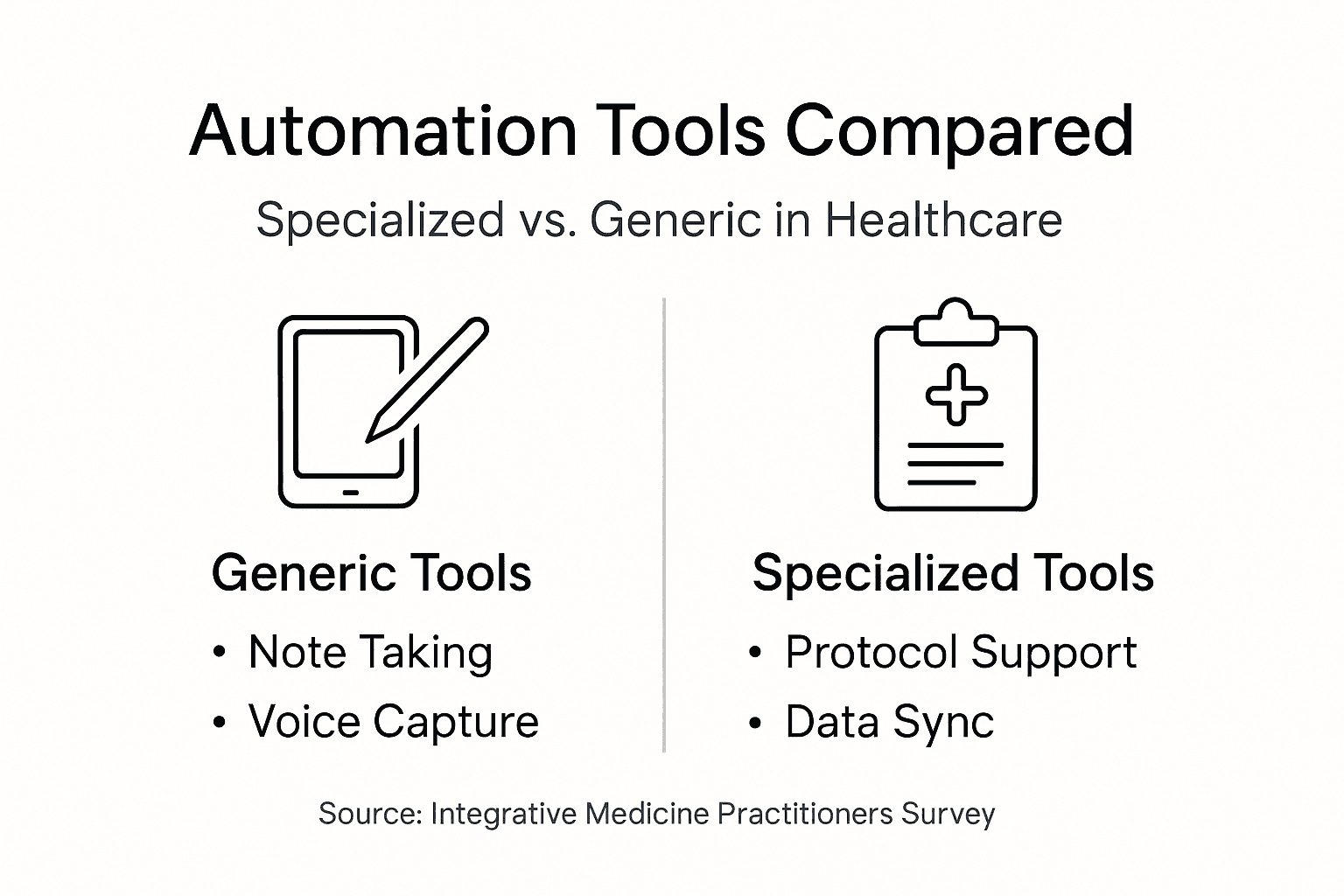
Generic AI scribes focus on transcribing patient encounters and generating basic clinical notes. These tools save documentation time but lack clinical intelligence specific to integrative protocols. They cannot generate Bredesen-compliant care plans or analyze functional medicine lab panels with protocol-specific insights.
Protocol-specific AI platforms like those designed for integrative medicine provide targeted clinical intelligence. These specialized tools understand complex frameworks, recognize therapeutic interventions specific to functional medicine, and generate recommendations aligned with evidence-based integrative protocols.
| Feature | Generic AI Scribes | Protocol-Specific AI Platforms |
|---|---|---|
| Clinical documentation | Basic encounter notes | Comprehensive protocol-aligned documentation |
| Care plan generation | Template-based suggestions | Personalized plans following specific frameworks |
| Lab analysis | Simple result transcription | Longitudinal trend analysis with protocol context |
| Nutrition planning | Generic recommendations | Therapeutic diet-specific meal planning |
| Protocol knowledge | None | Deep integration with Bredesen, Shoemaker, Wahls, etc. |
| Time savings | 1-2 hours daily | 4+ hours daily |
Key considerations when selecting automation tools:
- Validation against specific integrative medicine protocols you use
- Integration capabilities with your existing EHR system
- Nutrition database comprehensiveness for therapeutic diets
- Lab analysis features supporting functional medicine biomarkers
- Training and implementation support provided
- Pricing structure aligned with practice size and patient volume
The cognitive load reduction differs dramatically between tool types. Generic scribes eliminate typing but require you to maintain all clinical reasoning manually. Protocol-specific platforms handle initial clinical synthesis, allowing you to focus on refinement and patient-specific nuances.
Return on investment becomes apparent quickly with specialized tools. The additional hours saved and improved patient outcomes justify higher initial costs through increased practice capacity and patient satisfaction.
Practical Implementation Strategies
Successful automation adoption requires strategic planning rather than rushed deployment. Follow these steps to integrate AI tools smoothly into your practice.
-
Assess current workflows. Document time spent on administrative tasks, care plan creation, and patient communication. Identify specific pain points where automation delivers maximum impact. Most practitioners find documentation and care plan generation consume the most time.
-
Select appropriate tools. Evaluate platforms based on protocol compatibility, EHR integration, and feature alignment with your needs. Request demonstrations focusing on your specific use cases rather than generic capabilities.
-
Plan phased implementation. Start with one clinical function such as care plan generation rather than deploying all features simultaneously. This allows staff to adapt gradually while you refine workflows.
-
Train your team comprehensively. Ensure every team member understands their role in the automated workflow. Front desk staff need different training than clinical staff. Allocate sufficient time for hands-on practice.
-
Establish quality assurance processes. Create checklists for reviewing AI-generated content before patient delivery. Define escalation procedures for uncertain or complex cases.
-
Monitor outcomes systematically. Track time savings, patient satisfaction, adherence rates, and clinical outcomes. Use data to refine implementation and demonstrate ROI.
-
Maintain regulatory compliance. Document patient consent for AI-assisted care. Ensure data handling meets HIPAA requirements. Keep records of AI tool validation and clinical oversight.
Pro Tip: Implement automation during a slower practice period if possible. This provides breathing room for troubleshooting and workflow refinement without compromising patient care during peak times.
Managing change requires clear communication about automation's purpose. Staff may fear job displacement or increased workload during transition. Emphasize how automation eliminates tedious tasks, allowing everyone to focus on more rewarding patient interaction and clinical work.
Ongoing evaluation ensures automation continues serving your evolving practice needs. Schedule quarterly reviews assessing whether tools deliver promised benefits and identifying opportunities for expanded use or workflow optimization.
Conclusion: Advancing Patient Outcomes Through Automation
AI-driven automation represents a fundamental shift in how integrative and functional medicine practitioners deliver care. The evidence is compelling: save over 4 hours daily on administrative tasks, improve patient adherence by 20% through personalized support, and maintain clinical excellence through protocol-specific intelligence.
Your practice faces complex clinical challenges requiring sophisticated tools designed specifically for integrative medicine frameworks. Generic automation falls short where protocol-specific platforms excel, delivering clinical intelligence that respects the nuanced complexity of Bredesen, Shoemaker, and Wahls protocols.
The transformation extends beyond efficiency to fundamental practice sustainability. Reclaiming hours daily allows expanded patient capacity, improved work-life balance, or deeper focus on complex cases. Patients benefit from consistent, personalized care plans and proactive support improving adherence and outcomes.
Implementation requires strategic planning but delivers immediate returns. Practitioners report satisfaction not just from time savings but from practicing medicine as intended, focusing on healing relationships rather than administrative burden.
Consider how automation might transform your practice. The technology exists today to eliminate workflow friction while enhancing the personalized care distinguishing integrative medicine. Your patients deserve both your clinical expertise and the comprehensive support AI automation enables.
Unlock Efficiency with Meelio AI Assistant
Ready to reclaim your clinical time? Meelio delivers AI-powered workflow automation built specifically for integrative and functional medicine practitioners. Our platform goes beyond generic scribes to provide protocol-specific clinical intelligence for complex frameworks like Bredesen, Shoemaker, and Wahls.
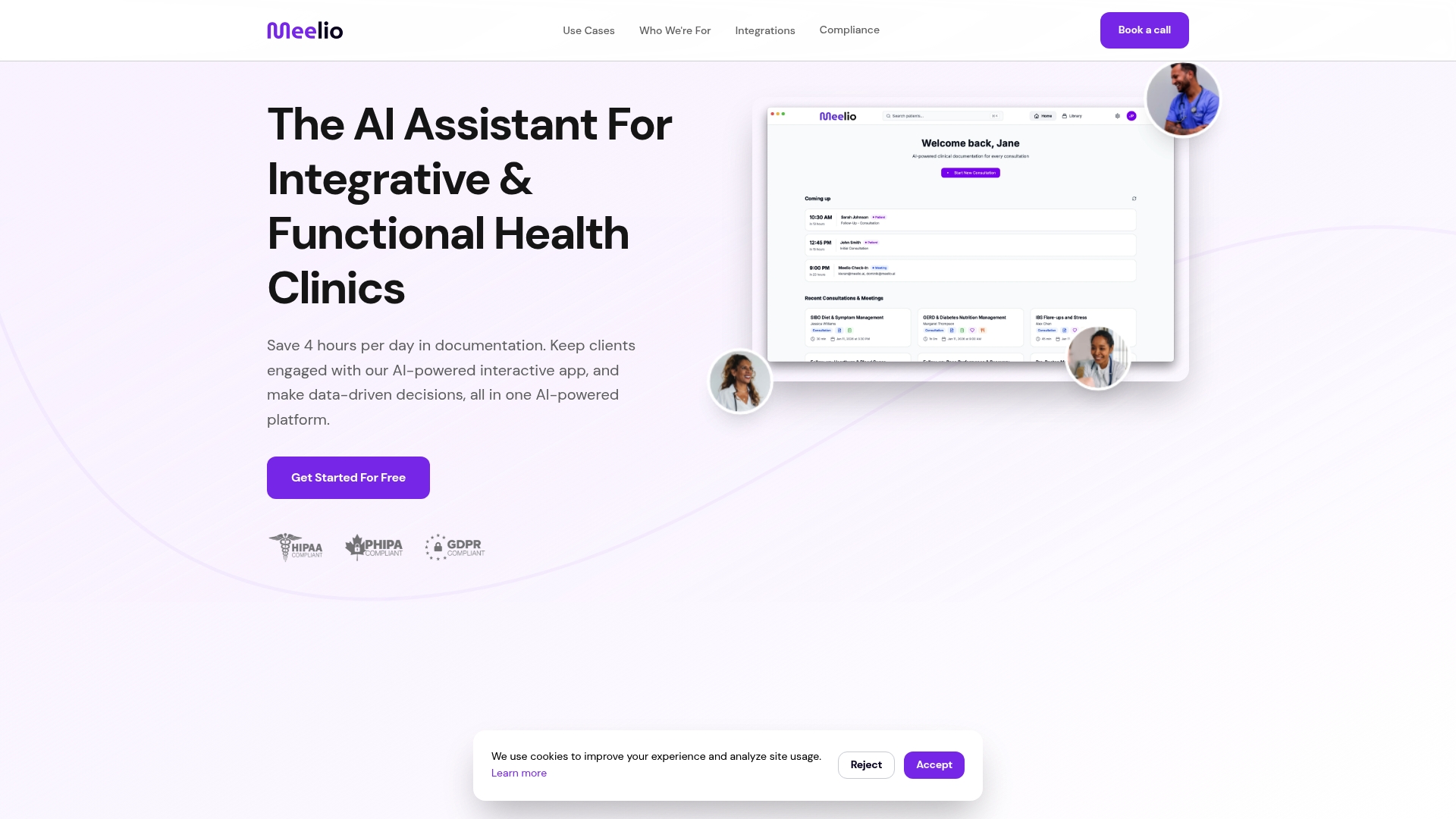
Generate personalized care plans instantly, create therapeutic meal plans aligned with patient protocols, and analyze longitudinal lab data with AI assistance. Seamless integration with Practice Better and Cerbo means automation works within your existing workflows. Explore how Meelio's comprehensive features can save you 4+ hours daily while improving patient outcomes.
"Meelio transformed my practice. I reclaimed hours spent on documentation and care planning, redirecting that time to patients who need my expertise most. The protocol-specific intelligence ensures every recommendation aligns perfectly with the frameworks I trust."
Discover how AI can enhance your integrative medicine practice. Visit Meelio today.
Frequently Asked Questions About Automation in Healthcare
What types of administrative tasks does automation reduce?
Automation handles clinical documentation, care plan generation, meal planning, lab analysis, appointment scheduling, patient education delivery, and progress tracking. These tasks typically consume 4+ hours daily for integrative practitioners. AI platforms process patient data to generate protocol-specific recommendations, freeing you to focus on clinical decision making and patient relationships.
How does AI maintain patient privacy and data security?
Reputable AI platforms implement HIPAA-compliant encryption for data transmission and storage, maintaining strict access controls and audit trails. Patient data remains confidential through secure cloud infrastructure and regular security audits. Always verify platform compliance certifications and review data governance policies before implementation.
Can automation be tailored to specific integrative medicine protocols?
Yes, protocol-specific AI platforms are designed around frameworks like Bredesen, Shoemaker, and Wahls. These tools understand intervention hierarchies, biomarker relationships, and therapeutic approaches unique to each protocol. Generic automation lacks this clinical intelligence, making specialized platforms essential for integrative practices.
What training is recommended before adopting automation tools?
Plan for 4-8 hours of initial training covering platform navigation, workflow integration, quality assurance procedures, and troubleshooting. Hands-on practice with sample patient cases builds confidence before live deployment. Ongoing training addresses advanced features and workflow optimization. Vendors should provide comprehensive onboarding support and accessible documentation.
How can automation improve patient adherence to care plans?
AI generates personalized, achievable recommendations rather than generic protocols, making interventions feel tailored to individual circumstances. Automated meal plans provide practical implementation support. Progress tracking and educational reminders maintain engagement between appointments. Studies show these features improve adherence by approximately 20%, translating to better clinical outcomes.
Does automation work with my existing EHR system?
Most modern AI platforms integrate with popular integrative medicine EHR systems like Practice Better and Cerbo through APIs. Integration enables bidirectional data flow, eliminating duplicate entry while maintaining unified patient records. Verify integration capabilities with specific platforms during evaluation, as functionality varies by EHR system.