ChatGPT for Clinical Notes: HIPAA, BAAs, and Alternatives
ChatGPT for clinical notes has a real gap: no signed BAA on consumer plans. See what HIPAA requires and what functional medicine practices use instead.
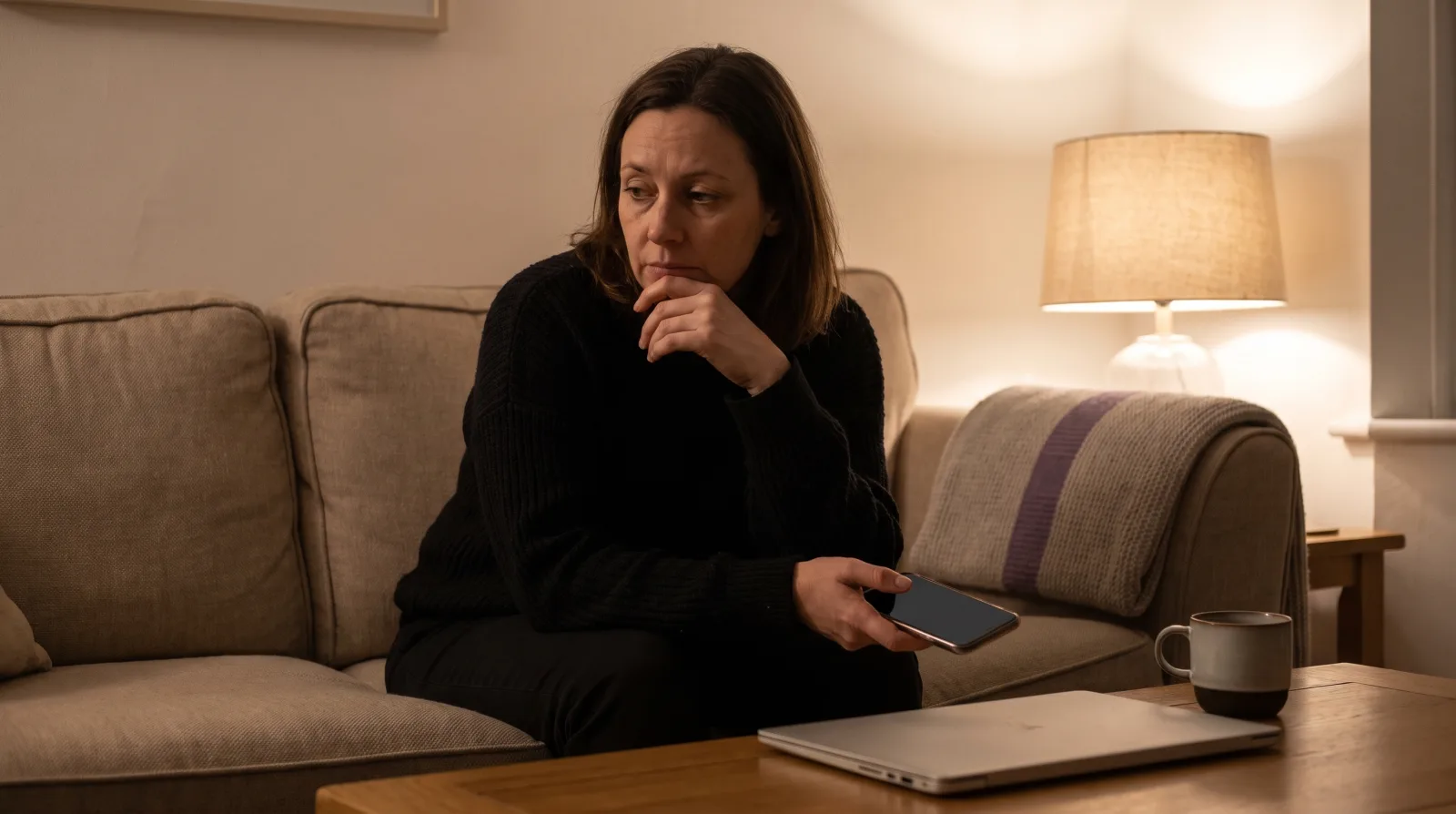
A physician finishes a 90-minute functional medicine intake at 9pm, opens ChatGPT on a phone, and starts typing up the visit before it's lost to memory. It feels faster than the alternative: typing the same note into the practice EHR tomorrow morning, half-remembered. But ChatGPT for clinical notes carries a compliance problem most practitioners don't find out about until after they've already pasted in a patient's name, a lab result, or a diagnosis. This guide covers what HIPAA actually requires, where ChatGPT's own terms draw the line, and what functional medicine practices use instead.
Table of Contents
- Can you use ChatGPT for clinical notes?
- Is ChatGPT HIPAA compliant?
- Does ChatGPT come with a signed BAA?
- What happens if you put patient information into ChatGPT without a BAA?
- Can ChatGPT write a SOAP note for a functional medicine visit?
- What do functional medicine practices use instead of ChatGPT for clinical notes?
- How is an EHR-native AI scribe different from ChatGPT?
- Frequently Asked Questions
Key Takeaways
| Point | Details |
|---|---|
| Consumer ChatGPT has no BAA | OpenAI's own compliance page lists a Business Associate Agreement only under the enterprise ChatGPT for Healthcare plan, not the Free, Plus, Pro, or Team plans individual clinicians use |
| No BAA means no PHI | Under HIPAA, a covered entity needs a signed BAA before any vendor creates, receives, or stores protected health information on its behalf; a business associate is anyone outside the practice's workforce handling that information for it |
| ChatGPT isn't built on the chart | It has no connection to Cerbo, Practice Better, CharmHealth, or Cliniko, so a note written there still has to be copied into the record by hand |
| It doesn't know your protocol templates | ChatGPT drafts whatever structure you prompt for that session; it doesn't hold a Bredesen, Shoemaker, or Wahls template, or remember your practice's format from one visit to the next |
| Purpose-built AI scribes close the gap | Freed, Nabla, Heidi, Abridge, and EHR-native platforms like Meelio are built specifically for clinical documentation, with BAAs and, for some, direct EHR sync |
Can you use ChatGPT for clinical notes?
Not safely, and not on a standard account. ChatGPT's Free, Plus, Pro, and Team plans don't include a signed Business Associate Agreement, which HIPAA requires before any outside tool can handle a patient's protected health information on a covered entity's behalf. OpenAI's own healthcare plans page reserves the BAA for ChatGPT for Healthcare, its enterprise product for health systems, and ChatGPT for Clinicians only extends HIPAA support to individuals "authorized to sign a BAA" through an employer, not through OpenAI directly. For a solo or small functional medicine practice typing visit details into the app most patients and clinicians already have installed, that's the account typically in use, and it's the one without coverage.
Is ChatGPT HIPAA compliant?
It depends entirely on which plan and which BAA. ChatGPT for Healthcare is built, in OpenAI's words, to "support HIPAA-compliant use," and the workspace includes a signed BAA with OpenAI, encryption controls, audit logs, and role-based access. None of that extends to the consumer product. A practice using Free, Plus, Pro, or Team ChatGPT is handling patient information outside any HIPAA-covered agreement, regardless of how the model itself performs, because the compliance gap is contractual, not technical.
Does ChatGPT come with a signed BAA?
Only on the enterprise plan. OpenAI's healthcare comparison table shows a BAA bundled into ChatGPT for Healthcare, along with SSO, SCIM provisioning, and governance controls aimed at hospital IT departments. ChatGPT for Clinicians, the free individual plan aimed at solo practitioners, doesn't come with one at all; it simply notes that HIPAA protections apply only if the clinician is "authorized to sign a BAA" elsewhere. If a functional medicine physician is running their own practice rather than working inside a larger health system's ChatGPT for Healthcare deployment, there is, in practice, no BAA in place.
What happens if you put patient information into ChatGPT without a BAA?
The practice has disclosed protected health information to a business associate without the required agreement, which is itself a HIPAA violation independent of what happens to the data afterward. A business associate, per the federal definition, is any person or organization outside a covered entity's workforce that uses identifiable health information to perform a service on that entity's behalf, and HIPAA's Privacy Rule governs exactly this kind of disclosure. In clinical practice, the risk isn't abstract: a dictated intake summary, a diagnosis, a DUTCH or GI-MAP result pasted in for interpretation help, all of it counts as PHI the moment it identifies a patient, however briefly the chat session lasts.
Can ChatGPT write a SOAP note for a functional medicine visit?
It can produce something shaped like a SOAP note, but not one built for how functional medicine visits actually run. ChatGPT will draft Subjective, Objective, Assessment, and Plan sections if prompted carefully, and for a short, single-complaint visit it can read reasonably well. The trouble shows up on the visits that define this specialty: a 90-minute intake touching a DUTCH panel, a GI-MAP, three years of history, and a root-cause narrative across multiple systems doesn't compress into a generic SOAP box without flattening the clinical reasoning that makes the note useful six months later. ChatGPT also has no memory of a practitioner's actual template, whether that's Bredesen/ReCODE, Shoemaker/CIRS, Wahls, or a fully custom structure, so every session starts from a blank prompt instead of the practice's own format.
Pro Tip: test any AI note-writing tool on the messiest multi-system intake on your schedule that week, not a straightforward follow-up. That's the visit where the gaps show up.
What do functional medicine practices use instead of ChatGPT for clinical notes?
Most move to AI tools built specifically for clinical documentation rather than a general-purpose chat app repurposed for it. Freed, Nabla, Heidi Health, and Abridge are ambient AI scribes that record a visit and draft a note from it, each with their own BAA and compliance terms. Dietitian Koosje Janssen replaced ChatGPT outright at her practice, Koos Zorgenloos, for a specific reason: "ChatGPT didn't understand orthomolecular protocols, so I rewrote half of every note by hand." That's the pattern across functional and integrative practices: a general model can write a plausible-sounding note, but a practitioner still edits it line by line because it doesn't know the protocol, the lab panel, or the practice's own documentation habits.
Meelio sits in the same category but goes further for practices built around Cerbo, Practice Better, CharmHealth, or Cliniko: it captures the consultation audio directly, drafts the note in SOAP, DAP, PIE, BIRP, Narrative, or the practitioner's own custom format, and syncs into the EHR instead of leaving the note sitting in a separate app. Meelio signs a Business Associate Agreement with every practice, encrypts recordings end to end, and never uses patient audio to train its models. See how it connects to Cerbo if that's the EHR in use.
How is an EHR-native AI scribe different from ChatGPT?
The difference is where the note ends up and what it's built on. ChatGPT produces text in a chat window with no connection to the patient's chart; an EHR-native scribe pulls the existing chart before the visit and pushes the finished note back into it, which removes the copy-paste step entirely.
| Consumer ChatGPT | Ambient AI scribes (Freed, Nabla, Heidi, Abridge) | EHR-native scribe (Meelio) | |
|---|---|---|---|
| Signed BAA | Not on Free/Plus/Pro/Team | Yes, varies by vendor | Yes |
| Knows your protocol template | No, re-prompted each time | Partial, template support varies | Yes: SOAP, DAP, PIE, BIRP, Narrative, or custom |
| Pulls existing chart/lab history | No | No | Yes |
| Syncs into Cerbo, Practice Better, CharmHealth, Cliniko | No | No | Yes (Cerbo and Practice Better full bi-directional sync; Cliniko available where enabled) |
| Built for long, multi-system visits | Only with careful manual prompting | Varies by vendor | Yes |
For a functional medicine practice weighing which gap matters most, the compliance question (BAA, encryption) and the workflow question (does it know my protocol, does it land in my EHR) are separate decisions. ChatGPT alone doesn't clear either one for routine clinical note writing. Pricing for Meelio starts at a single-seat plan, with custom pricing for multi-clinician practices.
Frequently Asked Questions
Is it a HIPAA violation to use ChatGPT for a patient note?
If the note includes anything that identifies a patient and the account doesn't have a signed BAA, yes. Standard ChatGPT consumer plans don't include one, so any protected health information entered there is disclosed to a business associate without the agreement HIPAA requires.
Can I use ChatGPT Plus or Team for clinical notes if I turn off chat history?
No. Turning off chat history changes what OpenAI retains for training, not whether a BAA exists. Without a signed BAA, the disclosure itself is the problem, regardless of retention settings.
Does ChatGPT for Healthcare solve this for a small functional medicine practice?
It can, but it's built for health systems and comes with enterprise pricing, admin controls, and seat minimums aimed at hospitals and large groups, not a solo or small-group practice. Smaller practices more often use a BAA-covered AI scribe built for their size and specialty instead.
What's the difference between ChatGPT and an AI medical scribe?
ChatGPT is a general-purpose chat model with no clinical documentation features by default. An AI medical scribe like Freed, Nabla, Heidi, Abridge, or Meelio is purpose-built to record a consultation, draft a structured clinical note from it, and in some cases sync that note directly into the practice's EHR.
Can a health coach or assistant use ChatGPT to help write session notes?
Only if the specific account has a signed BAA covering that use, and even then, any note involving a patient's protected health information should go through the same compliant tool the supervising clinician uses, not a separate consumer app.