Functional Health Assessment Checklist: 25% Better Accuracy
Discover top functional health assessment checklists that improve diagnostic accuracy by 25%. Compare features, digital tools, and implementation strategies for better patient outcomes.

Choosing the right functional health assessment checklist transforms how you capture patient complexity and build precise care plans. Your assessment tool directly impacts clinical efficiency and diagnostic accuracy. Clinicians save 4+ hours daily using digital outcome tracking tools with real-time patient data. This article guides you through selection criteria, top checklist options, and practical implementation strategies to elevate your functional health practice.
Table of Contents
- Selection Criteria For Choosing Functional Health Assessment Checklists
- Top Functional Health Assessment Checklists: Features And Differentiators
- Comparison Of Leading Functional Health Assessment Checklists
- Integration And Digital Workflow: Enhancing Efficiency In Functional Health Assessments
- Implementation Best Practices And Audit Tools For Functional Health Assessment Integration
- Summary Comparison Table Of Functional Health Assessment Checklists
- Situational Recommendations: Choosing The Right Checklist For Your Practice
- Enhance Your Practice With Meelio's AI Assistant
Key Takeaways
| Point | Details |
|---|---|
| Diagnostic Impact | Effective checklists improve diagnostic accuracy by 25% and enhance patient outcomes through comprehensive data capture. |
| Selection Priorities | Evaluate coverage breadth, customization options, digital integration capabilities, and evidence-based validation. |
| Tool Variety | Top checklists include MSQ, IFM Matrix, and Gordon's Patterns, each serving distinct clinical frameworks and workflows. |
| Digital Advantage | AI-powered platforms automate scoring, visualize trends, and integrate with EHRs to save significant clinical time. |
| Implementation Focus | Audit checklists and structured protocols ensure consistent adoption and continuous quality improvement. |
Selection Criteria for Choosing Functional Health Assessment Checklists
Selecting the optimal functional health assessment checklist requires balancing clinical depth with practical workflow integration. Symptom and system coverage breadth stands as the highest priority when evaluating assessment tools. Your checklist must capture the full spectrum of biological systems relevant to your clinical approach.
Customization and adaptability separate adequate tools from exceptional ones. You need flexibility to tailor assessments based on patient demographics, chief complaints, and your specific clinical protocols. Rigid, one-size-fits-all checklists miss nuances critical to functional medicine.
Digital workflow integration with Meelio eliminates administrative friction that derails even the best paper-based tools. EHR compatibility ensures assessment data flows directly into patient records without manual transcription. This integration reduces errors and frees your time for patient interaction.
Evidence-based validation provides confidence in clinical decision-making. Choose tools with published reliability studies and demonstrated outcomes improvement. Patient usability affects completion rates; complex language or excessive length leads to abandoned surveys and incomplete data.
Cost and accessibility matter, especially for smaller practices. Balance subscription fees against time savings and improved clinical outcomes. Free tools may lack integration features, while premium platforms offer automation that justifies investment.
Pro Tip: Pilot two or three checklists with a small patient cohort before full adoption. Track completion rates, data quality, and how well insights translate into care plans.
Key evaluation factors include:
- Comprehensive coverage of organ systems, lifestyle factors, and psychosocial elements
- Customization options for different patient populations and clinical frameworks
- Seamless EHR integration that eliminates duplicate data entry
- Validated scoring systems with published reliability metrics
- Patient-friendly design that encourages thorough responses
- Transparent pricing aligned with practice size and needs
Top Functional Health Assessment Checklists: Features and Differentiators
The Medical Symptoms Questionnaire (MSQ) delivers quantitative symptom burden scoring across multiple biological systems. This widely validated tool assigns numerical values to symptom severity, enabling you to track changes over time and measure treatment response objectively. MSQ excels when you need standardized metrics for longitudinal monitoring.

The IFM Functional Medicine Matrix organizes patient imbalances into biological nodes and psychosocial factors. This conceptual framework helps you visualize connections between seemingly disparate symptoms and identify root causes. The Matrix supports holistic analysis by integrating lifestyle, environmental triggers, and emotional health into your clinical picture.
Gordon's Functional Health Patterns covers 11 interrelated functional domains systematically used in nursing and integrative medicine. This framework assesses health perception, nutrition, elimination, activity, sleep, cognition, self-perception, roles, sexuality, coping, and values. Gordon's Patterns shine when psychosocial integration drives your practice philosophy.
Digital outcome tracking tools automate scoring and visualize patient trends, saving significant clinician time. These platforms integrate with your EHR for real-time data visualization and administrative efficiency. The Meelio AI assistant exemplifies this category, offering protocol-specific intelligence for complex functional medicine frameworks.
Each checklist serves distinct clinical needs:
- MSQ provides standardized quantitative symptom tracking ideal for research and outcomes measurement
- IFM Matrix supports conceptual organization of complex, multi-system patient presentations
- Gordon's Patterns enables systematic psychosocial assessment within integrative care models
- Digital platforms deliver automation, EHR integration, and AI-assisted personalization at scale
Comparison of Leading Functional Health Assessment Checklists
Direct comparison reveals how checklist capabilities align with different practice requirements. The Medical Symptoms Questionnaire excels in multi-system quantitative symptom tracking with validated numerical scoring that supports objective progress monitoring. You can compare baseline assessments against follow-ups to demonstrate treatment efficacy.
The IFM Matrix best supports holistic clinical imbalance analysis by incorporating lifestyle, environmental, and psychosocial factors into a visual framework. This tool helps you explain complex interconnections to patients and design comprehensive interventions that address root causes rather than isolated symptoms.
Gordon's Patterns provides strong psychosocial and nursing-integrated assessment capabilities across 11 functional domains. This framework works particularly well when your practice emphasizes mind-body medicine or when collaborating with nursing staff who use familiar assessment language.
Digital tracking tools provide unmatched EHR integration and workflow efficiency through automated data capture and analysis. These platforms eliminate manual scoring, generate trend visualizations automatically, and flag concerning patterns for clinical review.
Pro Tip: Match checklist complexity to your patient population's health literacy. Simpler tools may yield better completion rates with less clinically sophisticated patients.
| Checklist | System Coverage | Scoring Method | Digital Integration | Best Clinical Use |
|---|---|---|---|---|
| Medical Symptoms Questionnaire | 12+ organ systems | Quantitative numerical | Limited native support | Longitudinal symptom tracking, outcomes measurement |
| IFM Functional Medicine Matrix | Holistic with lifestyle factors | Qualitative conceptual | Manual entry typical | Root cause analysis, patient education |
| Gordon's Functional Health Patterns | 11 functional domains | Qualitative descriptive | Varies by platform | Psychosocial integration, nursing collaboration |
| Digital Outcome Tracking | Customizable breadth | Automated quantitative | Native EHR sync | High-volume practices, data-driven care |
Usability and patient engagement features vary significantly. AI-enabled assessment tools offer adaptive questioning that skips irrelevant sections and provides immediate feedback, dramatically improving completion rates. Traditional paper forms often see 60-70% completion, while engaging digital tools achieve 85-95%.
Integration and Digital Workflow: Enhancing Efficiency in Functional Health Assessments
Digital tools revolutionize functional health assessments through automated scoring and trend visualization that enhance clinical insight. Instead of manually tallying scores, you instantly see color-coded dashboards highlighting areas requiring attention. Pattern recognition becomes effortless when software graphs symptom trajectories across multiple visits.
Real-time patient response data supports dynamic care plan adjustments between appointments. When patients complete periodic mini-assessments via portal or app, you receive alerts about emerging concerns before they escalate. This proactive approach prevents crisis-driven reactive care.
EHR-compatible platforms eliminate data silos and reduce administrative burden substantially. AI-powered digital tools automate personalized guidance saving clinicians over 4 hours daily while increasing patient engagement. Assessment results flow directly into progress notes, care plans, and billing documentation without duplicate entry.
"Digital integration transforms assessment from a static baseline snapshot into dynamic, continuous patient monitoring that informs every clinical decision."
AI assists in generating personalized guidance that boosts patient adherence and satisfaction. When assessment responses trigger tailored educational content and specific protocol recommendations, patients feel seen and supported between visits. This continuous engagement improves outcomes and strengthens therapeutic relationships.
Time savings from automation free your capacity for higher value patient interactions. Less time on data entry means more time exploring patient stories, answering questions, and building trust. Digital workflow integration with Meelio exemplifies this shift toward clinician-augmented intelligent systems.
Key digital advantages:
- Instant automated scoring eliminates calculation errors and saves 15-20 minutes per assessment
- Visual trend dashboards reveal patterns invisible in tabular data
- Real-time alerts notify you of concerning changes requiring immediate attention
- EHR synchronization maintains single source of truth across all clinical systems
- AI-generated patient guidance extends your clinical reach between appointments
Implementation Best Practices and Audit Tools for Functional Health Assessment Integration
Successful implementation requires systematic planning beyond simply selecting a checklist. Customize assessments aligned with your clinical goals and patient characteristics. A checklist perfect for chronic fatigue patients may overwhelm someone seeking preventive wellness guidance.
Train your entire team for consistent checklist use and patient engagement. Front desk staff should explain why assessments matter and how to access them. Medical assistants need to troubleshoot technical issues and encourage completion. This team coordination ensures high response rates.
Audit checklists systematically ensure comprehensive protocol integration across clinical domains supporting effective patient assessments. Regular audits reveal gaps where assessments are ordered but not completed, completed but not reviewed, or reviewed but not integrated into care plans.
Monitor patient outcomes and adjust assessment tools over time. Track which checklist components correlate with successful interventions and which sections patients struggle to complete. Continuous refinement keeps your assessment strategy relevant and efficient.
Engage patients throughout the process to reduce survey fatigue and improve data quality. Explain how their responses directly influence care recommendations. Share previous assessment results during visits to demonstrate you value their input.
Implementation steps:
- Define your assessment goals and success metrics before selecting tools
- Pilot your chosen checklist with 20-30 patients to identify workflow friction
- Create standardized protocols for when and how assessments are administered
- Train all staff on technical troubleshooting and clinical importance
- Schedule quarterly audits to evaluate completion rates and clinical integration
- Gather patient feedback and refine questions or delivery methods accordingly
- Review outcome data to confirm assessments improve diagnostic accuracy
Clinical implementation with Meelio streamlines this process through built-in workflow templates and staff training resources.
Summary Comparison Table of Functional Health Assessment Checklists
This consolidated reference distills previous analysis into actionable guidance for your checklist selection decision. Quick comparison enables you to identify which tool best matches your practice profile.
| Checklist Name | Scope | Key Differentiator | Digital Integration | Recommended Use Case |
|---|---|---|---|---|
| Medical Symptoms Questionnaire | 12+ organ systems | Validated quantitative scoring | Third-party tools available | Outcome tracking, research protocols |
| IFM Functional Medicine Matrix | Holistic biological and psychosocial | Visual root cause framework | Manual documentation typical | Complex case analysis, patient education |
| Gordon's Functional Health Patterns | 11 functional domains | Nursing-integrated systematic assessment | Platform dependent | Team-based care, psychosocial focus |
| Digital Outcome Tracking Platforms | Customizable multi-system | AI automation and EHR sync | Native seamless integration | High-volume practices, efficiency priority |
Situational Recommendations: Choosing the Right Checklist for Your Practice
Your optimal checklist depends on your specific clinical context and resource constraints. Use the Medical Symptoms Questionnaire when you need comprehensive multi-system symptom tracking with validated numerical outcomes. This tool suits research-oriented practices and those requiring objective progress metrics for insurance documentation.
Choose the IFM Functional Medicine Matrix if holistic clinical imbalance organization aligns with your practice philosophy. This framework excels when you spend significant time educating patients about root causes and want a visual tool that illustrates complex interconnections clearly.
Opt for Gordon's Functional Health Patterns when psychosocial integration and nursing collaboration are priorities. This systematic approach works well in team-based care models and practices emphasizing mental health alongside physical symptoms.
Digital outcome tracking tools suit clinics focused on efficiency and data visualization. If you see high patient volumes or struggle with administrative burden, AI-powered platforms like Meelio deliver immediate ROI through time savings and improved completion rates.
Pro Tip: Consider hybrid approaches using different checklists for initial comprehensive intake versus focused follow-up assessments. This strategy balances thoroughness with efficiency.
Practical selection guidance:
- Solo practitioners with limited tech budget: Start with IFM Matrix or Gordon's Patterns using paper or simple digital forms
- Group practices with EHR investment: Prioritize digital platforms with native integration capabilities
- Research-focused or academic settings: MSQ provides validated metrics for publication and grant requirements
- Patient populations with lower health literacy: Choose simpler, shorter digital tools with adaptive questioning
- Practices emphasizing patient education: Visual frameworks like IFM Matrix support shared decision-making conversations
Balance tool selection with your budget, patient engagement needs, and EHR compatibility. The best checklist is the one your team consistently uses and that genuinely improves your clinical decision-making.
Enhance Your Practice With Meelio's AI Assistant
Transform your functional health assessments from time-consuming administrative tasks into strategic clinical assets. Meelio's AI assistant automates assessment scoring, generates personalized patient guidance, and integrates seamlessly with your existing EHR workflow.
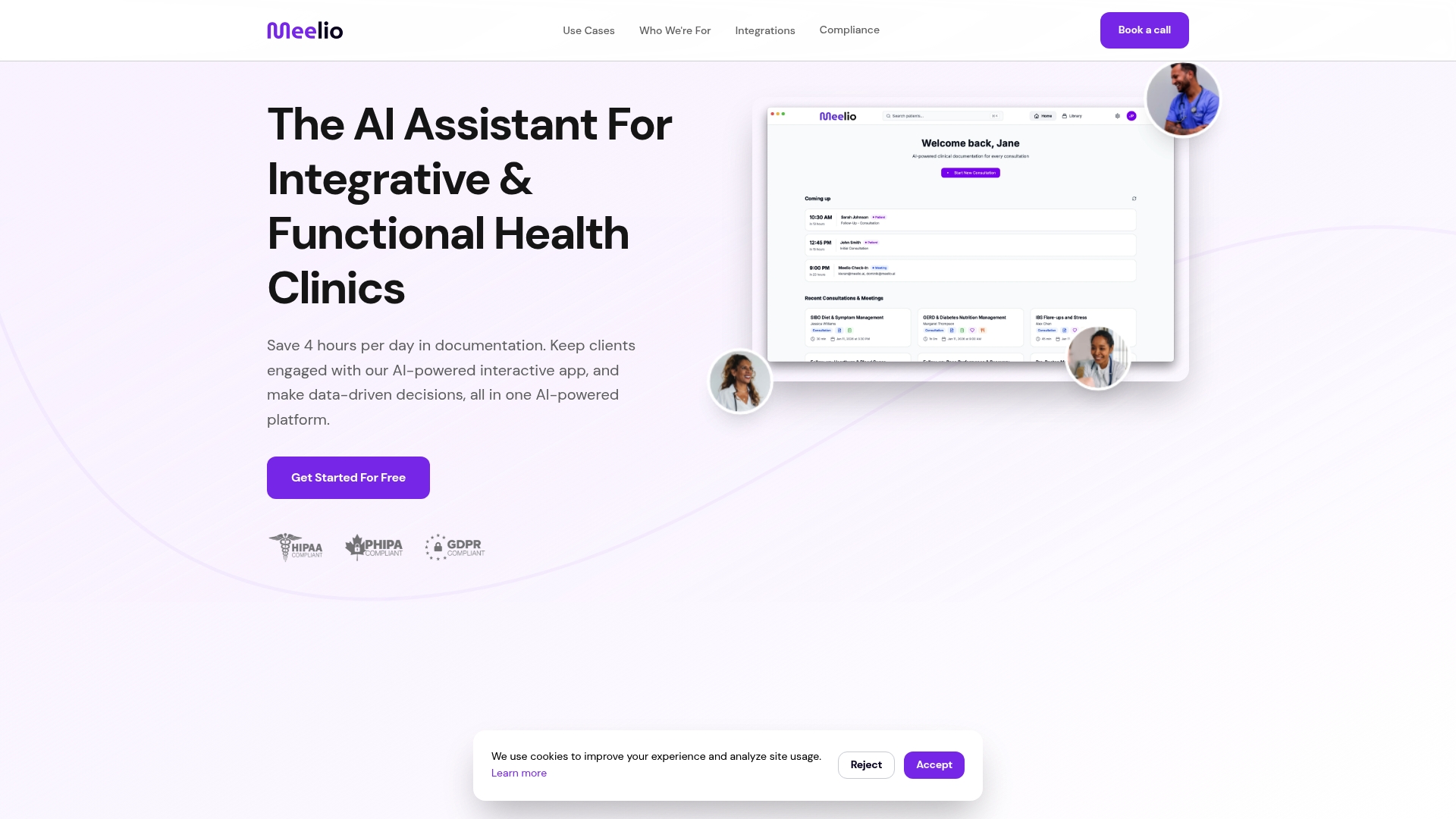
Our platform delivers protocol-specific intelligence for complex frameworks like Bredesen, Shoemaker, and Wahls, going beyond generic tools to support your specialized clinical approach. Save over 4 hours daily while improving patient outcomes through continuous engagement and longitudinal tracking. Discover how integrative health practice solutions from Meelio elevate your assessment strategy and free your time for what matters most: patient care.
Frequently Asked Questions
What is a functional health assessment checklist?
A functional health assessment checklist is a structured tool that evaluates patient symptoms, lifestyle factors, and biological systems to identify imbalances and root causes beyond conventional diagnoses. These checklists capture multi-system data that informs personalized functional medicine care plans. They range from quantitative symptom questionnaires to holistic conceptual frameworks organizing clinical information.
How do I select the best checklist for my practice needs?
Match checklist features to your clinical goals, patient population, and workflow constraints. Prioritize comprehensive system coverage, customization options, and evidence-based validation. Evaluate digital integration capabilities if you use an EHR. Pilot your top two or three options with real patients before committing practice-wide to ensure completion rates and clinical utility meet expectations.
What are the benefits of digital integration with EHR systems?
Digital integration eliminates duplicate data entry, reduces transcription errors, and saves 15-20 minutes per assessment through automated scoring. Real-time data flows directly into patient charts, enabling instant trend visualization and clinical decision support. AI-powered digital tools automate personalized guidance saving clinicians over 4 hours daily. Seamless digital workflow integration with Meelio exemplifies these efficiency gains.
How can I improve patient completion rates and engagement?
Explain clinical value before patients begin assessments, showing how their responses directly shape care recommendations. Use patient-friendly language and adaptive digital formats that skip irrelevant sections. Keep initial assessments under 15 minutes and follow-ups even shorter. Share previous results during visits to demonstrate you review and act on their input, reinforcing that completion matters.
What are audit checklists and why are they important?
Audit checklists systematically evaluate clinical protocols ensuring comprehensive patient assessments and consistent protocol integration. They identify gaps where assessments are incomplete or not integrated into care planning. Regular audits support continuous quality improvement by revealing workflow bottlenecks and training needs, ultimately enhancing diagnostic accuracy and patient outcomes.
How can I select the best checklist for my patient population?
Assess your practice's clinical scope, predominant conditions treated, and patient health literacy levels. Consider whether you need quantitative tracking, conceptual organization, or psychosocial integration. Evaluate digital capabilities against your technical infrastructure and staff comfort with technology. Pilot multiple options with representative patient samples and gather feedback before full adoption. Tailored checklist selection with Meelio provides personalized guidance based on your specific practice profile and clinical frameworks.