Top 7 tips for patient engagement 2026 in functional health
Discover 7 expert-backed patient engagement tips for 2026 using AI workflows, conversational automation, and hybrid strategies to boost adherence and reduce no-shows in functional health practices.

Selecting effective patient engagement strategies in 2026 is increasingly complex for functional and integrative health practitioners. With AI-driven tools, conversational automation, and hybrid workflows proliferating, you need a clear framework to evaluate which methods truly enhance outcomes. This article delivers seven expert-backed tips grounded in clinical workflows and AI innovations, helping you cut through the noise and implement engagement tactics that improve adherence, reduce no-shows, and elevate patient satisfaction in your practice.
Table of Contents
- How To Evaluate Patient Engagement Strategies: Key Criteria
- Top 3 AI-Powered Patient Engagement Tools And Methods In 2026
- Comparing Patient Engagement Options: Hybrid AI-Human Workflows Versus Traditional Methods
- Key Patient Engagement Tactics For Functional And Integrative Health In 2026
- Enhance Patient Engagement With Meelio AI Solutions
- FAQ
Key takeaways
| Point | Details |
|---|---|
| Hybrid AI-human workflows | Balance routine automation with human oversight to optimize engagement while maintaining empathy and safety. |
| Conversational AI reduces no-shows | Automate scheduling and reminders to achieve 30-40% no-show reductions and increase capacity. |
| Personalized communication improves adherence | AI-driven care plans and SMS reminders tailored to patient profiles boost follow-up rates and symptom outcomes. |
| Digital engagement drives revenue | Portal and SMS opt-ins correlate 1:1 with collections and operational efficiency gains. |
| Monitor AI risks carefully | Watch for hallucinations, bias, and socioeconomic barriers that can undermine patient trust and safety. |
How to evaluate patient engagement strategies: key criteria
Choosing the right patient engagement approach requires a systematic framework that balances efficacy, safety, patient preferences, and seamless integration with your existing clinical workflows. Start by assessing how AI is deployed in each option. Hybrid AI-human workflows handle routine tasks like appointment reminders and data synthesis while preserving human oversight for complex decisions and empathetic care. This balance prevents over-reliance on automation and catches errors that AI might introduce.
Next, measure patient outcomes using empirical benchmarks. Look for tools that demonstrate 30-40% no-show reduction and 15% capacity increases through digital engagement metrics like portal logins, SMS opt-ins, and appointment confirmations. These indicators directly correlate with revenue and operational efficiency. Evaluate patient preferences by considering contexts where AI excels versus where human interaction remains essential. Research shows patients prefer AI chatbots for certain sensitive health topics, yet human empathy is irreplaceable for complex emotional support.
Integration ease matters immensely. The best engagement tools connect seamlessly with your EHR, lab systems, and existing communication channels without creating workflow friction. Consider whether the solution supports your specific protocols, whether that is Bredesen, Shoemaker, Wahls, or other functional frameworks. Finally, account for risks including AI hallucinations, algorithmic bias, and socioeconomic barriers that can reduce engagement among lower-income patient populations.
Pro Tip: Prioritize solutions that allow you to customize AI behavior for your patient demographics and clinical philosophy, ensuring the technology amplifies rather than replaces your expertise.
With these criteria clarified, you can objectively compare engagement options and select tools that align with your practice goals and patient needs. This framework sets the stage for exploring specific AI-powered methods that functional health practitioners are successfully deploying in 2026.
Top 3 AI-powered patient engagement tools and methods in 2026
Conversational AI platforms are transforming how practices handle scheduling, reminders, and routine patient communication. These systems automate 60%+ of patient calls, handling appointment bookings, confirmations, and rescheduling with natural language processing that feels personal. By reducing manual phone work, you free staff to focus on complex patient needs while cutting no-shows through timely, empathetic reminders. The key advantage is scalability without sacrificing the human touch in tone and responsiveness.

AI chatbots designed for functional and integrative health synthesize complex patient data to generate individualized care plans that incorporate lab results, symptom tracking, and lifestyle factors. These tools increase patient time spent engaging with their health plans and improve adherence by delivering personalized recommendations in digestible formats. Patients can ask questions about their protocols, receive instant clarification, and feel supported between appointments. The limitation is that chatbots must be monitored for accuracy, especially when interpreting nuanced functional medicine frameworks.
SMS communication combined with AI analytics boosts responsiveness and follow-up rates by meeting patients where they are. Sending a text before making a call increases patient engagement and confirmation rates significantly. When paired with AI that analyzes response patterns and tailors message timing to individual preferences, SMS becomes a powerful tool for persistent yet non-intrusive engagement.
| Tool Type | Key Features | Workflow Impact | Patient Response | Risks |
|---|---|---|---|---|
| Conversational AI | Automates 60%+ calls, natural language scheduling | Frees 4+ staff hours daily | 30-40% no-show reduction | Over-trust, occasional misunderstandings |
| AI Chatbots | Personalized care plans, 24/7 patient access | Increases patient engagement time | Higher adherence, reduced anxiety | Hallucinations, protocol misinterpretation |
| SMS + AI Analytics | Tailored message timing, pre-call texts | Boosts confirmation rates | Improved responsiveness | Lower SES patients may disengage |
Pro Tip: Blend SMS and conversational AI by sending a personalized text reminder followed by an AI-powered call for patients who do not confirm, creating a persistent yet respectful engagement loop.
Next, we compare these AI-powered tools to traditional patient management methods to help you decide when and how to deploy each approach effectively in your functional health practice.
Comparing patient engagement options: hybrid AI-human workflows versus traditional methods
Hybrid AI-human workflows combine routine automation with human empathy oversight, offering a middle path between fully manual and fully automated engagement. These systems handle repetitive tasks like appointment reminders, data entry, and initial patient inquiries through AI, then escalate complex or sensitive issues to clinicians. This approach reduces burnout by offloading administrative work while preserving the therapeutic relationship that is central to functional medicine. Patients perceive AI chatbots as more empathetic than physicians for certain sensitive topics, yet human review remains essential to catch errors and address individual nuances.
Traditional methods rely heavily on manual follow-ups, phone calls, and in-person check-ins. While these approaches excel at building deep patient relationships and adapting to unexpected needs, they lack the efficiency and scalability of AI-enhanced workflows. Manual systems often result in missed follow-ups, inconsistent communication, and clinician burnout from administrative overload. However, they carry no risk of AI hallucinations or algorithmic bias.
The critical trade-off involves risk management. AI systems hallucinate or omit urgent issues 6-7% of the time, and physicians overlook 65%+ of AI errors when reviewing outputs. This over-trust can compromise patient safety if human oversight is insufficient. Conversely, traditional methods may miss engagement opportunities due to limited capacity and slower response times. Hybrid approaches mitigate both risks by using AI for efficiency gains while maintaining human checkpoints for quality and empathy.
| Approach | Efficiency | Patient Satisfaction | Risk Level | Best For |
|---|---|---|---|---|
| Hybrid AI-Human | High (4+ hours saved daily) | High (empathy + responsiveness) | Moderate (requires oversight) | Scaling practices, complex protocols |
| Traditional Manual | Low (labor-intensive) | Moderate to High (relationship depth) | Low (no AI errors) | Small practices, high-touch care |
| Fully Automated AI | Very High (minimal human input) | Variable (depends on AI quality) | High (hallucinations, bias) | Routine tasks only |
Pro Tip: Maintain human review of all AI-generated care plans and patient communications to catch errors and address individual needs that algorithms might miss, especially for patients with complex comorbidities or psychosocial factors.
Understanding this comparison enables you to select the best engagement strategy for your practice context, balancing efficiency, safety, and patient satisfaction based on your clinic size, patient demographics, and clinical philosophy.
Key patient engagement tactics for functional and integrative health in 2026
Implementing the right tactics can transform patient adherence and outcomes in functional health practices. Here are seven actionable strategies tailored to integrative medicine workflows:
-
Use detailed intake forms and root-cause analysis plans supported by AI to capture comprehensive patient histories and identify underlying drivers of symptoms. AI can synthesize complex data from labs, lifestyle questionnaires, and symptom trackers to surface patterns that inform personalized protocols.
-
Combine AI-driven personalized care plans with regular human check-ins to balance automation with empathy. Let AI generate meal plans, supplement schedules, and lifestyle recommendations based on patient data, then review and adjust these plans during follow-up appointments to address individual preferences and barriers.
-
Leverage SMS and portal reminders tailored to patient profiles to boost engagement without overwhelming patients. Segment your patient base by communication preferences, health literacy, and socioeconomic factors, then customize message frequency and content accordingly.
-
Measure adherence and symptom changes with AI analytics that track patient progress over time. Use dashboards that visualize trends in lab markers, symptom scores, and lifestyle behaviors to identify patients who need additional support and celebrate wins with those who are thriving.
-
Engage lower socioeconomic status groups with additional communication efforts, recognizing that digital engagement decreases among lower SES patients. Offer phone calls, printed materials, or in-person education sessions to ensure equitable access to your engagement tools.
-
Link AI meal planning and coaching tools to enhance lifestyle adherence by providing patients with practical, personalized resources they can implement immediately. Tools that generate shopping lists, recipes, and prep instructions based on functional medicine protocols reduce the friction between knowing what to do and actually doing it.
-
Monitor patient engagement metrics continuously and iterate on your strategies based on real outcomes. Track no-show rates, portal logins, appointment confirmations, and symptom improvements to identify which tactics work best for your patient population.
Pro Tip: Active patient engagement in functional medicine produces 30-50% symptom improvement by months 2-3, so prioritize engagement tactics that sustain patient participation through the critical early phase of treatment.
Having these tactics in hand, you can integrate them into your clinic workflows to translate insights into real impact on patient outcomes, satisfaction, and practice efficiency.
Enhance patient engagement with Meelio AI solutions
Functional and integrative health practitioners need tools designed specifically for their complex clinical workflows. Meelio offers AI assistants tailored to protocols like Bredesen, Shoemaker, and Wahls, automating care plan generation, personalized nutrition recommendations, and longitudinal lab analysis. Our platform accelerates personalized care with AI meal planning tools that generate shopping lists and recipes aligned to patient protocols, eliminating hours of manual documentation.
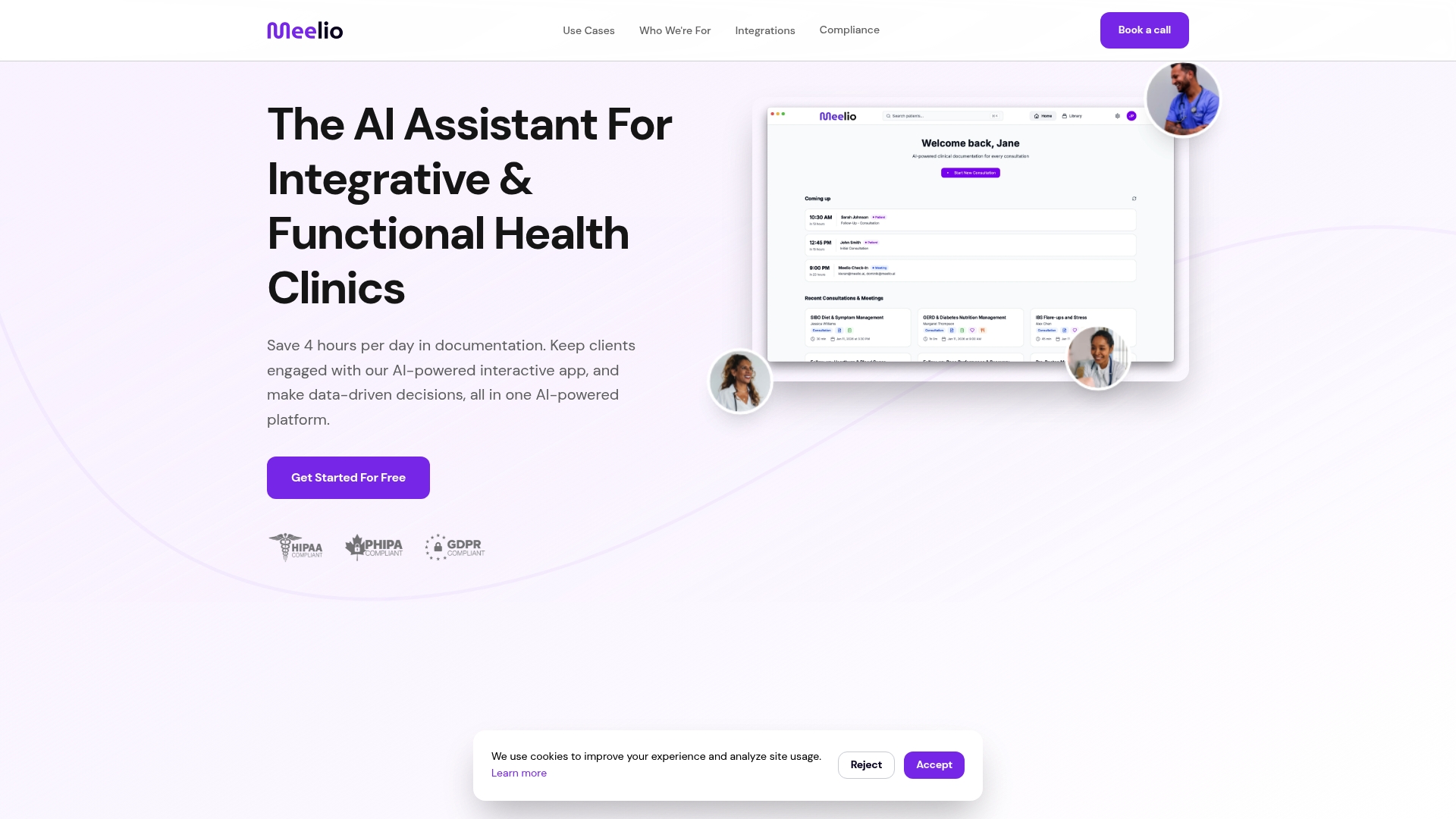
By integrating with EHRs like Practice Better and Cerbo, Meelio supports hybrid AI-human workflows that optimize engagement and outcomes. Our AI care plans synthesize patient data to deliver protocol-specific clinical intelligence, saving clinicians 4+ hours daily while improving patient adherence and satisfaction. These solutions encapsulate the best practices and technologies discussed, empowering your clinic's patient engagement efforts in 2026.
FAQ
What are the best methods to reduce patient no-shows using AI?
Deploy conversational AI to handle appointment reminders and scheduling automatically, which manages 60%+ of patient calls and reduces no-shows by 30-40%. Send SMS messages before making calls to boost patient responsiveness and confirmation rates, creating a layered communication approach that meets patients where they are.
How do patients feel about AI handling sensitive health conversations?
Patients often rate AI chatbots as more empathetic than physicians for certain sensitive health topics like cancer questions, reporting reduced anxiety during interactions. However, human oversight remains important for complex emotional support and situations requiring nuanced clinical judgment that AI cannot replicate.
What risks should practitioners consider with AI patient engagement?
AI can hallucinate or omit urgent issues 6-7% of the time, and physicians miss 65%+ of AI errors when reviewing outputs, creating safety concerns. Extra outreach is needed for lower socioeconomic status patients who engage less with digital tools, and continuous monitoring for algorithmic bias is essential to ensure equitable care.
How can clinics measure the success of patient engagement strategies?
Track no-show reductions and increased collections, as digital engagement correlates 1:1 with revenue and operational efficiency. Monitor portal and SMS engagement rates to gauge patient responsiveness, and measure symptom improvements and adherence rates to assess clinical impact, with functional health practices seeing 30-50% symptom improvement when engagement is high.